
Modern tinted window film systems can provide much more than a darker appearance. Quality automotive window film can help reduce solar heat, block harmful UV radiation, control glare, increase privacy, protect interior materials, and give a vehicle a cleaner, more refined look.
The important thing is choosing the correct product for the job.
Automotive window tint, safety and security window film, and Paint Protection Film (PPF) are different products. Automotive tint is installed on vehicle glass for solar control, UV protection, glare reduction, privacy, and appearance. Safety or security films are specialized films designed primarily to help retain broken glass. PPF, meanwhile, is installed on painted exterior surfaces to protect the paint from chips, scratches, road debris, and other surface damage.
Understanding these differences makes it much easier to choose the right film system for your vehicle.
What Is an Automotive Tinted Window Film System?
Automotive window film is a thin, multi-layer material installed on the interior surface of vehicle glass.
Depending on the technology and product, the film can manage visible light, ultraviolet radiation, solar energy, and glare while changing the appearance of the window.
Modern automotive films are available in several technologies, including:
-
Dyed window tint
-
Carbon window tint
-
Metalized window tint
-
Ceramic window tint
-
Nano-ceramic window tint
-
Virtually clear solar-control film
The right option depends on your priorities for appearance, privacy, heat rejection, UV protection, clarity, and budget.
Luxury Glass Tinting provides professional automotive window tinting for Los Angeles drivers seeking different combinations of these benefits.
1. Window Film Can Reduce Solar Heat
One of the biggest advantages of automotive tint is improved cabin comfort.
Sunlight passing through vehicle glass introduces solar energy into the cabin. Seats, dashboards, trim, and other interior surfaces absorb that energy and can become uncomfortable during hot weather.
Solar-control window film is designed to reduce the amount of solar energy reaching the interior.
This can make a noticeable difference for vehicles that:
-
Spend significant time parked outdoors
-
Are driven during hot afternoon hours
-
Have large areas of glass
-
Use panoramic roofs
-
Have dark interior materials
-
Are regularly driven in Southern California
However, it is important to understand that darkness and heat rejection are not the same thing.
A dark basic film can potentially provide less solar control than a relatively light high-performance ceramic film.
If heat control is a priority, compare actual performance specifications rather than simply selecting the darkest shade.
2. Quality Window Film Can Block Harmful UV Radiation
UV protection is another important advantage of automotive window tint.
Vehicle glass does not provide identical UV protection on every window. Laminated windshields generally provide strong UV protection, while many side, rear, and sunroof windows can allow greater UVA exposure.
Quality UV-protective automotive films can block 99% or more of harmful UV radiation, depending on the specific product.
For drivers and passengers, this provides an additional layer of protection during regular driving.
Reducing UV exposure can also help protect vehicle interiors, including:
-
Leather seats
-
Fabric upholstery
-
Dashboards
-
Steering wheels
-
Door panels
-
Plastic and vinyl trim
A tint does not need to be extremely dark to provide substantial UV protection. Virtually clear films can also be engineered to block UV radiation.
If UV protection matters to you, check the specifications of the exact film rather than judging it by color or darkness.
3. Tinted Window Film Can Reduce Glare
Strong sunlight and reflected light can create uncomfortable glare while driving.
Automotive window film can reduce the amount of visible light entering through treated windows, helping make bright driving conditions more comfortable.
Glare can come from:
-
Direct sunlight
-
Low-angle sunrise or sunset
-
Reflective pavement
-
Surrounding vehicles
-
Glass buildings
-
Bright exterior surfaces
This is particularly relevant during long Los Angeles commutes.
However, glare control should be balanced with nighttime visibility.
Extremely dark film can reduce the amount of visible light available to the driver after sunset. Choosing an appropriate VLT helps maintain a practical balance between daytime comfort and nighttime visibility.
4. Window Tint Can Improve Privacy
Tinted vehicle windows can make occupants and belongings less immediately visible from outside.
The amount of privacy depends on more than film darkness.
Factors include:
-
Visible Light Transmission (VLT)
-
Interior color
-
Exterior brightness
-
Reflectivity
-
Factory privacy glass
-
Viewing angle
-
Time of day
Lower-VLT films generally provide more visual privacy, but darker is not always better.
Privacy should be balanced with safe outward visibility and applicable California tint regulations.
Automotive tint should also not be treated as an anti-theft system. It may make belongings less visible, but it does not prevent someone from breaking a window.
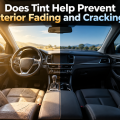
5. Window Film Can Help Protect the Interior From Fading
Vehicle interiors receive significant solar exposure over time.
UV radiation, visible light, and heat can all contribute to fading, discoloration, drying, and deterioration.
Window film can help reduce several of these contributors.
This may help preserve the appearance of:
-
Leather
-
Upholstery
-
Dashboards
-
Carpeting
-
Door panels
-
Interior trim
No automotive film can guarantee that an interior will never fade or age, but reducing solar exposure can help slow the process.
For owners of luxury vehicles, classic cars, or vehicles with premium interiors, this can be an important long-term benefit.
6. Tint Can Improve the Appearance of a Vehicle
Automotive window tint is also a popular customization option.
A well-selected tint can create a more consistent appearance across the vehicle’s glass and complement the paint, trim, wheels, roofline, and overall design.
Drivers can choose anything from a subtle factory-inspired look to a noticeably darker appearance where legally permitted.
Appearance is influenced by:
-
Film VLT
-
Reflectivity
-
Film color
-
Factory glass
-
Interior color
-
Vehicle paint color
-
Window angle
-
Exterior lighting
That is why the same film can look different on two vehicles.
Reviewing actual samples before installation can help you choose a film that complements your car rather than simply selecting a percentage from a chart.
7. Modern Films Can Provide Performance Without Extremely Dark Glass
One of the biggest advances in automotive window film is the ability to separate performance from darkness.
Older tint options often relied heavily on reducing visible light.
Modern ceramic and nano-ceramic films can manage solar energy while maintaining comparatively high Visible Light Transmission.
This means a driver can potentially receive strong UV and heat-control performance without making the vehicle look extremely dark.
Virtually clear films are also available for customers who want solar and UV performance with minimal change to the original appearance of the vehicle.
Understanding VLT in Tinted Window Film Systems
Visible Light Transmission, or VLT, describes the percentage of visible light that passes through the glass-and-film system.
The basic rule is:
Higher VLT = lighter appearance
Lower VLT = darker appearance
VLT affects appearance, privacy, glare, visibility, and legal compliance.
It does not directly measure heat rejection or UV protection.
For example, a 50% premium ceramic film may provide stronger solar performance than a much darker entry-level film.
You can learn more about Visible Light Transmission in automotive tint before deciding which shade is appropriate for your vehicle.
What Is TSER and Why Does It Matter?
If heat rejection is important, one useful specification is Total Solar Energy Rejected, commonly called TSER.
TSER describes the percentage of total solar energy rejected by the glass-and-film system.
This provides a broader picture of heat-control performance than simply looking at visible-light darkness.
You may also see infrared-rejection percentages advertised.
These can be useful, but manufacturers may measure infrared performance across different wavelength ranges. As a result, two impressive-looking IR percentages are not necessarily directly comparable.
When evaluating films for heat control, compare the complete manufacturer specifications instead of relying on a single marketing number.
Automotive Tint Is Not Paint Protection Film
This is an important distinction.
Paint Protection Film (PPF) is not window tint and should not be described as safety window film.
PPF is a transparent polyurethane-based film applied to painted or otherwise vulnerable exterior vehicle surfaces.
Depending on the product, it can help protect against:
-
Stone chips
-
Minor scratches
-
Road debris
-
Bug damage
-
Road tar
-
Certain stains and contaminants
Common PPF installation areas include:
-
Front bumpers
-
Hoods
-
Fenders
-
Side mirrors
-
Rocker panels
-
Door edges
-
Other painted surfaces
Some vehicles receive full-body PPF installations.
This is fundamentally different from automotive window film, which is applied to glass.
If your goal is protecting the paint rather than controlling light and solar energy through the windows, PPF is the relevant product.
Safety and Security Film Is Also a Different Product
Safety and security window film is another separate category.
These thicker specialty films are designed primarily to help hold broken glass together following impact or breakage.
Depending on the application, safety/security film can help reduce hazards from loose or flying glass.
For building-security applications, specialized security film can also be combined with attachment systems designed to help retain damaged glass in the framing and delay forced entry.
It is important not to exaggerate these capabilities.
Safety/security film does not make ordinary glass impossible to break and should not be described as bulletproof.
The appropriate film, thickness, attachment system, glass type, and installation method depend on the specific risk being addressed.
Luxury Glass Tinting offers specialized window security film installation for residential and commercial glass applications.
What Is the Difference Between Window Tint, Security Film, and PPF?
| Product | Installed On | Main Purpose |
|---|---|---|
| Automotive window tint | Vehicle glass | Heat, UV, glare, privacy and appearance |
| Safety/security window film | Glass | Helps retain broken glass and address specific security risks |
| Paint Protection Film (PPF) | Vehicle paint/body surfaces | Helps protect paint from chips, scratches and road debris |
| Anti-graffiti film | Glass or compatible surfaces | Sacrificial protection against scratching, etching and vandalism |
Using the correct terminology helps ensure you purchase the product that actually solves your problem.
Does Automotive Window Film Strengthen Glass?
Standard automotive tint adheres to glass, but it should not automatically be marketed as a structural safety product.
Specialized safety and security films are engineered and tested for glass-retention applications.
If preventing flying glass or improving security is your primary objective, ask about a dedicated safety/security system rather than assuming ordinary solar-control tint offers the same performance.
This distinction is especially important in residential and commercial applications where safety specifications and attachment systems may be required.
How Long Does Quality Window Film Last?
There is no universal lifespan for every window film.
Longevity depends on factors such as:
-
Film technology
-
Manufacturer
-
Product quality
-
Installation quality
-
Sun exposure
-
Climate
-
Glass type
-
Maintenance
-
Warranty terms
Higher-quality professionally installed films generally provide stronger warranty protection than low-cost products.
Before installation, ask what the manufacturer warranty covers and whether it addresses issues such as bubbling, peeling, cracking, delamination, or discoloration.
Why Professional Installation Matters
Window film is a highly engineered product, but its final appearance also depends on installation.
Professional installation involves careful glass preparation, accurate cutting, shaping, film application, moisture removal, edge finishing, and inspection.
Poor installation can result in:
-
Contamination
-
Creases
-
Lifting edges
-
Uneven gaps
-
Premature peeling
-
Inconsistent appearance
Freshly installed film also requires time to cure.
A small amount of residual installation moisture may initially remain between the glass and film, so temporary haze or moisture patterns can be normal while the film dries.
Follow your installer’s care instructions before rolling down treated windows or cleaning the film.
Frequently Asked Questions About Tinted Window Film Systems
What are the main advantages of automotive window tint?
Quality automotive window film can provide solar heat control, UV protection, glare reduction, privacy, interior protection, and improved vehicle appearance.
Can window tint block 99% of UV rays?
Certain high-quality automotive films can block 99% or more of UVA and UVB radiation. The specification should be verified for the exact film being installed.
Does darker tint reject more heat?
Not necessarily. Darkness is primarily related to visible light transmission. Heat rejection depends on the technology and overall solar performance of the film.
Is window tint the same as Paint Protection Film?
No. Window tint is installed on glass. Paint Protection Film is installed on painted exterior vehicle surfaces to help protect against chips, scratches, road debris, and related surface damage.
Is PPF the same as safety window film?
No. PPF protects vehicle surfaces. Safety window film is installed on glass and is designed primarily to help retain broken glass.
Does standard window tint make glass unbreakable?
No. Standard automotive tint should not be marketed as making glass unbreakable. Specialized safety and security films are designed for glass-retention applications, but even those do not make ordinary glass impossible to break.
Is ceramic tint better than dyed tint?
Ceramic film generally provides stronger premium solar performance and optical clarity, while dyed film is often chosen for affordability, privacy, and appearance. The better option depends on your budget and priorities.
What should I compare when choosing window film?
Consider VLT, TSER, UV rejection, film construction, reflectivity, warranty, legal requirements, installation quality, and your primary reason for tinting.
Choose the Right Film for the Right Surface
Tinted window film systems provide valuable benefits, but only when the correct product is used for the correct purpose.
For vehicle glass, automotive tint can improve heat control, UV protection, glare, privacy, interior protection, and appearance.
For broken-glass retention or security concerns, specialized safety and security window film should be considered.
For paint protection, the correct product is Paint Protection Film (PPF) rather than window tint.
Understanding these distinctions prevents confusion and helps you invest in the product designed for the result you actually want.
Luxury Glass Tinting provides professional automotive, residential, commercial, safety/security, and specialty film solutions throughout Los Angeles. Choosing the correct film and professional installation is the best way to get reliable performance without confusing fundamentally different protective-film technologies.