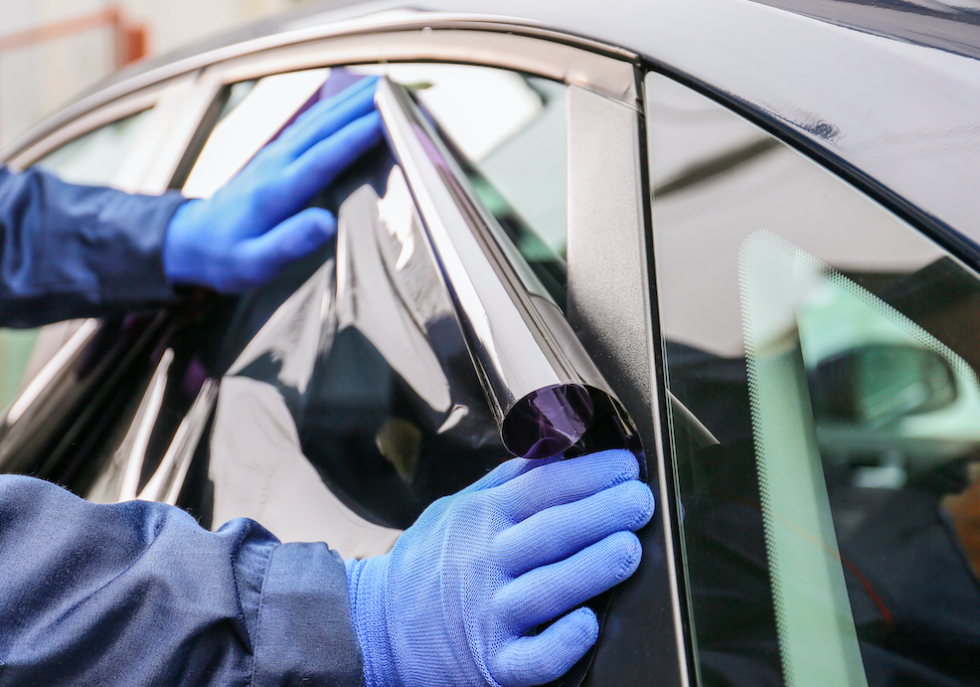
Automotive window tinting can make a vehicle look more refined, but appearance is only part of the reason Los Angeles drivers choose it.
The right film can reduce solar heat entering the cabin, block substantial UV radiation, reduce glare, add privacy, and help limit some of the solar exposure that contributes to deterioration of interior materials.
Window tint also comes with trade-offs.
Extremely dark film can reduce nighttime visibility. California has detailed rules governing automotive window material. Premium ceramic films cost more than basic dyed products, and poor-quality film or installation can create bubbling, peeling, discoloration, or optical problems.
Understanding both sides is the best way to decide whether automotive tint is right for your vehicle.
Luxury Glass Tinting provides professional automotive window tinting and mobile window tinting in Los Angeles with film and shade recommendations based on appearance, comfort, driving habits, and California requirements.
Quick Answer: Is Car Window Tinting Worth It?
For many drivers, yes.
Automotive window tint can be worthwhile if you value:
- Reduced solar heat
- UV protection
- Reduced daytime glare
- Additional privacy
- A customized appearance
- Protection for interior materials from some solar exposure
The disadvantages are primarily related to:
- Choosing tint that is too dark
- Legal restrictions
- Additional upfront cost
- Poor-quality film
- Improper installation
- More careful cleaning
- Replacement when old film eventually deteriorates
The key is choosing the right film and shade, not simply the darkest tint available.
Pros of Window Tinting
1. Window Tint Can Provide Strong UV Protection
UV protection is one of the strongest benefits of quality automotive window film.
The Skin Cancer Foundation’s July 2026 guidance explains that modern laminated windshields already block most UV radiation, but many side windows, rear windows, and sunroofs can allow more UVA exposure.
Appropriate automotive UV film can block approximately 99% of UV light. The Foundation also notes that darker tint is not inherently better for UV protection; clear UV-protective film can provide substantial protection as well.
This distinction matters.
You do not necessarily need extremely dark windows to gain meaningful UV protection.
2. Tint Can Help Protect Vehicle Interiors
UV exposure is not only a concern for occupants.
Vehicle interiors may include:
- Leather
- Vinyl
- Plastics
- Dashboards
- Upholstery
- Door trim
- Carpeting
- Decorative finishes
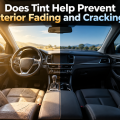
UV radiation, visible light, heat, and other environmental factors can contribute to fading, discoloration, drying, and deterioration.
Quality window film can reduce several contributors to that solar exposure.
However, tint should not be marketed as making interiors immune to fading or aging. It can help reduce exposure, not eliminate every cause of deterioration.
3. Window Tint Can Reduce Solar Heat
Anyone who has entered a vehicle after it has been parked in the Los Angeles sun understands how much heat enters through automotive glass.
Heat-rejecting window film can reduce the amount of solar energy entering the cabin.
The International Window Film Association identifies solar heat reduction as one of the major benefits of automotive film and recommends looking at overall solar performance when comparing products.
The result can be a more comfortable cabin during sunny conditions.
4. Ceramic Tint Can Reduce Heat Without Extremely Dark Glass
A common misconception is:
Darker tint = better heat rejection.
That is not necessarily true.
Premium ceramic and nano-ceramic films can reject substantial solar energy while still allowing relatively high levels of visible light through.
This means a lighter premium film can sometimes outperform a darker entry-level film for heat control.
When heat rejection matters, compare specifications such as:
- VLT
- TSER
- UV rejection
- Film construction
- Published infrared performance
rather than choosing according to darkness alone.
5. Tint Can Reduce Glare
Bright Southern California sunlight can create uncomfortable glare through side windows.
Window film reduces a portion of visible light entering the cabin, which can make sunny driving more comfortable.
IWFA identifies glare reduction as one of the major functional benefits of automotive window film.
However, glare control and nighttime visibility need to be balanced.
A film that feels comfortable during bright afternoon sunlight may feel unnecessarily dark on poorly lit roads at night.
6. Tint Can Increase Privacy
Tinted glass can make vehicle occupants and belongings less visible from outside.
This can create a more private cabin and help reduce casual visibility into the vehicle.
Privacy depends on several factors, including:
- VLT
- Exterior brightness
- Interior brightness
- Interior color
- Viewing angle
- Existing factory glass
- Film reflectivity
A darker rear window may provide considerably more privacy than a very light film.
However, privacy should not be confused with theft prevention.
7. Tint Can Make Belongings Less Obvious—But It Is Not an Anti-Theft System
A tinted vehicle interior may make items harder for someone outside to see casually.
That can be useful.
But window tint does not prevent someone from breaking vehicle glass.
Valuables should still be removed from sight, and tint should never be sold as a replacement for locks, alarms, secure parking, or other anti-theft precautions.
8. Automotive Tint Can Improve the Vehicle’s Appearance
A well-selected tint can significantly change how a vehicle looks.
The glass can appear:
- Cleaner
- More uniform
- More integrated with the roofline
- More private
- More premium
- More customized
The ideal shade depends on the car’s:
- Paint color
- Interior color
- Existing privacy glass
- Window shape
- Personal styling goals
A quality installation should complement the vehicle rather than look like a poorly added aftermarket modification.
9. Premium Tint Can Preserve Visibility While Improving Comfort
One of the biggest advantages of modern film technology is the ability to separate performance from darkness.
Drivers who do not want heavily tinted windows can choose lighter ceramic or virtually clear films that still provide meaningful UV and solar-control performance.
Luxury Glass Tinting’s current automotive service includes dyed, ceramic, nano-ceramic, and virtually clear LLumar options for different appearance and comfort priorities.
This makes modern tint much more flexible than simply choosing between “clear” and “dark.”
10. Mobile Window Tinting Can Be More Convenient
Mobile window tinting provides the same general film-selection decisions as an in-shop service, but the installer comes to a suitable location such as your home or workplace.
Luxury Glass Tinting’s current mobile service includes:
- Appointment and vehicle confirmation
- On-site setup
- Film and shade verification
- Professional installation
- Final inspection
- Curing and aftercare guidance
The company currently provides mobile appointments across most Los Angeles service areas.
For busy drivers, eliminating the trip to and from a tint shop can be a meaningful advantage.
Cons of Window Tinting
Window tinting has genuine disadvantages, but some commonly cited “cons” are really problems caused by choosing the wrong film or installer.
Here are the trade-offs that actually matter.
1. Very Dark Tint Can Reduce Nighttime Visibility
This is one of the most important disadvantages.
Tint reduces visible-light transmission.
That is useful for glare control and privacy during the day, but there is less available light at night.
Extremely dark tint can make it harder to see through side windows when:
- Driving on poorly lit roads
- Reversing
- Turning at intersections
- Entering parking garages
- Driving in rain
- Looking for pedestrians or cyclists
IWFA’s 2026 automotive guide directly links privacy and glare characteristics to visible-light transmission.
This is one reason the darkest film is not automatically the best choice.
2. California Has Strict Rules for Certain Vehicle Windows
California tint law is more complicated than simply selecting a legal percentage.
Under the current California Vehicle Code §26708, qualifying clear, colorless, transparent material applied to the front side windows must itself have at least 88% VLT, while the finished glass-and-film combination must meet the referenced federal 70% minimum light-transmission requirement.
The law also includes UV-related and certification conditions.
The current version became effective January 1, 2026.
Rear-side windows and rear glazing are treated differently.
You can read our complete Guide to Window Tinting Laws in California before selecting a film.
3. Noncompliant Tint Can Mean Removal and Additional Cost
Installing a film that does not comply with applicable California rules can create more expense later.
A driver may need to:
- Remove the film
- Replace it
- Obtain compliant material
- Address a citation
That means an inexpensive installation is not necessarily a bargain if the film has to be removed shortly afterward.
Choosing a professional familiar with current California requirements helps reduce this risk.
4. Premium Window Tint Costs More
Ceramic and nano-ceramic films generally cost more than entry-level dyed film.
The difference can be worthwhile when stronger solar control and premium performance are priorities.
But not every driver needs the most expensive film.
A quality dyed film may provide good value if your main objectives are:
- Appearance
- Privacy
- Glare control
- Budget
The premium price of ceramic makes the strongest case when solar heat performance matters to you.
5. Poor Installation Can Hurt the Vehicle’s Appearance
Tint should make a car look better.
A poor installation can have the opposite effect.
Possible installation problems include:
- Dust contamination
- Creases
- Misaligned edges
- Persistent air bubbles
- Peeling
- Uneven cuts
- Lifting edges
- Poor film shaping
These issues are particularly noticeable on high-end or luxury vehicles.
Professional workmanship matters as much as film quality.
6. Cheap Film Can Age Poorly
Not every film has the same durability.
Lower-quality or aged films may eventually develop:
- Bubbling
- Purple discoloration
- Peeling
- Delamination
- Haze
- Adhesive failure
Premium film is generally designed for better color stability and durability, but no film should be described as lasting forever.
Review the written manufacturer warranty for the exact product.
7. Old Tint Can Be Difficult to Remove
Removing failed window film can be tedious.
Old adhesive may remain on the glass, and brittle film can tear into small pieces.
The rear windshield deserves particular care because metal scraping tools can damage delicate defroster lines.
If tint has become severely bubbled, faded, purple, cracked, or distorted, professional removal may be safer before installing replacement film.
8. Tinted Windows Require Appropriate Cleaning
Modern tint is not particularly difficult to maintain, but it does need suitable cleaning methods.
After curing, use:
- Soft microfiber cloths
- Non-abrasive cleaners
- Gentle cleaning pressure
Avoid:
- Razor blades
- Abrasive scrub pads
- Harsh tools
- Products specifically prohibited by the film manufacturer
This is a minor inconvenience rather than a major drawback, but the film surface should be treated more carefully than bare glass.
9. Fresh Tint Needs Time to Cure
Professional tint installation does not become fully cured the instant the installer finishes.
Film is typically installed using a water-based slip solution.
Most moisture is removed during installation, but some may remain temporarily.
During curing, you may notice:
- Haze
- Moisture patterns
- Small water pockets
- Slight visual distortion
IWFA explains that residual installation moisture is normal while adhesion develops.
Curing time varies with film, temperature, humidity, sunlight, and storage conditions.
Follow the installer’s guidance before rolling windows down or cleaning the inside surface.
10. Extremely Dark Tint Can Change the Look More Than Expected
Tint appearance varies according to:
- Film shade
- Factory glass
- Interior color
- Exterior lighting
- Window angle
- Paint color
A shade viewed on another vehicle may look different on yours.
IWFA’s 2026 automotive guide specifically notes that vehicle glass, interior colors, reflectivity, viewing angle, weather, and time of day can affect the finished appearance.
Looking at film samples before installation can help avoid disappointment.
Does Window Tint Make Car Windows Stronger?
Standard automotive solar tint should not be marketed as making windows structurally stronger or shatterproof.
The original claim that metalized tint is best for “strengthening the windshield” is misleading.
Ordinary automotive film primarily addresses:
- Solar heat
- UV exposure
- Glare
- Privacy
- Appearance
Dedicated safety/security film is a different product category engineered specifically for glass-retention applications.
Standard ceramic, dyed, or metalized tint should not be treated as structural reinforcement.
Does Window Tint Hold Broken Glass Together?
Because automotive film is bonded to glass, some broken fragments may remain associated with the film after breakage.
However, ordinary tint should not be promoted as a guaranteed accident-safety or shatterproof system.
Its primary purpose is not crash protection.
Specialized safety films use different constructions and are tested for different purposes.
Does Window Tint Reduce Fuel Costs?
This is another benefit that should not be overstated.
Heat-rejecting film can reduce solar heat entering the cabin.
That may reduce demand on the air-conditioning system under certain conditions.
But vehicle fuel consumption depends on many factors, including:
- Vehicle design
- Traffic
- Driving style
- Temperature
- Speed
- HVAC settings
- Engine or drivetrain
- Tire condition
Window tint should therefore not be promoted as guaranteeing better gas mileage or lower fuel bills.
Its most defensible advantage is reduced solar heat gain and improved cabin comfort.
Does Window Tint Prevent Skin Cancer?
It is more accurate to say that appropriate UV-blocking film can reduce UV exposure through vehicle glass.
The Skin Cancer Foundation notes that UV exposure contributes to cumulative skin damage and skin cancer risk and says appropriate clear automotive film can block 99% of UV light.
Window film should still be considered one part of broader sun protection rather than described as guaranteeing prevention of any disease.
Window Tint and Eye Comfort
Bright sunlight and glare can contribute to visual discomfort while driving.
Reducing excessive visible light may make driving more comfortable.
However, claims that automotive tint directly prevents specific eye diseases such as cataracts or macular degeneration should be approached cautiously unless supported for the exact application.
The straightforward, supportable benefit is glare reduction and improved daytime visual comfort.
Privacy vs. Visibility: Finding the Right Balance
One of the hardest decisions is choosing how dark to go.
A darker film can provide:
- More privacy
- More dramatic styling
- Greater visible-light reduction
But it can also mean:
- Lower nighttime visibility
- A more noticeable aftermarket appearance
- Greater risk of running into legal limitations on regulated windows
A lighter ceramic film may provide a better balance for drivers primarily interested in heat and UV performance.
This is why film technology should be selected before focusing solely on tint percentage.
Dyed vs. Ceramic vs. Nano-Ceramic Tint
Dyed Tint
Best for drivers who prioritize:
- Lower cost
- Appearance
- Privacy
- Basic glare control
Ceramic Tint
Best for drivers who prioritize:
- Stronger solar performance
- UV protection
- Optical clarity
- Non-metallic construction
- Performance in lighter shades
Nano-Ceramic Tint
Best for drivers looking for:
- Premium heat control
- High-end solar performance
- Strong comfort improvements
- Premium film technology
Luxury Glass Tinting currently installs premium LLumar products across dyed, ceramic, nano-ceramic, and virtually clear categories.
In-Shop vs. Mobile Window Tinting
The film itself does not become better or worse simply because installation occurs at your location.
What matters is the quality of the installation environment and process.
In-Shop Tinting
A dedicated shop can provide:
- A controlled workspace
- Predictable lighting
- Weather protection
- Easy access to equipment
Mobile Tinting
Professional mobile tinting can provide:
- Home or workplace installation
- Less travel and waiting
- Film and shade consultation on-site
- A scheduled professional setup
- Final inspection and aftercare guidance
Luxury Glass Tinting currently asks mobile customers to provide a safe parking area with enough room to access both sides of the vehicle and confirms film and shade selection before installation begins.
Mobile service works best when the location provides suitable conditions for a clean installation.
When Window Tinting Makes the Most Sense
Window tinting is particularly attractive if you:
- Drive frequently in Southern California sunshine
- Park outdoors regularly
- Have a long commute
- Want additional UV protection
- Experience significant glare
- Want more privacy
- Own a vehicle with a large amount of glass
- Want a more finished exterior appearance
Premium ceramic tint becomes easier to justify if heat control is one of your highest priorities.
When You May Want to Skip or Limit Tint
Window tint may be less attractive if:
- You strongly prefer completely clear factory glass
- You have difficulty seeing at night and are considering very dark film
- Your budget does not justify premium film
- You do not want to maintain an aftermarket film surface
- The desired application would not comply with California law
In some cases, a lighter or virtually clear ceramic film can provide the solar or UV benefits you want without the disadvantages of dark glass.
Questions to Ask Before Tinting Your Car
Before choosing an installer, ask:
- What brand of film do you install?
- What exact product series am I getting?
- Is it dyed, ceramic, nano-ceramic, or another technology?
- What is the VLT?
- What is the TSER?
- What UV rejection does it provide?
- How is its infrared performance measured?
- What California requirements apply to these windows?
- What warranty is included?
- How will the shade look over my existing factory glass?
- How long should I keep the windows rolled up?
- What should I expect during curing?
- What cleaning products should I use?
These questions make it easier to compare actual performance rather than marketing labels.
Frequently Asked Questions
What are the main benefits of car window tinting?
The main benefits include solar heat reduction, UV protection, glare control, additional privacy, interior protection, and improved appearance.
What is the biggest disadvantage of window tint?
For drivers choosing very dark film, reduced nighttime visibility can be one of the most significant disadvantages. Legal restrictions and installation cost are other considerations.
Does window tint block UV rays?
Quality automotive films can block approximately 99% of UV radiation, depending on the product.
Does tint need to be dark to block UV?
No. Clear and light UV-protective films can provide substantial protection.
Does window tint really reduce heat?
Yes, heat-rejecting films can reduce solar energy entering the cabin. The amount varies significantly between film technologies and shades.
Is ceramic tint better than dyed tint?
Ceramic tint generally provides stronger solar performance and can achieve good heat rejection at lighter VLT levels. Dyed tint remains a good lower-cost option for appearance and privacy.
Is darker tint always cooler?
No. Film technology and total solar performance matter more than darkness alone.
Does tint make windows shatterproof?
No. Ordinary automotive solar film should not be described as shatterproof or as dedicated safety glazing.
Does window tint prevent theft?
No. It may make the vehicle interior less visible, but it cannot prevent someone from breaking the glass.
Does window tint improve fuel economy?
It may reduce A/C demand by reducing solar heat under some conditions, but it should not be marketed as guaranteeing better fuel economy.
Is it difficult to clean tinted windows?
Not particularly. Once cured, tint can be cleaned with soft microfiber cloths and suitable non-abrasive cleaners. Avoid sharp or abrasive tools.
Can dark tint make driving at night difficult?
Yes. Lower VLT means less visible light passes through, which can reduce visibility in dark conditions.
Is mobile window tinting as good as shop tinting?
It can be when an experienced installer has a clean, suitable location and follows a professional preparation, installation, inspection, and curing process.
Is automotive window tint legal in California?
Certain applications are allowed, but different windows are governed differently. Current qualifying front-side-window material has specific VLT, UV, transparency, and certification requirements.
Final Thoughts: Weighing the Pros and Cons of Window Tinting
Automotive window tinting offers real advantages, but it works best when expectations are realistic.
The strongest benefits are heat control, UV protection, reduced glare, privacy, interior protection, and appearance.
The main disadvantages involve nighttime visibility with excessively dark films, legal restrictions, upfront cost, curing, maintenance, and the consequences of choosing poor-quality film or installation.
Standard tint should not be sold as shatterproof, theft-proof, or guaranteed to improve fuel economy.
And darker film is not automatically better.
For many Los Angeles drivers, the best solution is a professionally installed film that provides strong solar and UV performance while maintaining comfortable visibility and complying with the applicable California requirements.
Luxury Glass Tinting provides professional automotive window tinting and mobile window tinting in Los Angeles with premium LLumar dyed, ceramic, nano-ceramic, and virtually clear options.
The right choice comes down to finding the balance that fits your driving habits, comfort expectations, privacy needs, budget, appearance preferences, and legal requirements.