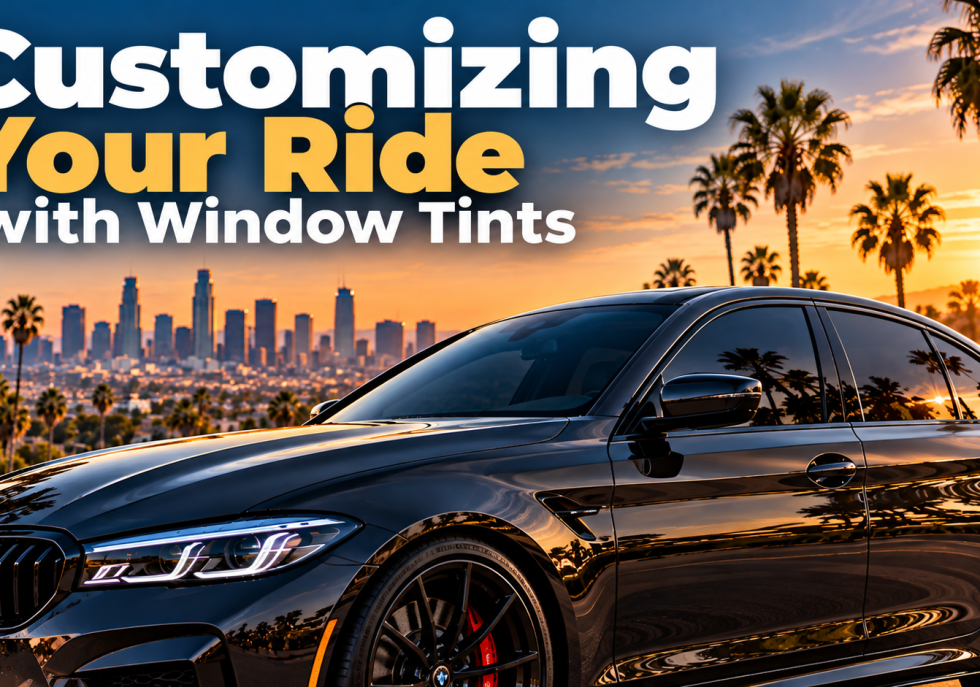
Customizing a vehicle is one of the most enjoyable parts of car ownership. Wheels, paint, wraps, interior upgrades, and other modifications can change the personality of a car, but few upgrades combine appearance and everyday functionality as effectively as automotive window tint.
Professional car window tinting can give a vehicle a cleaner, more unified appearance while also helping reduce solar heat, block harmful UV radiation, control glare, and improve privacy.
For drivers in Los Angeles and other sunny areas, those practical benefits can be just as important as the visual transformation.
The key is choosing the right film, shade, and installer rather than simply making every window as dark as possible.
Why Customize Your Car With Window Tint?
Window tint changes the character of a vehicle almost immediately.
A carefully selected shade can complement the paint, wheels, trim, and body lines while making the glass appear more consistent from front to back. On many modern sedans, SUVs, sports cars, EVs, and luxury vehicles, tint can create a more refined factory-inspired finish.
Unlike purely cosmetic modifications, however, automotive film can also improve how the vehicle feels to drive.
Depending on the film you choose, window tint can provide a combination of heat rejection, UV protection, glare reduction, privacy, and interior protection.
That combination makes automotive window tint one of the more practical ways to personalize a vehicle.
Window Tint Can Completely Change Your Car’s Appearance
Tint shade has a significant influence on the finished look of a vehicle.
A relatively light film can create a subtle, factory-style appearance, while darker shades produce a more dramatic effect where legally permitted.
The ideal shade can also depend on the vehicle itself.
Black, white, silver, gray, and brightly colored vehicles can all look different with the same film. Interior color, factory privacy glass, reflectivity, glass angle, and surrounding light also influence how dark a tint appears from outside.
That means it is better to evaluate actual samples than choose a film solely from a percentage printed on a chart.
Professional installers can help you compare shades in realistic lighting before installation.
Window Tint Can Reduce Solar Heat
Los Angeles sunshine can make a vehicle’s cabin uncomfortable quickly, particularly when it is parked outdoors.
Automotive window film can help manage solar energy entering through the glass.
However, darker tint does not automatically mean greater heat rejection.
Modern high-performance films can reject significant solar energy while remaining comparatively light.
When heat control is one of your main priorities, compare measurable specifications such as Total Solar Energy Rejected (TSER) rather than judging performance only by appearance.
Ceramic and nano-ceramic films are particularly popular among drivers who want strong solar performance without relying on extremely dark glass.
Luxury Glass Tinting currently offers ceramic and nano-ceramic automotive tint for Los Angeles drivers who prioritize cabin comfort as well as appearance.
Quality Window Tint Can Block Harmful UV Radiation
UV protection is another practical reason to customize your vehicle with window film.
Vehicle windshields generally provide strong UV protection because of their laminated construction, while side, rear, and sunroof glass can allow more UVA radiation through.
The Skin Cancer Foundation states that suitable automotive UV film can block 99% or more of UVA and UVB radiation.
This can provide additional protection for drivers and passengers who spend significant amounts of time on the road.
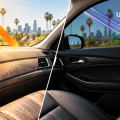
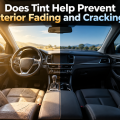
UV-blocking film can also help reduce ultraviolet exposure to dashboards, leather, upholstery, door panels, and other interior materials.
Importantly, tint does not have to look extremely dark to provide substantial UV protection. Some clear or virtually clear automotive films are specifically designed to provide UV and solar-control benefits while preserving the vehicle’s original appearance.
Reduce Glare for More Comfortable Driving
Customization should not make a vehicle more difficult to drive.
One practical advantage of automotive tint is its ability to reduce uncomfortable visible-light glare.
This can be valuable during bright Los Angeles afternoons, low-angle sunrise or sunset conditions, and long highway drives.
The correct balance matters, however.
A shade that feels comfortable in bright daytime conditions can become too dark for some drivers at night.
For that reason, your tint selection should consider both daytime glare control and nighttime visibility.
Add Privacy Without Going Too Dark
Privacy is one of the most recognizable reasons people customize their vehicles with tint.
A darker window can make it more difficult for people outside the vehicle to immediately see occupants or belongings inside.
However, tint should not be treated as an anti-theft system, and the darkest available shade is not necessarily the best choice.
Privacy depends on visible light transmission, reflectivity, interior brightness, exterior lighting, and viewing conditions.
The goal should be enough privacy for your preferences without unnecessarily compromising outward visibility or violating applicable California requirements.
Understand VLT Before Choosing a Shade
One of the most important terms to understand when customizing your vehicle is Visible Light Transmission, or VLT.
VLT represents the percentage of visible light that passes through the glazing system.
A higher VLT generally produces a lighter appearance because more visible light passes through. A lower VLT generally creates a darker appearance.
For example, a low-VLT film will normally look considerably darker than a high-VLT film.
But VLT does not directly tell you how much solar heat or UV radiation a film rejects.
This is why two films with similar darkness can provide very different performance.
You can learn more about window tint and Visible Light Transmission before selecting your shade.
Which Type of Window Tint Is Best for Customizing a Car?
Film technology affects appearance, performance, durability, and price.
Dyed window tint is generally a cost-conscious option for drivers primarily interested in a darker appearance, privacy, and basic glare control.
Carbon window tint provides a non-metallic option with a typically non-reflective appearance and can offer a useful balance between solar performance and price.
Metalized window tint uses metallic components to manage solar energy. Depending on the product and vehicle, some metal-containing films may affect certain radio-frequency or electronic signals.
Ceramic window tint is a premium non-metallic option commonly chosen for stronger solar heat rejection, UV protection, optical clarity, and long-term performance.
Nano-ceramic window tint uses extremely small ceramic particles engineered to manage solar energy while maintaining visibility and electronic signal compatibility.
The best option depends on whether your main priority is appearance, heat control, privacy, budget, or a combination of those factors.
Ceramic Tint Lets You Customize Without Going Extremely Dark
Ceramic film has changed the way drivers approach automotive tint.
Traditionally, drivers often associated better heat control with darker glass. Modern ceramic technology allows high-performance films to manage substantial solar energy without requiring extremely low VLT.
This gives drivers more flexibility.
You can choose a shade based on the appearance and privacy you actually want instead of making the windows excessively dark simply to improve cabin comfort.
For drivers who want a subtle appearance, virtually clear solar-control films are also available.
Match Your Tint With Existing Factory Glass
Many SUVs, crossovers, trucks, and other vehicles already have darker rear glass from the factory.
This is commonly called factory privacy glass.
Factory privacy glass and aftermarket solar-control film are not necessarily equivalent.
Dark factory glass may provide privacy and reduce visible light, but its appearance alone does not reveal its level of solar heat or UV protection.
When customizing a vehicle that already has privacy glass, a professional installer can help select film for the remaining windows and, where appropriate, additional film for rear glass so the finished appearance is more consistent.
Trying to match shades purely by VLT numbers can produce unexpected results because existing glass already has its own light-transmission characteristics.
Check California Tint Laws Before Customizing Your Car
Customization still needs to comply with California law.
California Vehicle Code Section 26708 regulates materials installed on vehicle windows and treats different window positions differently.
Current law contains specific requirements for certain clear, colorless, transparent material installed on front side windows. Among other requirements, the material itself must have at least 88% visible light transmittance, while the glass-and-material combination must meet the applicable 70% federal glazing requirement. Certification requirements also apply.
Rear side windows and rear glass can be subject to different provisions, and windshield applications have their own restrictions.
Because legality depends on the window position, glazing, film, and specific application, avoid relying on a generic online chart or copying another vehicle’s tint setup.
Your installer can explain suitable options, but vehicle owners should also verify current California requirements before installation.
Professional Installation Makes a Difference
Great-looking tint requires more than high-quality film.
The glass needs to be thoroughly prepared, and the film must be accurately cut, positioned, shaped, applied, and finished.
Poor installation can result in contamination beneath the film, creases, lifting edges, inconsistent cuts, bubbles, or premature failure.
Professional installation becomes even more important when you are investing in premium ceramic or nano-ceramic film.
A clean installation should complement the vehicle rather than draw attention to the edges of the film.
Do Not Roll Down Newly Tinted Windows Too Soon
After installation, window film needs time to cure.
During this period, a small amount of installation moisture may remain between the film and glass. Temporary haziness or moisture patterns can sometimes be visible while the film dries.
Do not roll the windows down until your installer says it is safe.
Rolling down a treated window too soon can potentially disturb the film or its edges.
The appropriate waiting period varies according to the film and environmental conditions, so follow the aftercare instructions given at the time of installation rather than relying on a universal number of hours.
Should All Your Car Windows Have the Same Tint?
Not necessarily.
A consistent appearance does not always require exactly the same film or VLT on every window.
Existing factory glass, California regulations, windshield restrictions, privacy preferences, and visibility requirements can all affect the appropriate setup.
An experienced installer can create a visually balanced result while selecting appropriate products for different areas of the vehicle.
This is particularly useful for SUVs and crossovers that already have darker factory rear glass.
Avoid Customization Regret
Window tint should look good not only on installation day but also during everyday driving.
Before making a decision, consider how the film will look in sunlight and shade, whether you are comfortable with nighttime visibility, how much privacy you actually want, whether heat rejection matters more than darkness, what warranty accompanies the product, and whether your chosen setup complies with California requirements.
Taking a little more time before installation can prevent you from paying to remove and replace a shade you later decide is too dark, too reflective, or inconsistent with the rest of your vehicle.
Frequently Asked Questions About Customizing a Car With Window Tint
Does darker window tint reject more heat?
Not necessarily. Darkness relates primarily to visible light transmission, while heat rejection depends on film technology and solar performance. A relatively light premium ceramic film can potentially provide stronger heat control than a darker basic film.
Can car window tint block 99% of UV rays?
Certain quality automotive films are designed to block 99% or more of harmful UVA and UVB radiation. Check the specifications of the exact film being installed.
What VLT looks best on a car?
There is no universal best VLT for appearance. Vehicle color, interior color, factory glass, privacy preference, nighttime visibility, and local laws all influence which shade will look and perform best.
Is ceramic tint better for customization?
Ceramic tint is particularly useful when you want both appearance and premium solar performance. It can provide strong heat and UV protection without requiring extremely dark or metallic-looking windows.
Can window tint match factory privacy glass?
A professional installer can often create a more consistent appearance between aftermarket-tinted windows and factory privacy glass. The exact film may need to be selected based on the existing glass rather than simply matching a VLT number.
Can I roll down my windows immediately after tinting?
No. Freshly installed film requires a curing period. Follow your installer’s instructions before lowering treated windows.
Does window tint protect valuables from theft?
Tint can make the contents of a vehicle less immediately visible, but it does not prevent theft or make the vehicle secure. Avoid leaving valuable items visible inside your car.
Give Your Vehicle a New Personality With Window Tint
Window tint can dramatically change a vehicle’s appearance without requiring a major exterior modification.
More importantly, today’s automotive films allow drivers to combine customization with practical benefits such as solar heat control, UV protection, glare reduction, privacy, and interior protection.
The best result comes from choosing a film and shade that complement the vehicle while still providing appropriate visibility, legal compliance, and measurable performance.
Luxury Glass Tinting offers professional automotive window tinting in Los Angeles with dyed, ceramic, nano-ceramic, and virtually clear film options for different style and performance goals.
Whether you want a subtle factory-inspired finish or a noticeably customized appearance, selecting the right film and having it professionally installed can give your vehicle a cleaner look and practical benefits every time you drive.