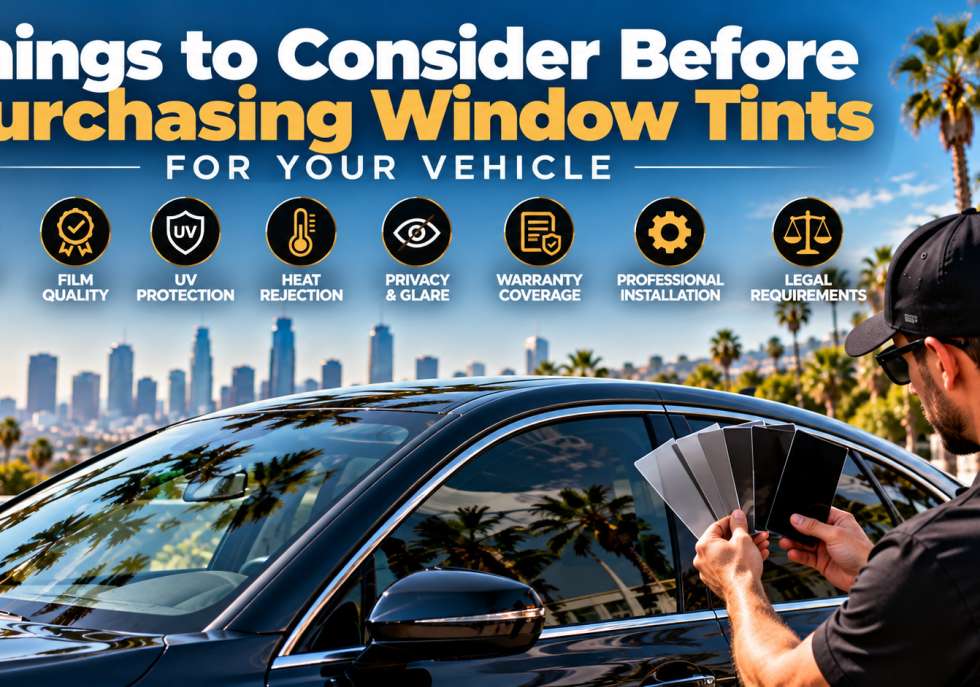
Choosing window tint for your vehicle involves more than picking a shade that looks good. The film you select can affect cabin comfort, privacy, visibility, UV protection, glare, appearance, and how satisfied you are with the installation years later.
With so many dyed, ceramic, nano-ceramic, carbon, metalized, and virtually clear films available, it is easy to compare products based only on price or darkness. That approach can lead to disappointing results.
Before purchasing car window tint, consider how the film performs, how you use your vehicle, applicable California tint laws, warranty coverage, and the quality of the installation.
Start With What You Want Window Tint to Do
Before comparing brands or prices, identify your primary reason for tinting the vehicle.
Some drivers want better privacy. Others want to reduce the amount of solar heat entering the cabin, protect themselves from UV exposure, reduce glare, preserve the interior, or simply improve the vehicle’s appearance.
Your priorities should influence the film you purchase.
For example, a driver focused mainly on styling may be satisfied with a quality dyed film, while someone who regularly parks outdoors in Los Angeles may place greater value on the heat-rejection performance of premium ceramic or nano-ceramic film.
There is no single best tint for every driver. The best choice is the film that matches your actual needs.
Set a Budget Based on Value, Not Just Price
Budget is important, but the cheapest quote is not always the least expensive option over time.
Automotive tint pricing varies according to the vehicle, number of windows, film technology, existing tint removal, installation complexity, and warranty.
Instead of asking only, “How much does window tint cost?” ask what is included in the price.
A higher-priced quote may include a premium film with stronger solar performance, better optical clarity, greater color stability, professional installation, and manufacturer-backed warranty coverage.
A lower-cost installation may still be appropriate when your main goal is appearance and privacy, but you should understand what you are purchasing before making the comparison.
Both film quality and installation quality should be included in your budget.
Compare the Different Types of Car Window Tint
Film construction can have a major influence on performance and price.
| Film Type | Common Strength | Main Consideration |
|---|---|---|
| Dyed tint | Affordable styling, privacy and glare reduction | Usually offers less solar performance than premium films |
| Metalized tint | Heat control and durability | Some products may affect certain electronic or radio-frequency signals |
| Carbon tint | Non-metallic appearance with balanced performance | Performance varies significantly between brands |
| Ceramic tint | Heat rejection, UV protection, clarity and non-metallic construction | Generally more expensive |
| Nano-ceramic tint | Premium solar performance and optical clarity | Higher initial cost |
| Virtually clear film | UV and solar protection with minimal appearance change | Provides less privacy than darker films |
Understanding these differences makes it easier to select a film based on performance rather than marketing terminology.
Luxury Glass Tinting currently offers dyed, ceramic, nano-ceramic, and virtually clear automotive window film options for different comfort, privacy, and appearance goals.
Understand VLT Before Choosing a Shade
One of the most important specifications when purchasing tint is Visible Light Transmission, usually abbreviated as VLT.
VLT describes the percentage of visible light that passes through the glazing system.
A higher VLT generally creates a lighter appearance because more visible light passes through. A lower VLT generally produces darker-looking glass.
However, VLT primarily describes visible light—not overall heat rejection.
A dark entry-level film can allow more solar energy into the vehicle than a lighter premium ceramic film.
That is why choosing tint based solely on darkness is one of the most common mistakes buyers make.
Learn more about Visible Light Transmission and automotive tint before deciding which shade is suitable for your vehicle.
Compare TSER When Heat Reduction Matters
If your main goal is keeping the cabin more comfortable, look beyond large infrared-rejection numbers.
One of the most useful measurements is Total Solar Energy Rejected, or TSER.
TSER represents the percentage of total solar energy rejected by the glass-and-film system.
The International Window Film Association recommends looking at TSER when evaluating overall heat-rejection performance because infrared measurements can be presented differently by different manufacturers.
This matters because an impressive “IR rejection” percentage may represent only a selected range of infrared wavelengths rather than total solar heat performance.
When comparing two films for Los Angeles driving conditions, ask to see their complete performance specifications rather than comparing one headline percentage.
Look for Verified UV Protection
UV protection is another important factor when choosing automotive film.
According to the Skin Cancer Foundation, qualifying UV window film can block 99% or more of UVA and UVB radiation.
This is especially relevant because vehicle windows do not all provide identical UV protection. Laminated windshields generally provide substantial protection, while certain side, rear, and sunroof windows can allow more UVA exposure.
Quality UV-blocking film can provide an additional layer of protection for drivers and passengers.
It can also help reduce UV exposure to leather, dashboards, upholstery, steering wheels, and other interior materials.
Do not assume darker film automatically provides better UV protection. Virtually clear films can also offer substantial UV blocking when designed for that purpose.
Consider Privacy and Nighttime Visibility Together
Many drivers purchase tint because they want more privacy.
A darker film can make occupants and belongings less visible from outside, but extremely dark windows may also reduce the driver’s outward visibility in low-light conditions.
A shade that looks excellent at noon may feel significantly darker at night.
Interior color, exterior lighting, factory privacy glass, and the angle of the windows can also affect how a tint appears.
For that reason, privacy should be balanced with nighttime driving comfort and legal requirements rather than treating the lowest possible VLT as automatically better.
Check California Tint Laws Before Purchasing Film
Window tint laws vary by state, and California treats different vehicle windows differently.
California Vehicle Code Section 26708 places restrictions on materials applied to vehicle glass and includes separate provisions for windshield, front side, rear-side, and rear-window applications.
For qualifying clear, colorless material on the front side windows, the current statute includes specific requirements involving visible light transmission, federal glazing standards, UV performance, and installer or manufacturer certification.
Rear windows and windows behind the driver are treated differently under specified conditions.
Because compliance depends on the window position, existing glazing, film, and application, do not select a shade based only on a generic “legal tint percentage” chart.
A professional installer should explain suitable options, but vehicle owners should also verify current California requirements before purchasing tint.
Do Not Confuse Factory Privacy Glass With Performance Film
Many SUVs, crossovers, vans, and trucks already have dark rear glass.
This is often called factory privacy glass.
Its dark appearance does not necessarily mean it provides the same heat-rejection characteristics as premium aftermarket automotive film.
If your vehicle already has factory privacy glass, an installer can measure or account for the existing glass when selecting additional film.
This is particularly important when you want the front and rear windows to appear visually consistent.
The same film applied to two different pieces of factory glass can produce different final VLT readings and appearances.
Review the Window Tint Warranty Carefully
Warranty coverage should be considered before purchasing film, particularly when choosing a premium product.
A legitimate warranty may cover specific manufacturing or installation-related problems depending on its terms.
Ask exactly what is covered rather than accepting the phrase “lifetime warranty” without reading the details.
Useful questions include:
Does the warranty cover bubbling, peeling, cracking, delamination, adhesive failure, or discoloration?
Is coverage provided by the film manufacturer, installer, or both?
Is the warranty transferable if the vehicle is sold?
What documentation must you keep?
Are there exclusions for improper cleaning or physical damage?
What happens if you move to another city?
A window-film warranty generally does not mean you can change to another tint color or shade for free simply because your preferences change.
That would normally be a new installation rather than a warranty claim.
Installation Quality Matters as Much as Film Quality
Even excellent window film can look poor when installed incorrectly.
Automotive glass requires careful preparation before film is applied. Dust, hair, fibers, or other contaminants trapped beneath the film can affect the finished appearance.
Curved rear windows may also require the film to be shaped correctly before installation.
Poor workmanship can result in creases, contamination, lifting edges, inconsistent cuts, or premature film failure.
The International Window Film Association notes that professionally installed film may initially contain some residual moisture from the installation process, so newly installed film should be given the appropriate curing period before its final appearance is judged.
When purchasing tint, evaluate the installer as carefully as the product.
Ask What Brand and Film Line You Are Actually Buying
“Ceramic tint” is a technology category, not a guarantee of performance.
Two products marketed as ceramic may have significantly different solar performance, clarity, construction, warranty terms, and prices.
Ask for the manufacturer and exact product line.
You should be able to review published specifications rather than relying on vague descriptions such as “premium ceramic,” “super heat rejection,” or “best tint.”
Luxury Glass Tinting currently installs LLumar automotive films and lists several different film technologies for Los Angeles drivers, making it possible to compare the product based on your priorities rather than choosing a generic tint category.
Consider How the Tint Will Look on Your Specific Vehicle
Tint appearance is influenced by more than film shade.
Vehicle paint color, interior upholstery, factory glass, window angle, exterior lighting, and reflectivity can all affect the finished look.
For example, the same VLT can look noticeably darker on a vehicle with a black interior than on one with a light interior.
If appearance matters, compare film samples and examples on vehicles similar to yours whenever possible.
This is particularly useful when you are trying to achieve a consistent factory-style finish rather than simply making the windows darker.
Understand the Curing and Aftercare Requirements
Window tint does not reach its final appearance immediately after installation.
The installer uses a liquid solution during application, and some residual moisture can remain temporarily between the glass and film.
This may cause temporary haziness or moisture patterns during curing.
Do not roll treated windows down until the installer says it is safe, because doing so too soon can disturb the film or edges.
You should also follow the recommended cleaning instructions and avoid products or tools that could damage the film.
Curing time varies according to film type and environmental conditions, so follow the instructions provided for your specific installation.
Questions to Ask Before Purchasing Car Window Tint
Before booking an installation, make sure you know what you are paying for. Ask about the exact film brand and product line, whether it is dyed, carbon, metalized, ceramic, nano-ceramic or virtually clear, its VLT and TSER, verified UV performance, California suitability, manufacturer and installer warranty, expected installation time, curing requirements, and aftercare.
If the installer cannot clearly explain these points, consider comparing another provider.
Frequently Asked Questions
What is the best type of window tint for a car?
There is no single best film for every vehicle. Ceramic and nano-ceramic films are often preferred when heat rejection, UV protection, clarity, and non-metallic construction are priorities. Dyed or carbon films may make more sense when budget, privacy, and appearance are the main concerns.
Is expensive window tint always better?
Not automatically. Higher-quality films often provide stronger performance and warranty coverage, but price alone does not prove quality. Compare the actual film specifications, manufacturer, warranty, and installation workmanship.
Does darker tint reject more heat?
Not necessarily. Darkness primarily relates to visible light transmission. Heat rejection depends on the film’s construction and overall solar performance. Compare TSER rather than judging heat rejection only by shade.
Can window tint block 99% of UV rays?
Certain high-quality automotive films can block 99% or more of UVA and UVB radiation. Verify the published specifications of the exact product being installed.
What is the difference between VLT and TSER?
VLT measures the amount of visible light passing through the glazing system. TSER measures the percentage of total solar energy rejected. A film can have relatively high VLT while still providing strong solar heat rejection.
Is ceramic window tint worth the additional cost?
Ceramic tint can be worth the additional investment when cabin heat reduction, UV protection, optical clarity, electronic signal compatibility, and premium performance are important. Drivers primarily interested in appearance or privacy may not need the highest-performance film.
Does window tint come with a lifetime warranty?
Some premium films and installers provide long-term or lifetime warranties, but terms vary. Review exactly what problems are covered and whether any conditions or exclusions apply.
Can I change my tint shade under warranty?
Usually not simply because you want a different appearance. Warranty coverage is generally intended for specified defects or failures. Changing shade or film type by choice would normally require a new installation.
Make the Right Window Tint Purchase the First Time
Buying window tint should not be reduced to choosing a darkness percentage and finding the lowest price.
The most important considerations are your goals, budget, film technology, VLT, TSER, UV protection, privacy, visibility, California compliance, warranty coverage, installer quality, and aftercare requirements.
For drivers in Los Angeles, solar performance deserves particular attention because vehicles regularly experience strong sunlight and outdoor parking.
Luxury Glass Tinting provides professional automotive window tinting with dyed, ceramic, nano-ceramic, and virtually clear film options. Comparing those options based on your vehicle and driving habits can help you select a film you are satisfied with long after installation day.