
Upgrading your vehicle does not always require expensive modifications. Professional window tinting is a practical enhancement that can improve your car’s appearance while providing benefits such as heat reduction, UV protection, glare control, privacy, and added protection for interior surfaces.
For drivers in Los Angeles and throughout Southern California, these benefits can be especially useful because vehicles are regularly exposed to strong sunlight and warm temperatures.
Having window tint installed by experienced professionals can give your vehicle a clean, refined appearance while making the cabin more comfortable. The key is choosing the right window film for your vehicle, budget, driving habits, and local requirements.
Why Is Car Window Tinting an Affordable Vehicle Upgrade?
Compared with many cosmetic and comfort-related vehicle modifications, window tinting can provide several benefits from a single upgrade.
Instead of changing only how your vehicle looks, quality automotive film can help address multiple concerns at the same time, including:
- Solar heat entering the cabin
- Harmful ultraviolet radiation
- Glare from bright sunlight
- Privacy inside the vehicle
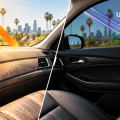
- Sun exposure to upholstery and interior trim
- Overall exterior appearance
The cost of professional window tinting varies according to the vehicle, number and size of windows, film technology, installation complexity, and the product selected.
Rather than choosing the lowest-priced option, compare what you are receiving for the price. A higher-quality film may provide better heat rejection, optical clarity, UV protection, durability, and warranty coverage.
If you are comparing options, these tips for choosing car window tint can help you understand what to consider before installation.
Window Tint Can Help Protect Your Vehicle’s Interior
Constant sunlight can take a toll on a vehicle’s interior.
Over time, solar exposure and UV radiation can contribute to fading, discoloration, and deterioration of materials such as:
- Leather seats
- Fabric upholstery
- Dashboards
- Door panels
- Plastic trim
- Interior finishes
Leather and other materials can become dry or brittle after prolonged exposure to heat and sunlight.
Automotive window film provides an additional barrier between the sun and your vehicle’s interior. While no film can prevent every form of wear, reducing UV and solar exposure may help preserve interior materials for longer.
This makes interior protection an important factor when selecting window tint for your vehicle.
Maintaining a cleaner, better-preserved interior may also help your vehicle remain more attractive when the time comes to sell or trade it.
Window Tint Provides Valuable UV Protection
One of the most useful benefits of high-quality automotive window film is UV protection.
Vehicle windshields generally provide substantial UV protection because of their laminated construction, but side, rear, and sunroof glass may still allow UVA radiation to reach occupants.
Quality UV-blocking window films can block more than 99% of UVA and UVB radiation, depending on the product.
That does not mean every dark tint provides the same UV protection. Film darkness and UV rejection are different characteristics.
When comparing films, look for verified UV-blocking specifications rather than assuming that the darkest option provides the greatest protection.
For drivers who spend significant amounts of time on the road, UV protection can be an important reason to consider professional automotive window tinting.
Window Tint Can Help Keep Your Vehicle Cooler
A car parked in direct Southern California sunlight can become uncomfortable quickly.
Automotive window films designed for solar control can reduce the amount of solar energy entering through the glass, helping the cabin remain more comfortable.
This is where the quality and technology of the film matter.
A common misconception is that the darkest tint automatically provides the best heat rejection. That is not necessarily true.
Modern ceramic and nano-ceramic films can provide strong solar and infrared heat rejection without requiring extremely dark windows.
When heat reduction is your priority, compare actual film-performance specifications instead of choosing a product based solely on appearance.
Important specifications can include:
- Total Solar Energy Rejected (TSER)
- Infrared rejection
- UV rejection
- Visible Light Transmission (VLT)
- Glare reduction
Understanding these numbers gives you a more accurate picture of how a film will perform.
Understand VLT Before Choosing a Tint Shade
Automotive window tint comes in multiple shades, ranging from nearly transparent films to much darker options.
One of the most important terms to understand is Visible Light Transmission, commonly called VLT.
VLT describes the percentage of visible light that passes through the window and film.
A higher VLT percentage generally means a lighter appearance because more visible light passes through. A lower VLT percentage means less visible light passes through, creating a darker appearance.
For example, a darker-looking film typically has a lower VLT than a light or nearly transparent film.
However, VLT should not be confused with heat or UV protection. Advanced films can provide significant solar performance while allowing relatively high levels of visible light through the glass.
Learn more about Visible Light Transmission and window tint before selecting a shade based only on appearance.
Check California Window Tint Laws Before Installation
Before deciding how dark you want your windows, consider the legal requirements that apply to your vehicle.
California regulates materials applied to vehicle windows, and the rules vary according to the position of the glass.
Requirements for front side windows and the windshield are particularly important because those areas directly affect driver visibility.
California Vehicle Code Section 26708 contains specific requirements and exceptions for certain window materials, including requirements relating to light transmission and certification.
Because the legal requirements can depend on the glass, film, vehicle, window position, and type of installation, avoid relying solely on a generic tint-percentage chart.
Professional installers can help explain available options, but vehicle owners should also verify current California requirements before choosing a film.
This is especially important if you are considering darker shades or windshield applications.
What Types of Car Window Tint Are Available?
Price differences between window tint installations often come down to the technology used in the film.
Understanding the basic options makes it easier to decide where your money is going.
Dyed Window Tint
Dyed window film is generally an entry-level option.
It can provide privacy, reduce visible light, and give the vehicle a darker appearance. However, performance and long-term color stability can vary significantly depending on the quality of the product.
Metalized Window Tint
Metalized films contain metallic components designed to improve durability and solar performance.
Although they can perform well, certain metallic films may interfere with some electronic or radio-frequency signals. Vehicle compatibility should therefore be considered before installation.
Carbon Window Tint
Carbon film provides a non-metallic option and can deliver a balance of appearance, heat control, durability, and price.
It can be a useful step up from basic dyed film for drivers who want additional performance without necessarily choosing the most premium option.
Ceramic Window Tint
Ceramic window tint is a premium option for drivers who prioritize heat rejection, UV protection, optical clarity, and long-term performance.
High-quality ceramic films use non-metallic technology to manage solar energy without depending solely on very dark shades.
For drivers in sunny areas such as Los Angeles, ceramic tint is worth comparing with conventional films when cabin comfort is a major concern.
Review these additional tips for selecting the ideal window tint for your car before deciding which film technology is best for you.
Window Tint Can Improve Privacy
Privacy is another reason many drivers choose tinted windows.
A properly selected tint can make it more difficult for people outside the vehicle to see clearly into the cabin.
This can help provide greater privacy for occupants and make belongings inside the vehicle less immediately visible.
However, window tint should not be treated as an anti-theft system. It does not prevent someone from breaking into a vehicle.
The safest approach is still to avoid leaving valuables visible inside your car, even when the windows are tinted.
Window Tint Can Reduce Glare
Strong sunlight can create uncomfortable glare, particularly during morning and late-afternoon driving.
Window tint reduces the amount of visible light entering through treated glass and can therefore help reduce glare.
This may improve visual comfort while driving, but tint should never be so dark that it compromises safe visibility at night or during poor weather.
The goal is to find an appropriate balance between glare control, appearance, visibility, and legal requirements.
Can Window Tint Reduce Air-Conditioning Use?
Window tint can help reduce solar heat entering your vehicle, which may make the cabin more comfortable and reduce the amount of work required from the air-conditioning system under some conditions.
However, it is misleading to promise that installing window tint will automatically produce a specific improvement in fuel economy.
Fuel consumption depends on many factors, including:
- Vehicle type
- Engine or drivetrain
- Driving conditions
- Climate
- Air-conditioning use
- Driving speed
- Vehicle load
For that reason, the stronger and more accurate benefit to focus on is cabin comfort and reduced solar heat gain, rather than guaranteed fuel savings.
Professional Installation Matters
Window tint film is only as good as the installation.
Automotive glass can involve curved surfaces, tight edges, defroster lines, sensors, and other features that require careful handling.
Professional installation reduces the likelihood of problems such as:
- Bubbles
- Creases
- Contamination under the film
- Uneven cuts
- Lifting edges
- Peeling
- Poor alignment
The amount of time required for installation depends on the vehicle, number of windows, existing film removal, and complexity of the glass.
After installation, the film also needs time to cure properly. Your installer should explain how long to wait before lowering the windows and provide any necessary aftercare instructions.
Cheap Window Tint vs. Premium Window Tint
If affordability is important, it can be tempting to choose the cheapest film available.
However, the initial price should not be your only consideration.
Lower-cost and premium window films can differ in areas such as:
- Heat rejection
- UV protection
- Optical clarity
- Film construction
- Color stability
- Durability
- Warranty coverage
- Resistance to bubbling and peeling
A quality film that performs well and lasts longer can provide better value than repeatedly replacing inexpensive film.
Before accepting a quote, ask what brand and type of film is being installed and what warranty comes with it.
How Much Does Car Window Tinting Cost?
There is no single accurate price for every vehicle.
Window tint pricing can vary based on:
- Vehicle size
- Number of windows
- Window shape and complexity
- Film type
- Film performance
- Existing tint removal
- Installation requirements
- Warranty coverage
A small sedan using an entry-level film will not necessarily cost the same as a large SUV using premium ceramic window film.
For this reason, it is better to request a vehicle-specific quote than rely on a generic online price.
Is Car Window Tinting Worth It?
For many drivers, professional window tinting can be a worthwhile vehicle enhancement because one installation can provide several benefits.
Quality automotive window tint can help:
- Reduce solar heat
- Block harmful UV radiation
- Reduce glare
- Improve privacy
- Protect interior materials from sun exposure
- Enhance your vehicle’s appearance
Whether window tinting is worth the investment ultimately depends on the film you choose, installation quality, local climate, your vehicle, and your priorities.
Drivers who regularly deal with intense Southern California sunlight may place greater value on UV and heat-rejection performance than drivers in cooler climates.
Frequently Asked Questions About Vehicle Window Tint
Does darker window tint keep a car cooler?
Not always. A darker film blocks more visible light, but heat rejection depends heavily on the film technology. A lighter high-performance ceramic film may provide better solar heat rejection than a darker entry-level film.
Does window tint protect a car’s interior?
Quality window film can reduce UV and solar exposure reaching interior surfaces. This may help reduce fading and deterioration of upholstery, dashboards, leather, trim, and other materials over time.
Can car window tint block UV rays?
Yes. High-quality automotive films can provide significant UV protection. Some UV window films are designed to block more than 99% of UVA and UVB radiation. Check the specifications of the exact product being installed.
What does VLT mean in window tint?
VLT means Visible Light Transmission. It describes the percentage of visible light that passes through the glass and film. A lower VLT generally creates a darker appearance, while a higher VLT allows more visible light through.
Is ceramic tint worth the extra cost?
Ceramic window film can be worth considering for drivers who want stronger heat rejection, UV protection, optical clarity, and premium long-term performance. Whether the additional cost is worthwhile depends on your priorities and budget.
How long does car window tinting take?
Installation time varies according to the vehicle, number of windows, glass configuration, film type, and whether existing film needs to be removed. Your installer should provide an estimated installation time for your specific vehicle.
Does window tint improve gas mileage?
Window film can reduce solar heat entering the cabin and may reduce air-conditioning demand in some conditions, but it should not be marketed as a guaranteed way to increase gas mileage. Vehicle fuel economy depends on many factors.
An Affordable Upgrade With Long-Term Benefits
Car window tint can provide much more than a stylish appearance.
The right film can improve cabin comfort, reduce glare, provide UV protection, increase privacy, and help protect your vehicle’s interior from prolonged sun exposure.
For drivers in Los Angeles, selecting a quality film with strong solar performance can be particularly valuable.
Instead of choosing tint solely by price or darkness, compare VLT, UV rejection, heat-rejection performance, film technology, warranty coverage, and installation quality.
Professional car window tinting can give your vehicle a refined appearance while providing practical benefits you can appreciate every time you drive.
Explore Luxury Glass Tinting’s automotive window tinting services to compare options for your vehicle.