Keeping a vehicle looking clean and well maintained used to mean washing it regularly and applying a fresh coat of wax.
Wax still has a place in automotive care.
But modern drivers now have access to more advanced protection technologies that solve problems wax was never designed to handle.
Paint Protection Film (PPF) can add a physical barrier against rock chips, road debris, scratches, and everyday wear.
Ceramic coatings can create a durable hydrophobic and chemical-resistant surface that makes paint easier to clean and maintain.
And when the two are used appropriately, they can complement each other.
For Los Angeles drivers dealing with freeway debris, outdoor parking, intense sunlight, insects, bird droppings, road tar, and everyday contamination, understanding the difference between these products can help you spend money where it actually makes sense.
Luxury Glass Tinting provides professional Paint Protection Film installation in Los Angeles for drivers who want physical protection on high-impact painted surfaces.
The important takeaway is simple:
Wax, ceramic coating, and PPF are not interchangeable products.
Each solves a different paint-care problem.
Quick Comparison: Wax vs. Ceramic Coating vs. PPF
| Protection Type | Wax | Ceramic Coating | Paint Protection Film |
| Adds gloss | Yes | Yes | Yes, depending on film |
| Water repellency | Yes | Strong | Product-dependent; many modern films are hydrophobic |
| Chemical resistance | Limited | Strong | Strong, product-dependent |
| Easier washing | Somewhat | Yes | Yes |
| Rock-chip protection | No meaningful protection | No meaningful protection | Major benefit |
| Physical scratch protection | Very limited | Limited | Stronger physical barrier |
| Self-healing | No | No | Available on many premium films |
| Long-term durability | Relatively short | Product-dependent, often much longer than wax | Product-dependent, often measured in years |
| Best use | Gloss and routine detailing | Surface behavior and easier maintenance | Physical paint protection |
There is no single product that is automatically best for everyone.
The right solution depends on what you are trying to protect against.
Why Traditional Wax Still Has a Place
Wax should not be dismissed simply because newer technologies exist.
A quality automotive wax can:
- Enhance gloss
- Improve surface slickness
- Increase water beading
- Add a sacrificial surface layer
- Make a freshly detailed vehicle look excellent
For an enthusiast who enjoys regular detailing, wax can still be satisfying and effective.
The limitation is durability and physical protection.
Wax creates a very thin layer over the paint.
It cannot meaningfully absorb a rock strike or stop a sharp object from scratching the clear coat.
That means wax is best viewed as surface maintenance and appearance enhancement, not serious impact protection.
Why Wax Is Not Enough for Rock Chips
Imagine driving on a Los Angeles freeway when a small piece of gravel is thrown from a vehicle ahead.
That stone can hit your:
- Front bumper
- Hood
- Front fender
- Side mirror
with enough force to damage the clear coat or paint underneath.
A wax layer is far too thin to provide meaningful protection against that type of impact.
Paint Protection Film is specifically designed for this problem.
That is the fundamental difference between traditional detailing products and PPF.
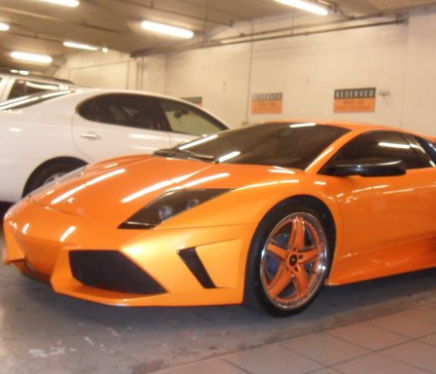
What Is Paint Protection Film?
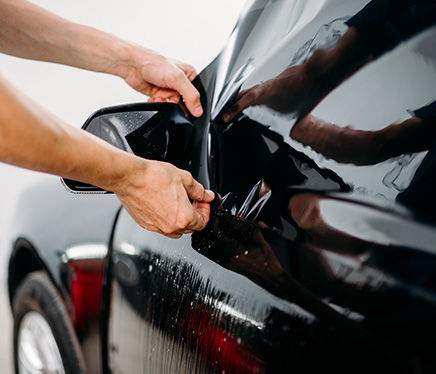
Paint Protection Film is a transparent protective material installed directly over automotive painted surfaces.
Modern premium PPF commonly uses a flexible polyurethane or urethane-based construction engineered to:
- Conform to body panels
- Resist impacts
- Protect against road debris
- Reduce light scratching
- Resist stains
- Maintain optical clarity
It is sometimes called clear bra, particularly when used on the front portion of a vehicle.
Current PPF technology has advanced far beyond the visibly thick or yellowing films many drivers may remember from older installations.
Premium products can provide high clarity, clean gloss, stain resistance, hydrophobic behavior, and self-healing topcoats.
Why PPF Is Different From Wax
PPF creates a much more substantial physical layer over the paint.
The film is designed to take damage first.
When a small stone reaches the front bumper, it strikes the PPF before reaching the clear coat.
When road grit hits a rocker panel, the film receives the exposure.
When a bag brushes across a protected loading ledge, the contact occurs against the PPF surface.
This is why PPF is often described as a sacrificial protective layer.
If a film section becomes seriously damaged, it may be removable and replaceable without repainting the entire panel—provided the impact did not penetrate far enough to damage the paint underneath.
What Does Paint Protection Film Protect Against?
High-quality PPF can help reduce damage from:
Rock Chips
One of the primary reasons people install PPF.
Gravel and Road Debris
Especially useful on front-facing and lower vehicle surfaces.
Light Scratches
PPF creates a physical surface above the clear coat.
Swirl Marks in the Film
Many premium films feature self-healing topcoats.
Bug Splatter
The film provides a protective surface over the paint.
Road Tar
Premium films are designed to resist common automotive contaminants.
Bird Droppings
PPF can reduce direct exposure of the paint, although contamination should still be removed promptly.
Everyday Scuffs
Door cups, door edges, loading areas, and rocker panels can benefit from targeted coverage.
What PPF Cannot Do
Modern PPF is impressive, but it should not be marketed as invincible armor.
A severe enough impact can still:
- Cut through the film
- Dent the panel
- Damage the paint
- Tear the PPF
- Require film replacement
- Require conventional body repair
PPF cannot guarantee protection from:
- Collisions
- Deep gouges
- Large stones
- Dents
- Every chemical
- Every scratch
It reduces risk.
It does not make a vehicle damage-proof.
How Self-Healing PPF Works
Self-healing is one of the most attractive modern PPF features.
Many premium films use an elastomeric or specialized topcoat that can reduce the appearance of minor scratches and swirl marks in the film surface.
Heat can help the topcoat return toward its original smooth condition.
Depending on the product, that heat may come from:
- Ambient warmth
- Sun exposure
- Warm water
- Controlled professional heating
But self-healing does not mean every form of damage disappears.
A deep cut that penetrates the film will not magically repair itself.
Neither will:
- A dent
- Torn film
- Punctured PPF
- Damaged paint underneath
Deep damage may require replacement of the affected PPF panel.
What Is Ceramic Coating?
Ceramic coating solves a different problem.
Automotive ceramic coatings are liquid surface treatments that cure into a durable protective layer over properly prepared paint.
Quality ceramic products are designed to create benefits such as:
- Hydrophobic water behavior
- Increased gloss
- Chemical resistance
- Easier cleaning
- Resistance to environmental contamination
- Improved surface slickness
- UV resistance, depending on the product
Unlike conventional wax, premium ceramic coatings can remain on the paint for substantially longer periods when correctly prepared, applied, and maintained.
Does Ceramic Coating Stop Rock Chips?
No.
This is one of the biggest misconceptions in automotive paint protection.
Ceramic coating is extremely thin compared with PPF.
It can improve chemical resistance and surface behavior, but it is not a substitute for a thick protective film when physical impact is the problem.
A rock can still chip ceramic-coated paint.
A sharp object can still scratch through a coating.
Ceramic coating should therefore not be sold as:
- Rock-chip protection
- PPF replacement
- Scratch-proof paint
- Impact armor
If physical protection is the priority, PPF is the better starting point.
Does Ceramic Coating Make a Car Scratch-Proof?
No.
Quality ceramic coatings can add resistance to minor surface wear and make careful washing easier.
Some products may reduce certain swirl marks compared with completely unprotected surfaces.
But a ceramic-coated vehicle can still be scratched.
Poor washing techniques can still create marks.
A key can still damage the finish.
A branch can still scratch the surface.
“Scratch resistant” and “scratch proof” are very different claims.
PPF vs. Ceramic Coating: Which Is Better?
Neither is universally better.
The better product depends on the problem.
Choose PPF When Your Main Concern Is:
- Rock chips
- Gravel
- Road debris
- Physical scratches
- High-impact panels
- Preserving exposed factory paint
Consider Ceramic Coating When Your Main Concern Is:
- Water beading
- Easier washing
- Environmental contaminants
- Surface slickness
- Gloss
- Chemical resistance
Consider Both When You Want:
- Physical protection on impact areas
- Hydrophobic surface behavior
- Easier maintenance
- Broad exterior preservation
Can Ceramic Coating Be Applied Over PPF?
Yes, when the coating and film are compatible.
One common strategy is:
Paint → PPF → compatible ceramic coating
The PPF handles much of the physical protection.
The ceramic coating adds hydrophobic behavior and can make the film easier to clean.
However, an additional coating is not always necessary.
Modern PPF products increasingly include hydrophobic or easy-clean topcoats of their own.
Before paying for both, determine what the selected film already provides.
PPF Has Become More Advanced
Modern premium films can include technologies that were uncommon in older PPF.
Depending on the product, features may include:
- Self-healing topcoats
- Hydrophobic surfaces
- High-gloss finishes
- Matte finishes
- Improved optical clarity
- Stain resistance
- Better conformability
- Long manufacturer warranties
Current 3M PPF products, for example, include dedicated paint-chip protection, self-healing capability, stain resistance, easy-clean hydrophobic performance, and product-specific long-term warranty coverage.
That is why modern PPF should be evaluated according to the exact film rather than assumptions based on older clear-bra technology.
Why Modern Paint Protection Matters in Los Angeles
Different regions create different ownership conditions.
Los Angeles vehicles can experience:
- Heavy freeway driving
- Loose road debris
- Construction zones
- Long commutes
- Outdoor parking
- Strong solar exposure
- Bird contamination
- Tree sap
- Dust
- Urban pollution
- Tight street parking
No film can prevent every one of those conditions.
But PPF can reduce direct physical wear on protected paint, while coatings can make environmental contamination easier to manage.
Full Front PPF: A Practical Starting Point
For many Los Angeles drivers, the most practical PPF package is not full-body protection.
It is the full front.
A typical full-front installation may protect:
- Front bumper
- Full hood
- Full front fenders
- Side mirrors
These are some of the areas most exposed to high-speed debris.
Covering complete panels can also create a more consistent appearance than stopping the film halfway across a hood or fender.
Partial Front PPF
A partial-front package may include:
- Front bumper
- Partial hood
- Partial fenders
- Mirrors
This can reduce the amount of material used and lower the project cost.
The trade-off is that partial coverage may leave a visible film edge across a panel.
For some owners that is acceptable.
Others prefer full-panel coverage.
High-Wear PPF Areas
PPF can also be installed only where repeated daily contact creates wear.
Examples include:
- Door cups
- Door edges
- Rear loading ledges
- Rocker panels
- Lower doors
- Areas behind wheels
These smaller installations can provide excellent practical value for daily drivers.
Full-Body PPF
Full-body PPF covers nearly all painted exterior panels.
It offers the broadest physical protection.
This may make sense for:
- Exotic cars
- Luxury vehicles
- Collectible vehicles
- Premium EVs
- Rare paint finishes
- Owners planning long-term ownership
- Customers who prioritize maximum cosmetic preservation
It is not essential for every vehicle.
Is PPF Only for Expensive Cars?
No.
A daily commuter can accumulate paint damage just as easily as a luxury vehicle.
PPF can make sense on:
- Sedans
- SUVs
- Pickup trucks
- EVs
- Family vehicles
- Sports cars
- Luxury cars
The decision is primarily about:
- How much you drive
- Where you drive
- How much paint damage bothers you
- How long you plan to keep the car
- How much coverage fits your budget
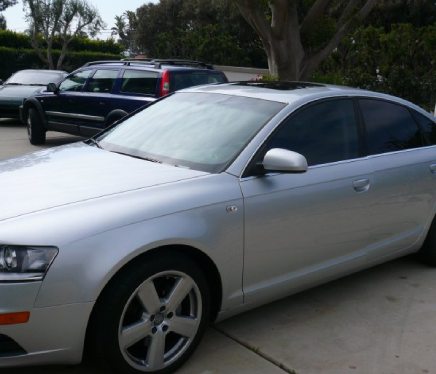
What About Tesla Paint Protection Film?
Tesla vehicles face the same basic road hazards as other cars.
Owners often consider PPF because:
- The front end receives freeway debris
- Large painted surfaces are visually prominent
- Many owners care strongly about maintaining the clean exterior design
- EVs are frequently used for substantial daily mileage
There is no need to rely on blanket claims that all Tesla paint is unusually soft.
The case for PPF is already strong enough based on ordinary driving exposure.
Does PPF Prevent Paint Fading?
PPF covers the paint and reduces its direct exposure to environmental conditions.
Premium films are also engineered to tolerate prolonged exterior use and UV exposure.
However, no reputable installer should promise that protected paint can never fade or age.
Automotive appearance changes can be influenced by:
- UV radiation
- Visible light
- Heat
- Material chemistry
- Environmental contamination
- Age
PPF adds another protective layer but does not stop time.
Does Ceramic Coating Prevent Fading?
Quality ceramic coatings can provide additional resistance to UV and environmental exposure depending on the product.
But they should not be treated as permanent anti-fading shields either.
The better claim is:
Ceramic coatings can help protect the surface from environmental and chemical exposure while improving ease of maintenance.
Modern Paint Protection vs. Automotive Window Tint
Automotive window tint is valuable, but it protects a different part of the vehicle.
Automotive window tinting is installed on glass to address:
- Solar heat
- UV exposure
- Glare
- Privacy
- Appearance
PPF goes on painted exterior surfaces.
Window tint does not protect the hood from rock chips.
PPF does not reduce glare through the windshield.
The two services complement each other because they solve different problems.
Ceramic Window Tint Is Not Ceramic Paint Coating
These names can confuse customers.
Ceramic window tint is a window film using ceramic technology to manage solar energy.
Ceramic paint coating is a liquid exterior surface treatment for automotive paint.
They are not the same product.
Luxury Glass Tinting’s ceramic automotive window tint focuses on heat rejection, UV protection, glare reduction, and visibility through automotive glass.
That should remain separate from the discussion of exterior paint coatings.
Vinyl Car Wraps Are Also Different
Vinyl vehicle wraps are primarily used for:
- Color changes
- Styling
- Matte or satin finishes
- Graphics
- Commercial branding
Standard vinyl can provide some protection against light surface exposure.
But it is generally thinner and less impact-focused than dedicated PPF.
Luxury Glass Tinting’s current vehicle-wrap service specifically recommends PPF when rock chips and road debris are the main concerns.
Do Not Use Anti-Graffiti Film as Automotive Paint Protection
Anti-graffiti film belongs to another category entirely.
Luxury Glass Tinting’s anti-graffiti film is designed primarily for architectural glass such as:
- Storefronts
- Lobbies
- Ground-floor glazing
- Other exposed building glass
Its job is to create a sacrificial layer against scratches, etching, tagging, and vandalism.
It should not be presented as an automotive paint-protection upgrade.
Likewise, building security window film should not be recommended as a substitute for automotive PPF.
Layered Vehicle Protection: What Actually Makes Sense?
A useful vehicle-protection strategy might look like this:
Exterior Paint
PPF on high-impact panels.
Exterior Surface Behavior
Compatible ceramic coating where desired.
Automotive Glass
Quality ceramic or other performance window tint.
Styling
Vinyl wrap for color change or graphics.
Each product has its own role.
The goal is not to pile unrelated films onto the car.
It is to solve the specific problems you care about.
Does Modern Paint Protection Reduce Maintenance?
It can make maintenance easier.
Ceramic coatings can create more hydrophobic surfaces, allowing water and contaminants to release more easily.
Some modern PPF also incorporates hydrophobic topcoats.
That can make washing more manageable.
But the vehicle still needs regular care.
Modern protection does not eliminate:
- Washing
- Bug removal
- Bird-dropping removal
- Tar removal
- Inspection
- Safe drying
You are protecting the vehicle to make maintenance and preservation easier—not to avoid maintenance entirely.
Is Modern Paint Protection Worth the Cost?
The answer depends on your goals.
PPF may make sense if:
- Rock chips bother you
- You have a new vehicle
- You drive heavily on freeways
- You want to preserve factory paint
- You own the car long term
- Paint repairs would frustrate you
- Exterior condition matters strongly to you
Ceramic coating may make sense if:
- You enjoy a glossy finish
- Easier washing is important
- Water behavior matters
- You want stronger chemical resistance than wax
- You prefer longer-lasting surface protection
Wax may still be enough if:
- You enjoy frequent detailing
- Your car has limited road exposure
- You mainly want gloss and water beading
- You prefer a lower-cost short-term solution
Modern does not automatically mean necessary.
It means there are better tools available when your needs go beyond what wax can provide.
Does PPF Guarantee Higher Resale Value?
No.
A vehicle with well-preserved exterior paint may be more attractive to future buyers.
But PPF cannot guarantee a specific increase in trade-in or private-sale price.
Resale value also depends on:
- Mileage
- Accident history
- Mechanical condition
- Market demand
- Service records
- Interior condition
- Overall cosmetic condition
PPF is better described as helping preserve one important component of vehicle condition.
Does Ceramic Coating Guarantee Better Resale Value?
No.
The same principle applies.
A professionally maintained exterior can support the overall presentation of a vehicle, but no coating can guarantee a financial return.
Choose protection because preserving your vehicle matters to you—not because someone promises you will recover a precise dollar amount later.
How Long Does PPF Last?
There is no single lifespan for every Paint Protection Film.
Current manufacturer guidance varies according to:
- Product
- Installation
- Exposure
- Climate
- Mileage
- Storage
- Maintenance
XPEL currently states that quality PPF commonly lasts approximately five to ten years, depending on film, installation, environmental exposure, road conditions, mileage, and maintenance.
Current 3M PPF products also carry product-specific long-term warranties.
Always compare the exact product being installed rather than assuming every film lasts the same length of time.
How Long Does Ceramic Coating Last?
Ceramic-coating durability is also product-specific.
Some consumer ceramic sealants last months.
Professional ceramic coatings may be rated for several years when correctly applied and maintained.
For example, current Gtechniq products range from shorter-duration ceramic sealants to professional coatings with multi-year durability and warranty programs.
This is why the phrase:
“Ceramic coating lasts for years.”
needs context.
Some do.
Some do not.
Ask what exact coating is being proposed.
PPF Still Needs Maintenance
Good PPF care generally includes:
- Routine washing
- Prompt contaminant removal
- Gentle wash techniques
- Care around exposed film edges
- Using compatible chemicals
XPEL, for example, recommends waiting 48 hours before washing several of its PPF products and cautions against directing high-pressure water close to film edges.
Those instructions are product-specific.
Follow the care guidance supplied for your exact film.
Why Professional PPF Installation Matters
Large automotive body panels can be difficult to cover correctly.
A professional installer has to manage:
- Surface preparation
- Panel contours
- Film alignment
- Sensors
- Grilles
- Mirrors
- Recesses
- Edges
- Corners
- Stretching
- Contamination control
Luxury Glass Tinting’s current PPF installation process includes:
- Complete paint inspection
- Surface decontamination
- Precise alignment
- Clean edge finishing where practical
- Post-installation treatment on critical edges
- Final quality inspection
These steps matter because premium film alone cannot compensate for poor installation.
Does PPF Need to Be Completely Bubble-Free Immediately?
Freshly installed PPF may show temporary moisture or minor visual variation while the installation settles.
The exact curing behavior depends on the film and installation conditions.
However, persistent contamination, lifting, poor edges, or obvious installation defects should be evaluated by the installer.
Do not pick at fresh edges or attempt to repair the film yourself immediately after installation.
Paint Condition Matters Before Installation
PPF is transparent.
It does not erase significant defects underneath.
Before installing film, the paint should be evaluated for:
- Chips
- Deep scratches
- Swirl marks
- Previous body repair
- Repainted panels
- Failing clear coat
Some surface defects may be correctable before installation.
Severely failing paint may not be suitable for film.
Can PPF Be Applied Over Repainted Panels?
Sometimes.
But refinished panels require more caution.
Future film removal depends partly on the quality of the repaint and how well the paint adhered to the substrate.
Tell your installer about known body repairs before installation.
Healthy OEM paint and unknown aftermarket paint should not automatically be treated the same.
Can PPF Be Removed?
Yes.
Premium PPF is designed to be removable.
Professional removal is recommended, particularly when:
- Film is old
- Large areas are covered
- Panels have been repainted
- Film has become damaged
XPEL states that deeper film damage may require professional repair or replacement and recommends professional attention when problems occur.
Can One Damaged PPF Panel Be Replaced?
Often, yes.
One of the advantages of panel-based film coverage is that a severely damaged section can potentially be removed and replaced without redoing the entire car.
Whether the paint beneath is unharmed depends on the severity of the original impact.
Common Modern Paint Protection Myths
Myth: Wax Is Useless
False.
Wax is still useful for gloss and short-term surface protection.
Myth: Ceramic Coating Stops Rock Chips
False.
Ceramic coatings are too thin to replace dedicated PPF for physical impact protection.
Myth: Ceramic Coating Makes Paint Scratch-Proof
False.
It may improve resistance to minor surface wear but cannot stop deep scratches.
Myth: PPF Prevents Every Chip
False.
It significantly reduces many common impacts but cannot stop every possible object.
Myth: Every PPF Scratch Self-Heals
False.
Self-healing generally applies to minor scratches and swirls in compatible film topcoats.
Myth: PPF Needs No Maintenance
False.
Film still needs washing and contaminant removal.
Myth: More Protective Products Always Means Better Protection
False.
Products need to be compatible and solve a real problem.
Myth: Anti-Graffiti Film Should Be Installed on Cars
Not as a substitute for PPF.
Anti-graffiti film is primarily a sacrificial architectural-glass product.
Frequently Asked Questions
Is wax still worth using?
Yes. Wax can add gloss, slickness, and temporary water repellency. It simply does not offer the physical impact protection of PPF or the durability of many ceramic coatings.
Is PPF better than wax?
For rock chips and physical damage, yes. For inexpensive short-term gloss and routine detailing, wax still has a role.
Is ceramic coating better than wax?
Quality ceramic coatings generally provide greater durability, chemical resistance, and hydrophobic performance than conventional wax. The exact difference depends on the products being compared.
Is ceramic coating better than PPF?
Not for rock chips. Ceramic coating and PPF solve different problems.
Should I choose PPF or ceramic coating first?
If physical protection from rocks and road debris is your main concern, PPF is usually the logical starting point.
Can I use PPF and ceramic coating together?
Yes, provided the products are compatible. PPF is normally installed first, followed by an appropriate coating if desired.
Does PPF protect against rock chips?
Yes, reducing damage from common stone impacts is one of PPF’s primary purposes. No film can guarantee protection against every impact.
Does PPF self-heal?
Many premium films can reduce the appearance of minor scratches and swirls in their topcoat. Deep damage does not self-repair.
Does PPF protect against bird droppings?
It creates another protective surface over the paint, but bird residue should still be cleaned promptly.
Does ceramic coating prevent bird-dropping damage?
Quality coatings can improve chemical resistance, but contamination should still be removed promptly rather than left on the surface.
How long does PPF last?
Premium products may provide many years of service. Current manufacturer guidance commonly varies according to film, exposure, driving, storage, installation, and maintenance.
How long does ceramic coating last?
It can range from months for some ceramic sealants to several years for certain professional coatings. Check the exact product.
Is full-body PPF necessary?
No. Many drivers begin with full-front or targeted high-wear coverage.
What PPF coverage is best for freeway driving?
A full-front installation covering the bumper, hood, front fenders, and mirrors is a common starting point for frequent freeway use.
Can you put PPF on a Tesla?
Yes. Teslas can receive the same type of professional PPF protection used on other appropriate vehicles.
Does window tint protect exterior paint?
No. Automotive tint protects through the glass and is selected primarily for heat, UV, glare, privacy, and appearance.
Is vinyl wrap the same as PPF?
No. Standard vinyl wrap is primarily for styling and color change. PPF is designed primarily for physical paint protection.
Go Beyond the Wax With the Right Protection Strategy
Modern paint protection gives drivers more choices than ever.
But the best strategy is not automatically the most complicated one.
If you enjoy regular detailing and mainly want short-term gloss, wax may still be enough.
If your priority is hydrophobic behavior, easier cleaning, and chemical resistance, a quality ceramic coating may be worth considering.
If you are trying to prevent the chips and scratches associated with Los Angeles freeway driving, Paint Protection Film provides the physical barrier that wax and ceramic coating cannot.
Luxury Glass Tinting provides professional Paint Protection Film installation in Los Angeles with coverage selected according to:
- Vehicle
- Driving habits
- Parking environment
- Paint condition
- Budget
- Long-term ownership goals
For drivers who want a broader vehicle upgrade, professional automotive window tinting can separately address cabin heat, UV exposure, glare, and privacy, while vehicle wraps can provide custom styling and color changes.
The important thing is to give every product the correct job.
Wax enhances and temporarily protects the surface.
Ceramic coating improves surface behavior and chemical resistance.
PPF provides the strongest physical barrier of the three against everyday chips and road debris.
That is the real game-changer in modern automotive protection: not one miracle product, but choosing the right technology for the damage you actually want to prevent.