A vehicle does not have to keep the same color and finish for its entire life.
Automotive vinyl wraps give drivers the ability to dramatically change the appearance of a car without permanently replacing the factory paint. A professionally installed wrap can transform a vehicle into gloss black, satin gray, matte green, metallic blue, or another custom finish while adding a removable layer over the original painted surface.
That layer can also provide some protection from everyday environmental exposure and light surface wear.
But there is an important distinction:
Vinyl wrap is primarily a styling and customization product. Paint Protection Film is primarily a physical paint-protection product.
Standard vinyl should not be marketed as armor against major rock chips or deep scratches.
Luxury Glass Tinting provides professional vinyl wrap installation in Los Angeles for full color changes, partial wraps, accents, commercial vehicles, fleet branding, and custom designs.
When the right vinyl is professionally installed over healthy paint and maintained correctly, a wrap can keep a vehicle looking fresh while allowing the owner to change its appearance again later.
What Is an Automotive Vinyl Wrap?
An automotive vinyl wrap is a flexible adhesive film applied over painted exterior vehicle panels.
Depending on the product and project, vinyl can change the vehicle’s:
- Color
- Finish
- Texture
- Graphics
- Branding
- Accent details
A wrap can cover the entire vehicle or only selected areas.
Popular applications include:
- Full color-change wraps
- Roof wraps
- Hood wraps
- Mirror accents
- Racing stripes
- Chrome-delete styling
- Commercial graphics
- Fleet branding
The main advantage is flexibility.
Rather than permanently changing the vehicle with a complete repaint, vinyl gives owners a removable way to customize the exterior.
How Vinyl Wrap Helps Preserve the Paint Underneath
Vinyl sits between the painted surface and the outside environment.
That can help reduce direct exposure to certain everyday conditions such as:
- UV exposure
- Light surface scratches
- Minor scuffs
- Road grime
- Bird droppings
- Tree sap
- Insects
- Regular washing
The wrap becomes the outer surface that receives that contact first.
However, this does not mean the factory paint becomes immune to damage.
Standard vinyl wrap is relatively thin compared with dedicated Paint Protection Film.
A hard stone impact, deep scratch, collision, dent, or sharp object may damage both the vinyl and the paint underneath.
For serious rock-chip protection, Paint Protection Film is the more appropriate product.
Vinyl Wrap vs. Paint Protection Film: Know the Difference
Vinyl and PPF are frequently confused because both are films installed on the exterior of a vehicle.
They are designed around different priorities.
| Feature | Vinyl Wrap | Paint Protection Film |
| Main purpose | Styling and color change | Physical paint protection |
| Color options | Extensive | Traditionally clear, matte, or specialized colors |
| Custom graphics | Excellent | Not the primary purpose |
| Light surface protection | Yes | Yes |
| Rock-chip protection | Limited compared with PPF | Major purpose |
| Self-healing | Not standard across conventional vinyl | Common on premium PPF |
| Thickness | Relatively thin | Generally substantially thicker |
| Full color transformation | Major advantage | Product-dependent |
| Business branding | Excellent | Not primary purpose |
3M, for example, distinguishes its conventional Wrap Film Series 2080 from its much thicker Protection Wrap Film and dedicated PPF products.
So if your top concern is changing the look of the car, vinyl is the natural choice.
If your top concern is freeway rock chips and physical impact, start with PPF.
Style Without a Permanent Color Change
One of the biggest advantages of vinyl wrapping is creative flexibility.
Perhaps you bought a vehicle in white but now want satin black.
Maybe you want a metallic finish this year but would prefer to return to the factory color when you sell the car.
A wrap gives you that option.
Available finishes can include:
- Gloss
- Matte
- Satin
- Metallic
- Color-shifting finishes
- Carbon-fiber-style textures
- Chrome-style finishes
- Printed custom graphics
Luxury Glass Tinting currently offers full vehicle wraps, partial wraps, color changes, custom vinyl projects, and commercial branding throughout Los Angeles.

Long-Term Protection You Can See
The California sun isn’t kind to paint. UV rays bleach colors and create that dull, chalky effect no one wants. Add in freeway dust, bird droppings, and minor scratches, and your car can look older than it really is.
Vinyl wraps solve this problem. The material resists fading, shields against scratches, and even repels dirt and water. Washes are easier, and the shine lasts longer. We’ve seen wrapped cars look showroom-ready even after years of daily driving.
How Vinyl Car Wraps Age Over Time
Some people worry about wraps peeling or looking bad with time, but high-quality wraps, installed by skilled professionals, can last five to seven years easily. The key is proper care, gentle washing, no harsh chemicals, and avoiding automated car washes with stiff brushes.
The beauty is this: while paint permanently absorbs damage, wraps take the abuse instead. When a wrap starts looking worn after years of use, you simply replace it. The original paint underneath is still like new.
Vinyl Car Wraps Near You
Whether you’re looking for vinyl car wraps in Hollywood or Culver City, the value is the same. Local shops like ours focus on precision installs, premium materials, and styles that fit your lifestyle.
Every driver has different goals. Some want head-turning designs. Others just want stealthy matte finishes or protective clear wraps. That’s why choosing the right team matters. When you work with us, we guide you to the perfect option for your car and budget.

Vinyl Wrap Can Change the Look Without Repainting
A properly planned vinyl wrap can transform a vehicle while leaving the underlying paint in place.
That can be especially attractive for:
- New vehicles
- Leased vehicles where modifications are allowed
- Luxury cars
- Performance vehicles
- Daily drivers
- Commercial fleets
- Owners who enjoy changing styles
However, removability depends strongly on the condition of the surface underneath.
Wraps perform best over healthy, sound paint.
Does Vinyl Wrap Damage Factory Paint?
Quality automotive vinyl is designed to be removable from suitable painted surfaces.
3M states that its wrap films can be professionally removed and that wraps removed within the applicable warranty period are designed for clean removal.
However, the phrase “vinyl never damages paint” is too absolute.
Removal can be more complicated when the vehicle has:
- Repainted panels
- Poor-quality bodywork
- Peeling clear coat
- Existing paint failure
- Rust
- Chips
- Weak aftermarket paint
- Unstable repairs
Luxury Glass Tinting currently inspects paint condition before wrapping a vehicle because existing defects can affect both installation and eventual removal.
If you know a panel has been repainted, tell the installer before the wrap goes on.
Can the Paint Look Better After the Wrap Is Removed?
Potentially.
A wrapped section of healthy factory paint has been covered from direct exposure to sunlight, contamination, and some everyday surface contact.
3M notes that areas protected beneath its wrap film may appear more vibrant or glossy after removal because they were shielded from the elements.
But this does not mean the entire vehicle will automatically look factory-new.
Unwrapped areas may age differently, and results depend on:
- Original paint condition
- Film
- Exposure
- Length of installation
- Maintenance
- Removal technique
Professional removal is the safest approach.
Vinyl Wrap Is Not a Guaranteed Resale-Value Upgrade
Preserving healthy original paint can be attractive to future buyers.
A removable color change can also be appealing because the factory finish remains underneath.
However, installing a vinyl wrap does not guarantee a higher resale value.
Vehicle value also depends on:
- Mileage
- Mechanical condition
- Accident history
- Model demand
- Maintenance history
- Interior condition
- Paint condition
- Market conditions
Likewise, a professional repaint does not automatically reduce a vehicle’s value in every situation.
For example, repainting may be necessary after legitimate collision repair or to restore badly damaged paint.
The better claim is that vinyl can help preserve the underlying finish from certain types of exposure while offering reversible customization.
Vinyl Wrap vs. Paint: Which Should You Choose?
Neither is universally better.
They solve different needs.
Choose Vinyl Wrap When You Want:
- A reversible color change
- Custom graphics
- Matte or satin styling
- Commercial branding
- Faster future style changes
- A removable exterior finish
- To leave healthy factory paint in place
Consider Paint When:
- Existing paint is severely damaged
- Body repair is required
- Rust or corrosion needs treatment
- You want a permanent finish
- The desired finish cannot be achieved effectively with available wrap material
A wrap should not be used to hide failing paint or unresolved body damage.
The surface underneath still matters.
Is a Car Wrap Faster Than Repainting?
A vinyl wrap can often be completed within a relatively short project window, but timing varies.
Luxury Glass Tinting currently states that most vehicle wrap projects take approximately one to three days, depending on:
- Vehicle size
- Coverage
- Preparation
- Complexity
A professional repaint can involve very different preparation, repair, curing, and refinishing requirements.
Therefore, it is more accurate to say that vinyl can provide a relatively fast color transformation rather than claiming every wrap is always faster than every paint job.
How Long Does a Vinyl Car Wrap Last?
There is no universal “five-to-seven-year” lifespan that applies to every wrap.
Luxury Glass Tinting currently gives a general expectation of roughly three to seven years for professionally installed vinyl, depending on exposure, driving conditions, maintenance, and storage.
Manufacturer warranties can be even more specific.
For example, 3M’s current vehicle-wrap guidance lists warranty periods of up to:
- 8 years for certain vertical applications
- 3 years for certain horizontal applications
depending on the product, orientation, climate, and warranty terms.
Why the difference?
Horizontal areas such as the:
- Hood
- Roof
- Trunk
generally experience more direct solar and environmental exposure than vertical door panels.
That can shorten effective service life.
Los Angeles Sun Can Affect Wrap Longevity
Southern California creates demanding conditions for automotive vinyl.
Wrap durability may be influenced by:
- Strong UV exposure
- Outdoor parking
- High surface temperatures
- Air pollution
- Road contaminants
- Washing habits
- Film orientation
Avery Dennison notes that horizontal wrap surfaces can experience reduced durability because they receive greater UV exposure and retain more atmospheric pollutants.
That makes storage and maintenance particularly important in Los Angeles.
Garage Parking Can Help a Wrap Last Longer
When possible, storing a wrapped vehicle:
- Inside a garage
- In shaded parking
- Under appropriate protection
can reduce continuous UV and heat exposure.
3M specifically recommends indoor or shaded storage where practical to help preserve wrap appearance and service life.
Of course, a car wrap is intended to be driven.
You do not need to hide the vehicle from sunlight entirely.
The point is simply that less extreme exposure generally helps the film age more slowly.
Does Vinyl Wrap Stop Paint From Fading?
Vinyl physically covers the painted surface, so covered paint receives less direct environmental exposure.
However, saying wrap “stops fading” completely is too strong.
The wrap itself is exposed to UV radiation and can age or fade.
Meanwhile, uncovered surfaces may receive different exposure.
Manufacturers design quality automotive films to resist outdoor weathering, but durability varies by:
- Product
- Color
- Finish
- Exposure
- Orientation
- Climate
Vinyl should be described as helping protect covered paint from direct exposure rather than guaranteeing that no fading can occur.
Does Vinyl Wrap Protect Against Scratches?
It can protect against light surface contact.
Small abrasions may affect the vinyl instead of touching the clear coat underneath.
But conventional styling vinyl is not scratch-proof.
A sharp key, branch, collision, or deep scrape can cut through the film.
Likewise, standard color-change wrap should not be presented as equivalent to PPF.
If scratch and chip resistance is your main objective, discuss a dedicated protective film.
Does Vinyl Wrap Protect Against Rock Chips?
Only to a limited degree.
Conventional vinyl creates a thin layer over the paint, but it is not primarily engineered to absorb stone impacts.
This distinction is important for Los Angeles freeway drivers.
3M’s dedicated Protection Wrap Film, for example, is approximately 70% thicker than typical 3M Wrap Film 2080 and is specifically designed for greater protection against stone chips and scratches.
That illustrates why standard styling vinyl and protective film should not be treated as the same product.
For regular rock-chip exposure, PPF is the stronger solution.
Does Vinyl Wrap Repel Water and Dirt?
Not every standard vinyl wrap is inherently hydrophobic.
Some finishes and specialized products can be easier to clean than others, and compatible sealants may improve maintenance.
Avery Dennison, for example, offers wrap-specific sealants designed to create an additional protective layer and make everyday dirt, bird droppings, and tree sap easier to clean.
But you should not assume every vinyl wrap automatically “repels dirt and water.”
Ask about the exact film and approved aftercare products.
Popular Vinyl Wrap Finishes
The visual possibilities are one of vinyl’s strongest benefits.
Gloss Wraps
Gloss film can imitate the polished appearance associated with automotive paint while giving owners access to different colors and effects.
Matte Wraps
Matte wraps remove much of the conventional shine for a more dramatic, understated appearance.
Satin Wraps
Satin provides a middle ground between gloss and matte.
It offers a soft sheen without a highly reflective finish.
Metallic Wraps
Metallic films can create more depth and visual movement under changing light.
Specialty Finishes
Depending on the manufacturer’s catalog, specialty wrap options may include:
- Carbon-fiber effects
- Brushed textures
- Chrome effects
- Color-shifting finishes
- Custom printed graphics
Availability should be confirmed for the specific project.

Full Wrap vs. Partial Wrap
A complete color change is not the only option.
Full Vehicle Wrap
A full wrap transforms most visible exterior painted surfaces for a unified new appearance.
Partial Wrap
Partial coverage can focus on:
- Hood
- Roof
- Mirrors
- Stripes
- Lower panels
- Accent sections
This can provide a significant visual change using less material.
Commercial Wrap
A business vehicle can use vinyl for:
- Logos
- Contact information
- Brand colors
- Service descriptions
- Promotional graphics
Luxury Glass Tinting currently wraps personal vehicles as well as commercial cars, vans, service vehicles, and fleets.
Commercial Vehicle Wraps Turn Cars Into Branding Space
For businesses, vinyl has a completely different advantage.
A fleet vehicle already spends time on roads and parked near customers.
Adding professionally designed graphics turns that exterior area into visible branding.
Commercial wraps can include:
- Business name
- Logo
- Phone number
- Website
- Services
- Promotional graphics
Unlike permanent painted signage, vinyl graphics can be replaced when:
- Branding changes
- Contact information changes
- The vehicle changes ownership
- A promotion ends
This makes wraps useful beyond personal vehicle customization.
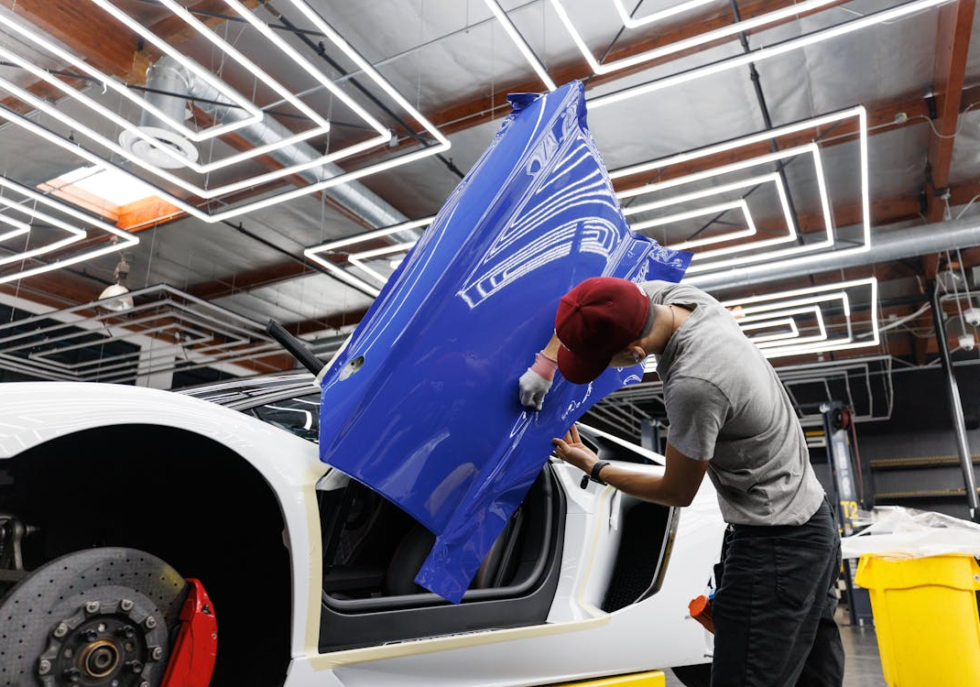
How Professional Vinyl Wrap Installation Works
A premium wrap depends heavily on preparation and technique.
Luxury Glass Tinting’s current wrap process emphasizes surface preparation, panel planning, alignment, and clean edge finishing.
Step 1: Paint Inspection
The installer checks the exterior before film is applied.
Potential problems include:
- Peeling paint
- Chips
- Poor bodywork
- Repainted panels
- Rust
- Existing adhesive
- Deep scratches
The wrap will conform closely to the body.
It will not make major paint defects disappear.
Step 2: Washing and Decontamination
The surface needs to be free of:
- Dirt
- Grease
- Wax
- Road grime
- Contaminants
Proper preparation allows the adhesive to bond more consistently.
Step 3: Panel Planning
The installer determines:
- Film orientation
- Panel layout
- Seam locations
- Body-line alignment
- Edge finishing
- Trim removal where appropriate
Planning is particularly important with patterned, metallic, directional, or color-shifting films.
Step 4: Vinyl Application
The film is fitted over each panel and shaped around curves, recesses, edges, and body lines.
Automotive vinyl is designed to conform to complex surfaces when installed with proper technique.
Step 5: Edge and Corner Finishing
Clean edges are critical to both appearance and durability.
Luxury Glass Tinting currently emphasizes professionally secured edges, corners, and recesses wherever appropriate.
Step 6: Final Inspection
The finished wrap should be checked for:
- Alignment
- Visible seams
- Edge finish
- Corners
- Contamination
- Consistency
- Overall appearance
The goal is for the wrap to look intentional both in photographs and when viewed close up.
Why Professional Installation Matters
Automotive wrapping involves much more than laying adhesive material over the body.
Vehicles contain:
- Compound curves
- Recesses
- Bumpers
- Mirrors
- Spoilers
- Sensors
- Trim
- Tight corners
Poor installation can lead to:
- Wrinkles
- Lifting
- Excessive stretching
- Misaligned panels
- Visible seams
- Poor corners
- Premature failure
Even excellent film can produce disappointing results when installation quality is poor.
How to Care for a Vinyl-Wrapped Car
Proper maintenance can significantly affect how the wrap looks and ages.
Wash Regularly
Road grime, insects, fuel, bird droppings, tree sap, and environmental contamination should not remain on the wrap indefinitely.
Both 3M and Avery Dennison recommend regular cleaning.
Hand Washing Is a Good Choice
Use:
- Clean water
- Mild automotive detergent
- Soft wash mitts or sponges
- Microfiber drying towels
Avoid unnecessary abrasive scrubbing.
Be Careful With Automatic Car Washes
Brush-style washes can:
- Scratch wrap film
- Dull finishes
- Catch film edges
3M recommends hand washing when possible and using touchless washes if an automatic wash is necessary.
Avery Dennison similarly advises against automatic washes that use brushes.
Use Pressure Washers Carefully
Excessive pressure or spraying directly into film edges can contribute to lifting.
Follow the film manufacturer’s guidance regarding:
- Pressure
- Distance
- Water temperature
- Spray angle
Remove Contaminants Promptly
Pay special attention to:
- Bird droppings
- Tree sap
- Bugs
- Fuel
- Road grime
Do not aggressively scrape dried contamination off the vinyl.
Soften and clean it according to the film manufacturer’s recommendations.
Should You Wax a Vinyl Wrap?
That depends on the film.
Traditional automotive waxes designed for paint may not be appropriate for every vinyl finish.
Matte and satin films in particular can react differently to products intended to increase gloss.
Use wrap-specific products approved for the exact film.
Avery Dennison, for example, sells cleaners and sealants specifically intended for its Supreme Wrapping Film.
Always test an unfamiliar product in an inconspicuous location first.
Can Ceramic Coating Be Applied Over Vinyl Wrap?
Potentially, but compatibility matters.
Do not assume every ceramic coating is safe for every vinyl film.
Some coating solvents may affect certain wrap surfaces.
If you want a ceramic coating over a wrap, use a product specifically approved or demonstrated to be compatible with that vinyl.
Check the wrap manufacturer’s guidance and warranty before application.
When Should a Vinyl Wrap Be Replaced?
Consider replacement or removal when you notice significant:
- Cracking
- Peeling
- Edge lifting
- Severe fading
- Discoloration
- Surface deterioration
- Damage
- Adhesive failure
Removing heavily aged film can be more difficult than removing material within its recommended service period.
Regular inspection is therefore worthwhile.
Can a Vinyl Wrap Be Removed?
Yes.
One of vinyl’s greatest advantages is reversibility.
Professional installers use controlled heat and removal techniques to release the adhesive from the surface.
3M recommends professional removal for its vehicle wraps.
On healthy compatible OEM paint and within the applicable product conditions, clean removal is an expected feature of quality automotive wrap film.
However, paint condition remains important.
Repainted or failing surfaces may not behave the same way as healthy factory paint.
Common Vinyl Wrap Myths
Myth: Vinyl Wrap Makes Paint Damage-Proof
False.
Standard wrap can reduce light surface exposure but cannot stop severe chips, scratches, dents, or collisions.
Myth: Vinyl Wrap Is the Same as PPF
False.
Vinyl is primarily a styling product. PPF is engineered primarily for physical protection.
Myth: The Paint Under Every Wrap Will Look Brand-New Forever
False.
Results depend on original paint, film, exposure, maintenance, time, and removal technique.
Myth: Every Vinyl Wrap Lasts Seven Years
False.
Durability varies by manufacturer, film, orientation, climate, storage, and maintenance.
Myth: Vinyl Automatically Repels Dirt and Water
False.
Surface properties depend on the exact film and any compatible sealant or coating.
Myth: Wrapping a Car Always Raises Its Resale Value
False.
Wrap can help preserve aspects of the paint condition, but resale value depends on the entire vehicle and market.
Myth: Repainting Always Lowers a Vehicle’s Value
False.
The effect depends on why the vehicle was repainted and the quality of the work.
Myth: Vinyl Can Hide Bad Paint
Usually a bad idea.
Peeling clear coat, deep defects, rust, and poor bodywork can show through the film or compromise adhesion.
Frequently Asked Questions
How long does a vinyl car wrap last?
Luxury Glass Tinting currently gives a typical range of approximately three to seven years, depending on film, exposure, driving, maintenance, and storage.
Manufacturer warranties may differ by panel orientation and product.
Does vinyl wrap protect car paint?
It provides a physical layer that can help protect against UV exposure, light scratches, minor scuffs, contaminants, and ordinary surface wear.
It does not offer the same rock-chip protection as PPF.
Can vinyl wrap stop rock chips?
Conventional color-change vinyl provides only limited protection from stone impacts. PPF is the more appropriate option when rock chips are the primary concern.
Can vinyl wrap prevent scratches?
It can absorb some light surface contact, but deep scratches can cut through both the film and underlying finish.
Will vinyl wrap damage factory paint?
Quality wrap is designed to be removable from healthy compatible factory paint. Existing paint defects and aftermarket repainting can increase removal risk.
Can you wrap a car with damaged paint?
Minor imperfections may be manageable, but peeling paint, failing clear coat, rust, or unstable repairs should be addressed before wrapping.
Can vinyl wrap be removed?
Yes. Professional removal is recommended.
Is vinyl wrap cheaper than paint?
Sometimes, but pricing varies substantially according to the vehicle, coverage, film, preparation, paint work, and desired finish. Compare actual project quotes rather than assuming one method is universally cheaper.
How long does a vehicle wrap take to install?
Luxury Glass Tinting currently estimates approximately one to three days for many projects, depending on vehicle size, coverage, and preparation requirements.
Is vinyl wrap good for Los Angeles weather?
Quality automotive wrap films are designed for exterior use, but strong sun and heat can accelerate aging. Proper maintenance and shaded or indoor storage when practical can help extend appearance and service life.
Can a wrapped car go through a car wash?
Touchless washing is generally safer than brush-style automatic washes. Hand washing is typically preferred.
Can you pressure wash vinyl wrap?
Often yes when manufacturer pressure, distance, temperature, and spray-angle guidance is followed. Avoid directing concentrated water pressure into film edges.
Should I wax a vinyl-wrapped car?
Use only products appropriate for the exact vinyl finish. Conventional wax may not be suitable for matte, satin, or specialty films.
Can you ceramic coat a vinyl wrap?
Potentially, if the ceramic coating is compatible with the specific vinyl. Manufacturer recommendations and warranty terms should be checked first.
Does wrapping a car help resale value?
Preserving healthy underlying paint may support the vehicle’s overall cosmetic condition, but no resale-price increase can be guaranteed.
What’s the difference between a full and partial wrap?
A full wrap changes most of the vehicle’s visible exterior finish. A partial wrap covers selected areas such as the hood, roof, mirrors, stripes, or commercial graphics.
Can vinyl wraps be used for business vehicles?
Yes. Vinyl is widely used for logos, graphics, branding, contact information, service vehicles, delivery vans, and fleets.
Vinyl Wraps in Los Angeles: Protect the Finish While Changing the Look
Automotive vinyl wrap offers something paint alone cannot easily provide:
a highly customizable exterior finish that can later be removed or replaced.
For Los Angeles drivers, the main benefits include:
- Full color changes
- Matte, satin, gloss, metallic, and specialty finishes
- Custom accents
- Commercial graphics
- Fleet branding
- A removable layer over healthy original paint
- Some protection from UV exposure and light surface wear
- The ability to refresh the exterior again later
But vinyl should be chosen for the right reason.
If you need maximum rock-chip protection, choose PPF.
If you want to dramatically change the vehicle’s appearance while keeping the underlying healthy factory paint in place, vinyl is the stronger fit.
Luxury Glass Tinting provides professional vehicle wrap installation in Los Angeles for:
- Full vehicle wraps
- Partial wraps
- Color-change wraps
- Custom vinyl projects
- Commercial wraps
- Fleet graphics
- Accent panels
Every project begins with surface preparation and paint inspection, followed by panel planning, precise alignment, clean edge finishing, and final quality control.
For a customized quote, provide your year, make, model, current vehicle photos, preferred coverage, and desired finish.
The best wrap does more than look impressive on installation day.
It should be professionally selected, correctly installed, properly maintained, and appropriate for the condition of the paint underneath.