Premium window tint can cost more than basic automotive film, so it is reasonable to ask whether the upgrade is actually worth paying for.
For many Los Angeles drivers, the answer can be yes—particularly if heat rejection, UV protection, optical clarity, long-term appearance, privacy, and a refined factory-style finish matter to you.
But “luxury window tint” is not an official technical category. The term usually refers to higher-quality products such as premium ceramic and nano-ceramic automotive films combined with professional installation.
The value comes from the film’s performance and installation quality, not simply from a luxury label or extremely dark appearance.
Luxury Glass Tinting offers automotive window tinting in Los Angeles with dyed, ceramic, nano-ceramic, and virtually clear options. Understanding how these products differ can help you decide whether premium tint is worth the additional investment for your vehicle.
What Is Considered Luxury Window Tint?
Luxury window tint generally means a premium automotive film designed to provide a combination of high solar performance, strong UV protection, optical clarity, color stability, and an attractive appearance.
Ceramic and nano-ceramic films are commonly placed in this category.
Compared with basic dyed film, premium ceramic products can provide stronger heat rejection without requiring very dark glass.
They are also non-metallic, which makes them well suited to vehicles that rely on GPS, Bluetooth, cellular connectivity, satellite radio, and other electronic systems.
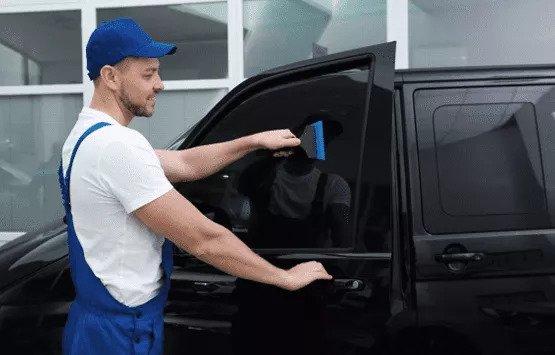
A premium installation should also have clean edges, consistent shade, minimal contamination, proper film shaping, and a finish that complements the vehicle rather than looking like an aftermarket addition.
So, Are Luxury Window Tints Really Worth It?
Luxury window tint is most likely to be worth the additional cost when you want more than basic privacy and appearance.
If you regularly drive in strong Southern California sunshine, park outside, own a vehicle with a large glass area, want to protect a premium interior, or intend to keep the vehicle for several years, ceramic or nano-ceramic tint can provide meaningful advantages.
A basic dyed film may still make sense when budget and appearance are your primary concerns.
The decision should therefore be based on what you expect the film to accomplish.
| Priority | Basic Film May Be Enough | Premium Ceramic/Nano-Ceramic May Be Worth It |
|---|---|---|
| Darker appearance | Yes | Yes |
| Basic privacy | Yes | Yes |
| Glare reduction | Yes | Yes |
| Strong solar heat control | Limited to moderate depending on product | Often a major advantage |
| High UV protection | Product-dependent | Common on quality premium films |
| Light shade with strong performance | Less likely | Major advantage |
| Signal-friendly construction | Depends on technology | Typically yes with non-metallic ceramic |
| Premium optical clarity | Product-dependent | Often a major selling point |
| Long-term premium finish | Depends on product | Often stronger with quality film and installation |
Premium Tint Can Provide Better Heat Rejection
Heat control is one of the strongest reasons to consider upgrading from basic film.
Sunlight entering through automotive glass carries solar energy into the cabin. Seats, dashboards, steering wheels, and other interior surfaces absorb this energy and become hot.
Premium ceramic and nano-ceramic films are engineered to reduce a significant portion of that solar energy.
This can make the cabin more comfortable during Los Angeles summers and after the vehicle has been exposed to direct sun.
Most importantly, the film does not need to be extremely dark to control heat effectively.
That distinction is one of the biggest reasons premium film may be worth the money.
A lighter ceramic film can potentially provide stronger heat rejection than a significantly darker entry-level film.
Darkness Is Not the Same as Heat Rejection
Many drivers assume they need the darkest possible film if they want a cooler vehicle.
That is not necessarily true.
Window darkness is primarily described by Visible Light Transmission, or VLT.
Lower VLT means less visible light passes through, creating darker-looking glass.
Heat rejection is a different performance characteristic.
The International Window Film Association’s 2026 automotive guide recommends looking at total solar performance rather than assuming darkness or one large infrared percentage tells the whole story.
When comparing premium tint options, ask about Total Solar Energy Rejected (TSER) in addition to VLT and any infrared-performance specifications.
This lets you select a shade for appearance and visibility while evaluating heat performance separately.
Luxury Window Tint Can Provide Excellent UV Protection
UV protection is another reason premium automotive film can be worthwhile.
The Skin Cancer Foundation’s current automotive guidance notes that modern laminated windshields provide substantial UV protection, while many side, rear, and sunroof windows can leave occupants exposed to more UVA radiation.
Appropriate UV-blocking automotive film can block approximately 99% of UV light.
This is beneficial for drivers and passengers who spend significant amounts of time in their vehicles.
UV-rejecting film can also reduce exposure to interior materials such as leather, dashboards, steering wheels, upholstery, and trim.
Remember that dark tint does not automatically provide better UV protection.
Clear or very light films can also provide substantial UV blocking if they are specifically engineered for it.
Premium Tint Can Help Preserve a Luxury Interior
High-end vehicles often contain materials that owners want to keep looking good for as long as possible.
Leather, synthetic leather, textiles, plastics, dashboards, wood trim, and other surfaces can gradually deteriorate after prolonged exposure to sunlight.
UV radiation is one contributor to this deterioration, along with visible light and heat.
Quality window film can reduce several components of solar exposure and may help slow fading, discoloration, drying, and other forms of sun-related deterioration.
It cannot stop normal aging completely, but protecting a premium interior can add meaningful value for owners planning to keep their cars for several years.
Better Glare Control Can Improve Driving Comfort
Tint also reduces excessive visible light.
This can make daytime driving more comfortable when dealing with low-angle sun, reflective pavement, bright vehicles, and other sources of glare.
Premium films allow drivers to balance glare reduction with outward visibility.
Going excessively dark can create the opposite problem by reducing the amount of visible light available at night.
A quality installer should therefore help you select VLT according to both daytime and nighttime driving—not simply recommend the darkest film available.
Premium Tint Can Improve Privacy
Tinted windows can make occupants and belongings less immediately visible from outside.
For many luxury-vehicle owners, this creates a cleaner and more private cabin environment.
Privacy depends on the VLT, factory glass, interior color, exterior brightness, viewing angle, and film reflectivity.
Window tint should not, however, be treated as a theft-prevention system.
It may make objects less visible, but it does not stop someone from breaking vehicle glass. Valuable items should still be kept out of sight.
Ceramic Tint Does Not Need Metal to Perform Well
Some older high-performance films used metallic components to manage solar energy.
Modern ceramic films provide an alternative.
Premium ceramic and nano-ceramic films use non-metallic materials to control solar energy while maintaining electronic signal compatibility.
This can be especially attractive in modern vehicles equipped with extensive wireless and connected technology.
Luxury Glass Tinting currently installs LLumar ceramic and nano-ceramic products alongside dyed and virtually clear options, allowing customers to choose performance levels without relying on metal-containing construction.
Premium Tint Can Look More Refined
Performance is only one part of the value proposition.
Luxury tint should also look good.
A premium film can create a consistent, factory-inspired finish that complements the vehicle’s body lines, interior, factory rear glass, and overall design.
Quality ceramic films are available in different shades, which means the goal does not have to be an aggressively dark appearance.
Some drivers prefer subtle glass that looks almost factory original. Others prefer stronger contrast and more privacy where legally permitted.
Premium film gives you flexibility to choose appearance and solar performance as separate priorities.
What About Factory-Tinted Glass?
Many SUVs, trucks, crossovers, and other vehicles come with dark factory privacy glass behind the driver.
That glass may already provide the appearance and privacy you want.
However, dark factory glass should not automatically be considered equivalent to aftermarket high-performance solar film.
Its solar and UV characteristics depend on the glazing itself.
Adding compatible automotive film can provide additional solar-control performance when desired.
An installer should consider the existing factory glass when trying to create consistent appearance and final VLT across the vehicle.
Is Ceramic Window Tint Better Than Dyed Tint?
Ceramic film is generally the stronger option when heat rejection, optical clarity, non-metallic construction, and premium performance are the priorities.
Dyed film has advantages of its own.
It is typically more affordable and can provide attractive color, glare reduction, and increased privacy.
If you primarily want a darker appearance at a lower price, a quality dyed product can provide good value.
If you want greater solar control without necessarily choosing a very dark shade, ceramic window tint becomes much more compelling.
“Better” therefore depends on what you value.
Is Nano-Ceramic Tint Worth the Extra Cost?
For drivers prioritizing maximum comfort and premium solar performance, nano-ceramic tint may justify its higher price.
Luxury Glass Tinting currently offers LLumar nano-ceramic options designed around strong solar and infrared performance, UV protection, non-metallic construction, and a refined finish.
The upgrade makes the most sense when you frequently drive or park in strong sun and value cabin comfort.
If you mainly want privacy or appearance and rarely deal with intense solar exposure, paying for the highest-performance product may be unnecessary.
Does Premium Window Tint Improve Gas Mileage?
This benefit should not be overstated.
A heat-rejecting film can reduce solar energy entering the vehicle, and under some circumstances that may reduce demand on the air-conditioning system.
But it would be misleading to promise that installing luxury window tint will produce a measurable improvement in fuel economy.
Gas mileage and EV energy consumption depend on vehicle design, temperature, driving conditions, speed, traffic, HVAC settings, drivetrain efficiency, and many other variables.
The defensible benefit is better solar heat control and cabin comfort, not guaranteed fuel savings.
Does Window Tint Reinforce or Shatterproof the Windows?
Ordinary automotive solar-control film should not be described as making windows shatterproof.
Film adheres to the glass, and some fragments may remain associated with the film after breakage, but standard ceramic, dyed, or nano-ceramic tint is not a dedicated structural safety system.
Safety and security films are specialized products designed for glass-retention applications.
Even specialized security film does not make ordinary glass impossible to break.
If glass protection is a major concern, ask about an appropriate safety/security system rather than assuming premium tint provides that performance.
Does Luxury Tint Bubble or Peel?
Quality film should not require “frequent replacement” under normal circumstances simply because it is aftermarket film.
Bubbling, peeling, delamination, or severe discoloration can occur with lower-quality products, aged film, adhesive deterioration, poor installation, or other problems.
Professional installation and manufacturer-backed film are important for this reason.
Luxury Glass Tinting’s current ceramic service advertises manufacturer warranty coverage against specified issues such as peeling, bubbling, and discoloration.
Always review the actual written warranty for the film you are purchasing so you understand its coverage and exclusions.
How Long Does Ceramic Tint Last?
There is no single lifespan that applies to every film or vehicle.
Longevity can depend on film quality, product construction, installation, sun exposure, climate, window use, maintenance, and warranty terms.
Premium ceramic films are designed for long-term automotive use and generally offer better color stability and durability than inexpensive entry-level films.
Instead of choosing a film because someone claims it will last a fixed number of years, review the manufacturer’s warranty and reputation.
How Much Does Luxury Window Tint Cost?
Premium ceramic and nano-ceramic tint generally costs more than basic dyed film.
The final price can depend on the vehicle, number and size of windows, selected film series, existing film removal, windshield or sunroof coverage, and installation complexity.
That makes a one-price-fits-all quote unreliable.
When comparing prices, make sure two installers are actually quoting comparable products.
A low-cost dyed film and a premium nano-ceramic product are not equivalent simply because both make the glass darker.
Ask for the exact manufacturer and product line so you can compare specifications and warranty coverage.
When Is Luxury Window Tint Worth the Money?
Premium tint makes the strongest case when you spend a lot of time driving in the sun, regularly park outside, have a vehicle with extensive glass, want strong heat rejection without extremely dark windows, own a premium interior you want to protect, value non-metallic signal-friendly construction, or plan to keep the vehicle for several years.
It can also be worthwhile when appearance matters enough that you want a clean, consistent, professionally finished result rather than simply the least expensive dark film.
On the other hand, basic high-quality film may be enough if your main priorities are affordability, modest glare reduction, privacy, and appearance.
California Tint Laws Still Apply to Luxury Film
Paying more for premium film does not change California’s tint laws.
California Vehicle Code Section 26708 contains different requirements depending on the window position and application.
For qualifying clear, colorless, transparent material on the front side windows, current California law requires the material itself to have a minimum 88% VLT. The glazing with the material installed must also comply with the applicable 70% minimum federal light-transmission requirement, along with certification and other conditions.
Rear-side windows, rear glass, and windshield applications are addressed differently.
The statute was amended effective January 1, 2026.
Because legal compliance depends on the window location, existing glazing, and film, do not select a premium shade solely from an online “legal tint percentage” chart.
Questions to Ask Before Paying for Premium Window Tint
Before choosing a luxury tint package, ask the installer:
- What manufacturer and exact film series are you installing?
- Is it ceramic, nano-ceramic, dyed, metalized, or another technology?
- What are its VLT and TSER?
- What UV protection does the exact film provide?
- How does its heat performance compare with the less expensive option?
- Is it non-metallic?
- What will it look like over my factory glass?
- What written warranty is included?
- Which applications are appropriate under current California requirements?
- Is the additional cost buying measurable performance or primarily a different appearance?
An installer should be able to explain why a more expensive product is worth more rather than simply describing it as “premium.”
Frequently Asked Questions
Are expensive window tints worth it?
They can be when the additional price buys stronger heat rejection, UV protection, optical clarity, durability, non-metallic construction, and professional installation. If you only want basic privacy and appearance, a less expensive quality film may be sufficient.
Is ceramic tint worth paying more for?
Ceramic tint is often worth considering for drivers who prioritize cabin comfort, solar heat rejection, UV protection, clarity, and electronic signal compatibility.
Is nano-ceramic tint better than regular ceramic tint?
Premium nano-ceramic products can provide higher levels of solar performance depending on the film. Compare the actual product specifications rather than assuming every nano-ceramic film automatically outperforms every ceramic film.
Does ceramic tint need to be dark to block heat?
No. Modern ceramic technology can provide meaningful solar heat rejection at relatively high VLT levels.
Can premium tint block 99% of UV radiation?
Quality UV-protective automotive films can block approximately 99% or more of UV radiation. Verify the specifications for the exact film.
Does luxury tint improve nighttime visibility?
The film cannot create additional light. Choosing an appropriate VLT can preserve better nighttime visibility than choosing unnecessarily dark tint. Optical clarity is also an important characteristic of premium film.
Will ceramic tint interfere with GPS or Bluetooth?
Quality ceramic film is non-metallic and is commonly selected specifically because it provides solar performance without the potential signal concerns associated with some metal-containing films.
Does expensive tint prevent break-ins?
No. Tint can make the interior less visible, but standard automotive film does not prevent glass from being broken and should not be treated as an anti-theft system.
Is factory privacy glass as good as ceramic tint?
Not necessarily. Factory privacy glass primarily creates a darker appearance. Solar and UV performance depend on the glazing. Premium aftermarket film can provide additional performance depending on the product.
Is luxury window tint legal in California?
Premium film is subject to the same California regulations as other automotive films. Legality depends on the exact film, glass, and window location.
The Verdict: Are Luxury Window Tints Really Worth It?
For many Los Angeles drivers, premium window tint is worth the additional investment—but only when you are paying for performance and installation quality that you actually value.
Ceramic and nano-ceramic films can offer a compelling combination of solar heat rejection, UV protection, glare control, privacy, optical clarity, signal-friendly construction, and premium appearance.
They can also deliver those benefits without forcing you to choose extremely dark glass.
If you only want a darker appearance and basic privacy, a quality dyed film may offer better value.
If you want stronger solar performance, long-term comfort, and a refined finish for a vehicle you care about, premium ceramic film becomes much easier to justify.
Luxury Glass Tinting provides professional automotive window tinting and ceramic window tinting in Los Angeles with premium LLumar film options for different budgets, vehicle types, appearance goals, and comfort priorities.
The right question is therefore not simply, “Is expensive tint worth it?”
It is: “Am I getting enough additional performance, appearance, warranty coverage, and installation quality to make the upgrade worthwhile for how I use my vehicle?”