I
Absolutely.
Homeowners no longer have to choose between beautiful glass, natural light, and privacy.
Modern residential window films can transform clear glass into a more private architectural feature while preserving much of the brightness that makes open, glass-heavy homes appealing in the first place.
For Los Angeles homeowners, this can be especially useful in:
- Street-facing living rooms
- Entry doors and sidelights
- Bathrooms
- Ground-floor bedrooms
- Home offices
- Glass partitions
- Shower enclosures
- Windows facing neighboring properties
The key is understanding that different privacy films create different results.
Frosted film can obscure the view day and night while diffusing natural light.
Decorative film can create patterns, textures, gradients, or partial privacy.
Reflective residential film can preserve a clearer outdoor view while adding privacy during favorable daytime lighting conditions.
And solar-control films can address heat and glare separately when comfort is also a priority.
Luxury Glass Tinting provides decorative window film, white frost window film, and residential window tinting for Los Angeles homes.
The best result comes from choosing the film according to how private you want the glass to be, how much view you want to preserve, and how you want the room to look afterward.
Quick Answer: Can Window Film Add Privacy Without Making a Room Dark?
Yes.
Frosted and decorative films can obscure visibility while still allowing substantial diffused natural light through the glass.
Reflective and dual-reflective films can provide daytime privacy while preserving an outward view.
But there is a trade-off:
The more completely a film obscures the view, the less clear your outdoor view will be.
There is no conventional clear film that simultaneously provides:
- Complete privacy from both sides
- Day and night
- A completely unobstructed view outside
Understanding that trade-off makes choosing the right privacy solution much easier.
Why Privacy Has Become More Difficult in Modern Homes
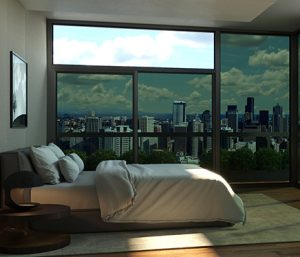
Contemporary residential design often celebrates glass.
Homes increasingly feature:
- Large picture windows
- Floor-to-ceiling glazing
- Glass entry doors
- Door sidelights
- Open-plan spaces
- Interior glass partitions
- Oversized sliding doors
These features can make interiors feel:
- Bright
- Open
- Modern
- Connected to the outdoors
But they can also make occupants feel exposed.
A large living-room window overlooking a quiet yard may be wonderful.
The same glass facing:
- A sidewalk
- Neighboring property
- Shared driveway
- Apartment walkway
can feel completely different.
The challenge is preserving the architectural benefits of glass without feeling as though the entire room is on display.
Why Curtains and Blinds Are Not Always the Perfect Answer
Curtains, shades, and blinds are effective privacy tools.
They also offer an advantage no conventional transparent privacy film can completely replicate:
They can be opened and closed whenever you want.
But homeowners may not want them covering the windows throughout the day.
Closed window coverings can reduce:
- Natural daylight
- Outdoor views
- Visual openness
- The architectural impact of large glass areas
Window film offers another approach.
Instead of covering the window with fabric or slats, the privacy treatment becomes part of the glass itself.
For many homes, the best solution may even combine both:
Window film for daytime or constant privacy + curtains or shades when additional control is needed.
Frosted Window Film: Privacy Without Heavy Window Coverings
Frosted film is one of the strongest choices when the priority is privacy while maintaining daylight.
Rather than making the glass simply darker, frost diffuses the view through it.
Objects and people behind the glass become obscured while light can continue to pass through.
That makes frost particularly useful for spaces where you want:
light, but not a clear view.
Popular applications include:
- Bathrooms
- Shower enclosures
- Front-door sidelights
- Entryways
- Interior glass doors
- Ground-floor bedrooms
- Office partitions inside the home
Luxury Glass Tinting offers white frost window film specifically for this type of application.
Does Frosted Film Provide Privacy at Night?
Yes, frosted film provides much more consistent visual privacy than reflective one-way-style film because it does not rely on one side of the glass being brighter than the other.
The film physically obscures the view through the glass.
That makes it appropriate where privacy needs to remain effective after interior lights are turned on.
However, the exact degree of obscuration depends on:
- Film
- Distance from the glass
- Lighting
- Silhouettes
- Coverage
A translucent film may still reveal blurred shapes or movement.
If complete visual blocking is required, a more opaque film may be appropriate.
Does Frosted Film Block Natural Light?
It reduces and diffuses some light, but it does not necessarily make a space dark.
Quality frosted films are specifically used to create light-filled private spaces.
Instead of allowing a clear beam of light and a clear view, the film scatters incoming light.
This can create softer illumination.
That is why frost works particularly well in bathrooms and entryways where homeowners want both:
- Daylight
- Visual separation
Frosted Film Does Block Your Clear View
This is the trade-off.
Frost can maintain brightness, but it intentionally removes clear visibility through the treated portion of glass.
That makes it excellent for:
Bathroom window: Yes.
Front-door sidelight: Yes.
Bedroom window facing a close neighbor: Often yes.
Large living-room window overlooking the ocean: Probably not, unless only part of the glass is frosted.
For view-sensitive spaces, partial or gradient privacy can offer a better compromise.
Partial Frosting: Privacy Only Where You Need It
Privacy does not have to mean covering the entire pane.
A particularly effective design approach is partial coverage.
For example, a homeowner may frost:
- The bottom half of a street-facing window
- Eye-level sections of an entry door
- The center band of a bathroom window
- The lower portion of an interior partition
while leaving the rest clear.
This can block the most intrusive sightlines without sacrificing all of the view.
It can also make the film feel like an intentional architectural feature rather than something installed purely for concealment.
Gradient Window Film
Gradient film offers another creative compromise.
Instead of moving abruptly from clear to opaque, a gradient gradually changes visibility across the pane.
For example:
Clear at the top → progressively frosted → opaque toward the bottom
This can work particularly well in:
- Bathrooms
- Bedrooms
- Glass doors
- Interior partitions
where privacy is most important around eye level or lower areas.
LLumar currently offers decorative gradient films specifically to control what is revealed or concealed across different portions of the glass.
White Frost Window Film for a Clean, Modern Look
White frost is popular because it resembles the appearance of etched or sandblasted architectural glass.
It can complement:
- Modern homes
- Minimalist interiors
- Coastal interiors
- Contemporary bathrooms
- Neutral color palettes
The film itself becomes part of the design.
Rather than seeing a privacy treatment hanging over the glass, you see glass with a soft architectural finish.
This can make a major difference in small spaces where heavy window coverings would feel visually bulky.
Decorative Window Film Goes Beyond Basic Frost
Privacy film does not have to look uniform.
Modern decorative window film can incorporate a wide variety of styles.
Depending on the collection and product, options can include:
- Matte frost
- Textured frost
- Colored frost
- Geometric patterns
- Nature-inspired patterns
- Stripes
- Dots
- Gradients
- Stained-glass-style effects
- Colored translucent film
- Opaque accents
This allows the glass to become part of the overall interior design.
Decorative Film Can Mimic Specialty Glass
One of the biggest aesthetic advantages of film is its ability to create effects inspired by:
- Etched glass
- Sandblasted glass
- Textured glass
- Patterned glazing
without replacing the existing pane.
That can be valuable if the existing glass is still in good condition and the homeowner primarily wants:
- A new appearance
- More privacy
- A design feature
Film and true specialty glass are not identical materials, but film offers a practical retrofit option.
Decorative Film for Entry Doors
Glass entry doors can be beautiful but revealing.
Clear glass may create a direct sightline into:
- Living rooms
- Hallways
- Staircases
Decorative film can interrupt that view while still allowing daylight into the entry.
Possible treatments include:
- Full frost
- Geometric pattern
- Frosted border
- Clear/frost combination
- Gradient
- Textured appearance
This gives homeowners considerably more design freedom than simply closing a curtain over the door.
Decorative Film for Door Sidelights
Sidelights are one of the best residential uses for privacy film.
They allow daylight into the entryway but can also give visitors or pedestrians a direct view into the home.
White frost or patterned decorative film can:
- Obscure the view
- Preserve daylight
- Complement the front door
- Create a more intentional entrance
Because sidelights are narrow, even a relatively bold decorative pattern can look elegant without overwhelming the façade.
Decorative Film for Bathrooms
Bathroom windows need a different type of privacy from most living-room windows.
The priority is usually:
consistent privacy regardless of time of day.
This makes frost an excellent fit.
It can work on:
- Exterior bathroom windows
- Shower glass
- Interior bathroom doors
- Glass partitions
A translucent frost allows light through without relying on curtains or blinds in areas where moisture can make traditional window coverings inconvenient.
Decorative Film for Bedrooms
Ground-floor bedrooms can benefit from several different strategies.
Frosted Film
Best when constant privacy matters more than the view.
Partial Frost
Good when you want privacy across the lower portion while preserving sky or tree views above.
Reflective Film
Useful when you want daytime privacy while maintaining a clearer outward view.
Reflective film will not provide the same privacy after dark when interior lights are brighter than outside.
Decorative Film for Home Offices
Home offices often benefit from privacy without needing complete visual blocking.
For interior glass walls or doors, decorative film can create:
- Frosted bands
- Partial privacy
- Patterns
- Gradient effects
For exterior windows, solar-control film may be more appropriate if the main problem is:
- Heat
- Monitor glare
- UV exposure
The product should follow the problem.
Decorative Film for Interior Glass
Not every privacy concern involves exterior windows.
Glass appears throughout contemporary homes in:
- Interior doors
- Room dividers
- Home offices
- Staircases
- Bathrooms
- Closet doors
Decorative film can create separation without constructing a solid wall.
This can help maintain the feeling of:
- Openness
- Light
- Continuity
while still defining different spaces.
Patterns Can Create Privacy Without Hiding Everything
Privacy does not always need to be absolute.
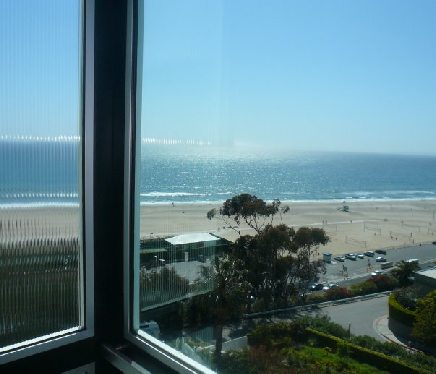
Patterned film can break up direct sightlines while intentionally leaving portions of glass clearer.
This can create a lighter, more decorative result.
For example:
Clear stripes + frost
can provide partial separation without completely closing the glass.
Geometric patterns can create similar effects.
This is often more appropriate for:
- Interior glass
- Hallways
- Home offices
- Decorative entry panels
than a completely opaque finish.
Can You Customize Decorative Window Film?
Yes, depending on the film and production method.
Decorative films can sometimes be:
- Cut into patterns
- Applied in bands
- Combined with clear sections
- Created as custom graphics
- Used to produce personalized design elements
Luxury Glass Tinting currently offers custom-design and decorative-film options for residential and other glass.
The exact capabilities depend on the selected material and design.
Can You Put a Monogram or Custom Design on Home Glass?
Potentially.
Custom-cut decorative vinyl or film can be used to create:
- Initials
- Monograms
- Geometric artwork
- Borders
- Custom motifs
on suitable glass.
For permanent-looking design elements, professional layout is especially valuable because:
- Alignment
- Scale
- Spacing
- Position
strongly affect the final appearance.
Stained-Glass-Style Window Film
Decorative film can also create an appearance inspired by stained or colored glass.
Luxury Glass Tinting currently offers decorative stained-glass-style film among its design options.
This may work particularly well for:
- Entry doors
- Accent windows
- Stairway windows
- Interior decorative glass
It provides visual interest without requiring the existing pane to be replaced with custom stained glass.
Reflective Privacy Film: Better When You Want to Keep the View
Frosted film provides excellent privacy but blocks a clear view.
What if you still want to look outside?
Reflective residential window film may be a better option.
During appropriate daylight conditions, reflective film can make the outside surface appear more mirror-like.
When it is brighter outside than inside, this can:
- Reduce visibility into the home
- Preserve outward visibility
- Reduce glare
- Provide solar control
This can work well on street-facing living-room windows where frost would sacrifice too much of the view.
Reflective Privacy Is Primarily a Daytime Effect
Reflective film does not create magical one-way glass.
Privacy depends on the relative brightness on each side of the window.
During the day:
Outside brighter → stronger privacy effect
At night:
Inside brighter → people outside may be able to see in
This is why reflective film should not be marketed as guaranteed 24/7 privacy.
Curtains or blinds may still be needed after dark.
Dual-Reflective Film Can Improve the Interior View
Dual-reflective film uses a different design:
- More reflective toward the exterior
- Less reflective toward the interior
That helps provide solar control and daytime privacy while reducing the mirror-like reflection occupants see when looking outward.
Luxury Glass Tinting currently offers dual-reflective residential film for homeowners prioritizing privacy and clearer outward views.
It remains lighting-dependent for privacy.
Frosted vs. Reflective Privacy Film
The best choice depends on what matters most.
| Feature | Frosted Film | Reflective Film |
| Daytime privacy | Strong | Strong under favorable lighting |
| Nighttime privacy | More consistent | Limited when interior is brighter |
| Clear outdoor view | No | Yes |
| Natural light | Diffused | Maintained to varying degree |
| Decorative appearance | Excellent | More architectural/reflective |
| Solar heat control | Product-dependent | Often a major function |
| Best for bathrooms | Excellent | Usually not first choice |
| Best for view windows | Usually no | Stronger choice |
| Lighting-dependent privacy | No | Yes |
Neither is universally better.
They solve different privacy problems.
Frosted vs. Blinds and Curtains
Frosted film and traditional coverings also serve different purposes.
Frosted Film
Offers:
- Constant visual obscuration
- Daylight diffusion
- Clean glass appearance
- No daily adjustment
Curtains and Blinds
Offer:
- Adjustable privacy
- Ability to restore a clear view
- Additional light control
- Nighttime privacy
For many homes, combining them provides the most flexibility.
For example:
Reflective solar film + curtains at night
or
partial frost + shades when complete blackout is desired.
Can Decorative Film Be Removed Later?
Many quality decorative films are designed to be removable.
LLumar currently positions its decorative residential film as durable but removable so homeowners can update a room’s appearance.
However, removability is still product-specific.
Factors include:
- Adhesive
- Film
- Installation age
- Glass
- Environmental exposure
For homeowners who expect frequent design changes, ask specifically about future removal before selecting the product.
What About Static-Cling Privacy Film?
Static-cling or non-adhesive film provides another option for temporary decorative privacy.
It can be useful for:
- Renters
- Temporary applications
- Small windows
- Seasonal designs
- DIY projects
Static-cling film differs from conventional adhesive architectural film.
It typically offers:
- Easier repositioning
- Easier removal
- Less permanent adhesion
but may not provide the same:
- Longevity
- Edge stability
- Optical finish
- Solar performance
as professionally installed adhesive products.
Choose it when temporary flexibility is more important than maximum long-term performance.
Does Decorative Window Film Reduce Heat?
Sometimes—but not automatically.
This is one of the biggest areas where window-film marketing can become confusing.
Decorative film is primarily selected for:
- Privacy
- Appearance
- Light diffusion
Solar-control film is specifically engineered around solar-energy performance.
Some decorative products may provide useful UV or solar properties.
Others may not.
Do not assume every frosted or patterned film will deliver the same heat reduction as:
- Reflective solar film
- Ceramic window film
- Spectrally selective film
If heat is also a major problem, tell the installer before selecting a decorative product.
Decorative Film and Solar-Control Film Solve Different Problems
A homeowner may need both design and solar performance.
For example:
Bathroom: white frost for privacy.
West-facing living room: ceramic or dual-reflective solar film for heat and glare.
Front-door sidelight: decorative frost.
Home office: spectrally selective film for heat and daylight.
There is no rule that every window in the house needs the same film.
A room-by-room strategy is often stronger.
Can Residential Window Film Help With Energy Efficiency?
Yes, when the film is specifically designed for solar or thermal performance.
The U.S. Department of Energy states that heat gain and heat loss through windows account for roughly 25%–30% of residential heating and cooling energy use.
That statistic describes the role of windows broadly.
It does not mean:
- Untreated windows automatically waste exactly 30% of every home’s energy
- Decorative film will lower an energy bill by 30%
- Every film saves the same amount of energy
Actual energy performance depends on factors such as:
- Glass
- Window area
- Orientation
- Film
- Shading
- Insulation
- HVAC
- Climate
- Occupant behavior
Solar-control window film can reduce solar heat gain through treated glass and may reduce cooling demand.
Decorative-film energy performance must be evaluated separately.
Does Frosted Film Block UV?
Some frosted and decorative films provide significant UV reduction.
But UV performance is product-specific.
The Skin Cancer Foundation notes that many films are designed primarily for appearance or darkening and recommends looking specifically for UV or solar film when UV protection is the goal.
Products earning the Foundation’s Seal of Recommendation must demonstrate at least 99% blockage of UVA and UVB radiation.
So do not assume:
“All decorative film blocks 99% UV.”
Check the data for the exact product.
UV Protection and Interior Fading
UV radiation is an important contributor to fading.
But it is not the only one.
Other contributors include:
- Visible light
- Solar heat
- Material chemistry
- Age
The International Window Film Association specifically states that film can reduce fading but cannot eliminate it.
If preservation of:
- Artwork
- Hardwood flooring
- Furnishings
- Rugs
is a priority, choose a film based on verified solar and UV performance rather than appearance alone.
Privacy Film Does Not Automatically Improve Security
Another important distinction:
A window that looks private is not necessarily more resistant to forced entry.
Frosted, decorative, and reflective privacy films should not automatically be described as:
- Security film
- Shatterproof film
- Break-in film
Dedicated safety/security window film is a separate specialty category.
Privacy and security can both be part of a project, but they solve different problems.
Decorative Film Does Not Guarantee Higher Property Value
A well-designed window treatment may make a home more attractive to certain occupants or buyers.
But design is subjective.
There is no responsible basis for promising that decorative film will increase a home’s resale price by a particular amount—or at all.
Choose decorative film because it improves:
- Privacy
- Design
- Usability of glass
- Day-to-day enjoyment of the home
Any effect on future property value should be treated as secondary and uncertain.
Where Privacy and Decorative Film Work Best
Bathroom Windows
Best options:
- White frost
- Matte frost
- Textured frost
- Opaque privacy film
Why:
Consistent privacy is usually more important than preserving the view.
Front-Door Sidelights
Best options:
- Frost
- Patterned film
- Gradient
- Stained-glass-style decorative film
Why:
You can obscure direct views into the home while maintaining entrance daylight.
Street-Facing Living Rooms
Best options may include:
- Reflective
- Dual-reflective
- Partial frost
Why:
The right choice depends on whether preserving the outside view is important.
Ground-Floor Bedrooms
Consider:
- Frost for consistent privacy
- Partial frost
- Reflective film plus nighttime coverings
Home Offices
Consider:
- Decorative film on interior partitions
- Solar-control film on exterior windows if glare or heat is the primary problem
Interior Glass Doors
Ideal for:
- Frost
- Patterns
- Gradients
- Custom decorative accents
Shower Glass
Frosted film can provide visual privacy, provided the exact product and installation are appropriate for the application and moisture exposure.
How to Design Privacy Without Making a Home Feel Smaller
Privacy works best when it feels intentional.
Instead of automatically frosting every inch of glass, consider:
Protect Sightlines
Identify exactly where people can see in.
You may only need privacy between:
- Waist level
- Eye level
rather than from floor to ceiling.
Keep Upper Glass Clear
Clear glass above a privacy zone can preserve:
- Daylight
- Sky views
- Visual height
Use Repeated Patterns
Repeating the same frost band or pattern across multiple panes can create architectural consistency.
Match the Interior Style
Minimalist spaces may work well with:
- Matte frost
- Simple gradients
More decorative interiors may suit:
- Patterns
- Textures
- Colored glass effects
Privacy can become part of the design rather than something the design has to hide.
Can Window Film Improve Curb Appeal?
Potentially.
A thoughtfully selected film can create a cleaner or more consistent window appearance.
But curb appeal is subjective.
A mirrored reflective film may suit a contemporary Los Angeles home but feel out of place on another architectural style.
Decorative film installed on entry glass may be highly visible from outside and should therefore complement:
- Door design
- Exterior colors
- Hardware
- Architecture
Homeowners should evaluate samples on their actual glass whenever possible.
Does Decorative Film Require Replacing the Glass?
No.
That is one of its primary advantages.
The existing compatible pane remains in place.
The film modifies its appearance.
This can make decorative film a practical alternative when:
- Glass is already serviceable
- Privacy is the primary concern
- The homeowner wants an etched or patterned appearance
- Replacing the pane would be unnecessary
Film cannot repair damaged or failed windows, however.
Film Cannot Fix a Bad Window
Privacy and decorative film should not be used to hide serious glazing problems such as:
- Cracked glass
- Failed insulated-glass seals
- Water intrusion
- Rotten frames
- Major air leakage
- Structural damage
Those conditions may require proper window repair or replacement.
Glass Compatibility Still Matters
Decorative projects may look simple, but the glass should still be evaluated.
Homes can contain:
- Single-pane glass
- Double-pane insulated glass
- Tempered glass
- Laminated glass
- Low-E glass
- Factory-coated glass
Product manufacturers provide compatibility requirements for different glazing systems.
This becomes especially important when combining decorative goals with stronger solar-control performance because film can change solar absorption.
Professional vs. DIY Decorative Film
Decorative film is one of the residential categories where DIY can sometimes make sense.
Small projects such as:
- Cabinet glass
- Small bathroom windows
- Temporary privacy panels
- Static-cling applications
can be manageable for homeowners who enjoy DIY work.
Professional installation becomes more valuable for:
- Large panes
- Multiple matching windows
- Complex patterns
- Gradients
- Custom graphics
- Precise partial frost
- Entry doors
- Long-term adhesive film
The main professional advantage is consistency.
Across several neighboring panes, even a small alignment error can become very obvious.
What Professional Decorative Film Installation Includes
A typical project involves:
1. Privacy Assessment
The installer identifies which sightlines need to be obscured.
2. Design Selection
The homeowner chooses:
- Frost level
- Pattern
- Texture
- Coverage
- Custom design
3. Measurement
Each pane is measured so the design sits correctly within the glass.
4. Glass Preparation
The surface is carefully cleaned.
5. Film Application
The decorative film is positioned using the appropriate installation process.
6. Trimming and Alignment
Edges and design features are aligned carefully.
7. Final Inspection
The finished glass is reviewed for:
- Straight lines
- Clean edges
- Pattern consistency
- Contamination
- Overall appearance
Luxury Glass Tinting currently emphasizes clean alignment, crisp trimming, and privacy solutions that keep spaces visually bright.
How to Clean Decorative Window Film
After installation and curing, the film should be cleaned according to the product manufacturer’s instructions.
In general:
- Use a soft cloth
- Use non-abrasive cleaning products
- Avoid hard scrapers
- Avoid abrasive pads
- Be careful around film edges
Textured and specialty films may have additional care requirements.
How Long Does Decorative Window Film Last?
There is no single lifespan for every product.
Durability depends on:
- Film
- Adhesive
- Glass
- Interior vs. exterior exposure
- Sun exposure
- Cleaning
- Installation
When comparing films, ask for the warranty and expected service life of the exact product being recommended.
Questions to Ask Before Choosing a Privacy Film
Before installation, consider these questions:
- Do I need privacy only during the day or also at night?
- Do I want to maintain an outdoor view?
- How much daylight do I want to keep?
- Do I want full or partial privacy?
- Should the film look decorative or nearly invisible?
- Is heat reduction also a priority?
- Is UV protection important?
- Do I want to remove or change the design later?
- What type of glass do I have?
- What warranty applies to the chosen film?
These questions narrow the options quickly.
Common Privacy and Decorative Window Film Myths
Myth: Privacy Film Has to Be Dark
False.
Frosted and patterned films can provide privacy without creating dark glass.
Myth: Frosted Film Blocks All Natural Light
False.
Quality frost diffuses light and can maintain substantial brightness.
Myth: Frosted Film Lets You Keep a Clear View
False.
It creates privacy specifically by obscuring the view.
Myth: Reflective Film Provides Privacy 24/7
False.
Its privacy performance depends on lighting conditions.
Myth: There Is a Clear Film That Gives Complete One-Way Privacy Day and Night
Not with conventional passive window film.
Lighting conditions always matter when maintaining a clear view.
Myth: All Decorative Film Blocks 99% UV
False.
UV performance is product-specific.
Myth: Every Decorative Film Reduces Heat
False.
Decorative and solar-control films have different primary functions.
Myth: Decorative Film Is Security Film
False.
Dedicated safety/security film is a separate category.
Myth: Window Film Automatically Cuts Energy Bills by 30%
False.
DOE’s 25%–30% statistic concerns heat gain and loss through windows as a share of residential heating and cooling energy use. It is not a guaranteed film-savings percentage.
Myth: Decorative Film Guarantees Higher Property Value
False.
Home value depends on far more than a window treatment.
Myth: Privacy Film Must Cover the Entire Window
False.
Partial and gradient designs can provide privacy exactly where it is needed.
Frequently Asked Questions About Privacy and Stylish Home Window Film
Can privacy and style really coexist?
Yes. Frosted, patterned, gradient, colored, and other decorative films can obscure views while becoming part of the room’s design.
What is the best window film for home privacy?
It depends on whether you want to preserve an outdoor view.
For consistent privacy, frost is a strong choice.
For daytime privacy while keeping the view, reflective or dual-reflective film may be more appropriate.
Does frosted film provide privacy day and night?
Generally yes, because it obscures visibility rather than relying on lighting differences.
Can you still see through frosted glass film?
Clear details are obscured, although silhouettes and blurred movement may remain visible depending on film, lighting, and distance.
Does frosted window film let light through?
Yes. Translucent frost can diffuse natural light while obscuring the view.
Is frosted window film good for bathrooms?
Yes. Bathrooms are one of the most common applications because frost offers consistent privacy without requiring the room to lose all daylight.
Is frosted film good for living rooms?
It can be, but it eliminates the clear view through treated areas. Partial frost or reflective film may be better when preserving an outdoor view matters.
Does reflective privacy film work at night?
Not reliably. When the room is brighter than outside, visibility into the home can increase.
Can I have privacy while still seeing outside?
During daylight, reflective or dual-reflective films can provide increased privacy while maintaining an outward view. For full day-and-night privacy, preserving a completely clear outward view is generally not possible with passive film alone.
What is gradient privacy film?
It transitions between clearer and more opaque areas, allowing privacy to be concentrated where it is needed.
Can I frost only half of a window?
Yes. Partial frost can be an excellent way to block street-level sightlines while preserving light and upper views.
Can decorative film look like etched glass?
Yes. Frosted and textured films can create an appearance inspired by etched or sandblasted architectural glass.
Are decorative window films removable?
Many are, but removal characteristics depend on the exact film and adhesive.
Is static-cling film the same as adhesive decorative film?
No. Static-cling film does not use a conventional permanent adhesive and is generally easier to reposition or remove, while professionally installed adhesive film can provide a more durable long-term finish.
Does decorative film reduce UV?
Some products do. Check the specifications of the exact film rather than assuming all decorative films provide 99% UV blocking.
Does decorative film reduce heat?
Some may provide solar benefits, but decorative film should not automatically be treated as high-performance solar-control film.
Can I combine decorative privacy with heat control?
Potentially. The installer can determine whether one product meets both objectives or whether different windows should receive different film types.
Can window film save energy?
Solar-control film can reduce solar heat gain through treated glass and may reduce cooling demand. Actual savings depend on the home.
Is the DOE’s 25%–30% window statistic true?
Yes, with an important qualification: DOE states that heat gain and heat loss through windows account for approximately 25%–30% of residential heating and cooling energy use. It does not say decorative film will reduce an energy bill by 25%–30%.
Does privacy film improve home security?
Not automatically. Visual privacy film and safety/security film are separate product categories.
Is professional installation necessary?
Not for every small project. DIY and static-cling films can work for simple applications. Professional installation becomes more valuable for large panes, custom patterns, multi-window alignment, permanent adhesive products, or projects combining privacy with solar performance.
Privacy and Style Do Not Have to Compete
The best privacy solution is not necessarily the darkest window.
It is the one that fits the room.
For a bathroom, that may mean:
Full white frost for consistent privacy and diffused daylight.
For a front door:
A patterned or frosted design that obscures the hallway while becoming part of the entrance.
For a street-facing living room:
Dual-reflective film that improves daytime privacy while preserving the outward view.
For a bedroom:
Partial frost that blocks pedestrian sightlines without covering the entire window.
And for decorative interior glass:
Patterns, gradients, textures, or custom designs that turn privacy into an architectural feature.
Luxury Glass Tinting provides professional decorative window film in Los Angeles, including:
- Frosted privacy film
- White frost window film
- Patterned decorative film
- Stained-glass-style film
- Decorative privacy film
- Static-cling options
- Custom design applications
For exterior windows where privacy must also be combined with heat and glare control, Luxury Glass Tinting offers residential window film including reflective, dual-reflective, neutral, ceramic, spectrally selective, and other solar-control options.
Privacy does not have to mean closing your home off from natural light.
And style does not require living on display.
With the right film, the glass itself can become the solution—private where you need it, bright where you want it, and designed to look intentional rather than covered up.