Choosing the right window tint for your vehicle is about more than appearance. The right film can help reduce interior heat, minimize glare, protect your car’s interior from UV exposure, and make everyday driving more comfortable.
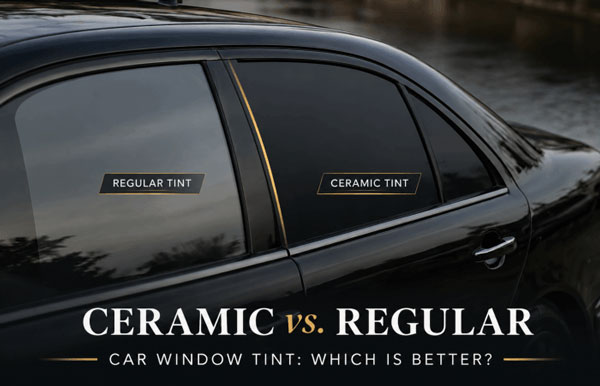
However, not all window tint films offer the same performance. Traditional window tint provides basic shade and privacy, while advanced ceramic films are designed to deliver better solar heat control without relying on metallic materials.
So, which option is better for your vehicle?
In this guide, we’ll compare ceramic and regular car window tint, explain their differences, and help you decide which option makes the most sense for your driving needs.
What Is Ceramic Window Tint?
Ceramic window tint is an advanced window film made using microscopic ceramic particles. These particles are designed to reduce solar heat and block harmful ultraviolet (UV) radiation while maintaining good visibility.
Unlike traditional dyed or metallic films, ceramic film does not depend on dark dyes or metal layers to achieve its performance.
One of its biggest advantages is that it can provide effective heat rejection without significantly darkening your vehicle’s windows.
Some key benefits include:
- Helps reduce infrared heat entering the cabin.
- Blocks up to 99% of UV rays, depending on the product.
- Reduces uncomfortable sunlight and glare.
- Maintains excellent optical clarity.
- Does not interfere with GPS, Bluetooth, or mobile signals when using non-metallic ceramic film.
- Offers long-term color stability with quality products.
For drivers dealing with strong Southern California sunshine, ceramic film can be a valuable upgrade.
What Is Regular Car Window Tint?
Regular car window tint generally refers to traditional dyed or metallic window films. These films have been used for years to improve vehicle appearance, provide privacy, and reduce sunlight entering the cabin.
However, performance varies depending on the film’s construction and quality.
There are two common types:
1. Dyed Window Tint
Dyed window film uses layers of dye to create a darker appearance and provide basic sunlight control.
Its advantages include:
- Generally more affordable.
- Provides additional privacy.
- Offers a darker, customized appearance.
- Can reduce some visible sunlight and glare.
However, lower-quality dyed films may fade, turn purple, or lose their appearance over time.
2. Metallic Window Tint
Metalized window film contains tiny metallic particles that reflect solar energy.
Potential benefits include:
- Solar heat reflection.
- Glare reduction.
- Improved durability compared with some basic dyed films.
One possible disadvantage is signal interference. Depending on the film’s metallic construction, it may affect GPS, mobile phone reception, radio, or other electronic signals.
This is one reason many drivers consider non-metallic ceramic alternatives.
Ceramic vs. Regular Car Window Tint: Key Differences
Both options can improve your vehicle’s appearance and provide some protection from sunlight. However, their technology and performance can be quite different.
| Feature | Regular Tint | Ceramic Tint |
| Heat Rejection | Basic to moderate, depending on film | Generally higher with quality products |
| UV Protection | Varies by product | Often up to 99% |
| Glare Reduction | Yes | Yes |
| Signal Interference | Possible with metallic films | No metal-related interference |
| Color Stability | May fade over time | Better long-term stability |
| Visibility | Depends on shade and film | Excellent clarity with suitable film |
| Price | Generally lower | Generally higher |
| Long-Term Value | Depends on quality | Often a better premium investment |
The important difference is that ceramic technology focuses on controlling solar energy while maintaining visibility and avoiding metal-related signal interference.
5 Major Benefits of Ceramic Window Tint
1. Better Heat Rejection for a Cooler Cabin
One of the biggest reasons drivers choose ceramic window tint is its ability to reduce unwanted solar heat.
During hot summer days, sunlight entering through vehicle windows can make the cabin uncomfortable. Your air conditioning system may also need to work harder to maintain a comfortable temperature.
High-quality ceramic films are engineered to reject infrared solar energy, helping reduce heat buildup inside the vehicle.
This can make a noticeable difference for:
- Daily commuters.
- Drivers who park outdoors.
- Rideshare and delivery drivers.
- Luxury vehicle owners.
- Families who regularly travel in sunny conditions.
If keeping your vehicle comfortable is a priority, ceramic film is worth considering.
2. Protection Against Harmful UV Rays
Extended exposure to ultraviolet radiation can contribute to skin damage and fading of your vehicle’s interior materials.
Premium ceramic films can block up to 99% of harmful UV rays, depending on the manufacturer’s specifications.
This helps protect:
- Leather seats.
- Dashboard surfaces.
- Door panels.
- Upholstery.
- Other interior materials.
It also provides an additional layer of UV protection for passengers during everyday driving.
3. Reduced Glare for More Comfortable Driving
Direct sunlight can make driving uncomfortable, particularly during early mornings, late afternoons, and long highway journeys.
Glare can affect visibility and create unnecessary eye strain.
Ceramic window film helps reduce excessive brightness while maintaining good optical clarity.
This is useful when driving through bright Los Angeles streets or dealing with strong afternoon sunlight.
However, the correct film shade and visible light transmission (VLT) should always be considered to maintain safe visibility.
4. No Metal-Related Signal Interference
Some traditional metallic window films can interfere with electronic signals.
This may create problems for drivers who depend on GPS navigation, mobile connectivity, Bluetooth devices, and keyless entry systems.
Ceramic films use non-metallic technology, making them a suitable option for vehicles with modern electronic systems.
This is especially valuable for newer vehicles equipped with advanced navigation and connectivity features.
5. Better Long-Term Appearance and Durability
Lower-quality dyed films may gradually lose their original appearance after prolonged exposure to sunlight.
Fading, discoloration, peeling, and bubbling can make vehicle windows look unattractive.
Quality ceramic films are designed for improved color stability and long-term performance.
When combined with professional installation and proper aftercare, they can maintain a clean, consistent appearance for years.
Is Ceramic Tint Worth the Higher Price?
Ceramic window tint generally costs more than traditional dyed film. However, the additional investment may be worthwhile depending on your driving habits and expectations.
Consider ceramic film if you:
- Frequently drive in hot and sunny weather.
- Want better heat rejection.
- Prefer additional UV protection.
- Want to maintain a comfortable vehicle interior.
- Use GPS and electronic devices regularly.
- Want a premium tint solution with long-term performance.
Regular dyed tint may be suitable if your primary goals are basic privacy, appearance, and a lower initial installation cost.
Ultimately, the best choice depends on your priorities, budget, and the film’s actual performance specifications.
How to Choose the Right Ceramic Tint for Your Car
Choosing the right film involves more than selecting a darkness level.
Before installation, consider the following factors:
1. Heat Rejection Performance
Check the manufacturer’s specifications for total solar energy rejected (TSER) and infrared rejection. These measurements help you compare film performance more accurately.
Do not rely on darkness alone to determine how well a tint blocks heat.
2. UV Protection
Look for films with clearly documented UV protection ratings. Many premium ceramic films offer up to 99% UV protection.
3. Visible Light Transmission (VLT)
VLT measures how much visible light passes through the film and glass.
A darker film does not automatically provide better heat rejection. Select a shade that balances privacy, visibility, and legal requirements.
4. Film Quality and Warranty
Choose a reputable manufacturer and ask about product specifications, color stability, and warranty coverage.
Professional installation also plays an important role in the final appearance and performance.
Is Ceramic Window Tint Legal in Los Angeles?
Before installing any window film, it is important to understand California’s vehicle window tint regulations.
California has specific requirements governing the amount of visible light allowed through vehicle windows and the placement of window film.
The legality of a particular tint depends on the window location, film specifications, and applicable vehicle regulations.
Do not assume that a particular ceramic film shade is automatically legal simply because it offers excellent visibility.
A professional installer can help you select an appropriate film and shade based on current California requirements.
Why Choose Luxury Glass Tinting for Ceramic Window Tint in Los Angeles?
If you are considering upgrading from traditional film, professional installation makes a significant difference.
At Luxury Glass Tinting, we provide professional automotive window tinting in Los Angeles using premium LLumar window films.
Our ceramic window tint solutions are designed to improve driving comfort through heat rejection, UV protection, and glare reduction while maintaining excellent optical clarity.
We work with different vehicle types, including:
- Sedans.
- SUVs.
- Trucks.
- Luxury vehicles.
- Sports cars.
- Electric vehicles.
Our installation process includes vehicle-specific film selection, computer-cut patterns, careful application, and attention to clean edges and finishing.
We also help customers compare available film shades and performance options so they can choose a solution that suits their vehicle and driving needs.
Whether you want better heat control, additional UV protection, or a premium appearance, our team can help you find the right option.
Frequently Asked Questions
1. Is ceramic window tint better than regular window tint?
Ceramic window tint generally offers better heat rejection, UV protection, and color stability than basic dyed films. It also avoids metal-related signal interference. However, the actual performance depends on the specific film product.
2. How long does ceramic car window tint last?
High-quality ceramic window tint can last many years when professionally installed and properly maintained. Its lifespan depends on the manufacturer, film quality, installation, and environmental conditions.
3. Does ceramic window tint block heat?
Yes. Ceramic films are designed to reject infrared solar energy and reduce heat entering the vehicle. The level of heat rejection varies by product and film series.
4. Does ceramic tint interfere with GPS or mobile phone signals?
Non-metallic ceramic window films do not create the signal interference associated with certain metalized films. This makes them suitable for vehicles that rely on modern electronic systems.
5. How much does ceramic window tint cost in Los Angeles?
The cost depends on your vehicle’s make and model, the number of windows, film series, and installation requirements. Contact Luxury Glass Tinting for a personalized quote.
6. Can ceramic tint be installed on any vehicle?
Ceramic window tint can be installed on many vehicle types, including sedans, SUVs, trucks, and luxury cars. However, the film must be compatible with the existing glass and applicable vehicle regulations.
Final Thoughts
When comparing ceramic and regular car window tint, the best option depends on what you expect from your investment.
Regular dyed film can provide basic privacy and appearance improvements at a lower initial cost. Ceramic film offers more advanced solar control, UV protection, and signal-friendly performance.
For drivers who spend considerable time on the road or regularly deal with strong sunlight, ceramic window tint can be a worthwhile upgrade.
If you are looking for professional ceramic window tint installation in Los Angeles, Luxury Glass Tinting can help you choose the right film for your vehicle.
Ready to upgrade your vehicle’s window tint?
Contact Luxury Glass Tinting today to request a quote for professional ceramic window tint installation in Los Angeles.
Website: https://luxuryglasstinting.com/
Phone: (310) 925-0780
Email: luxuryglasstinting@yahoo.com