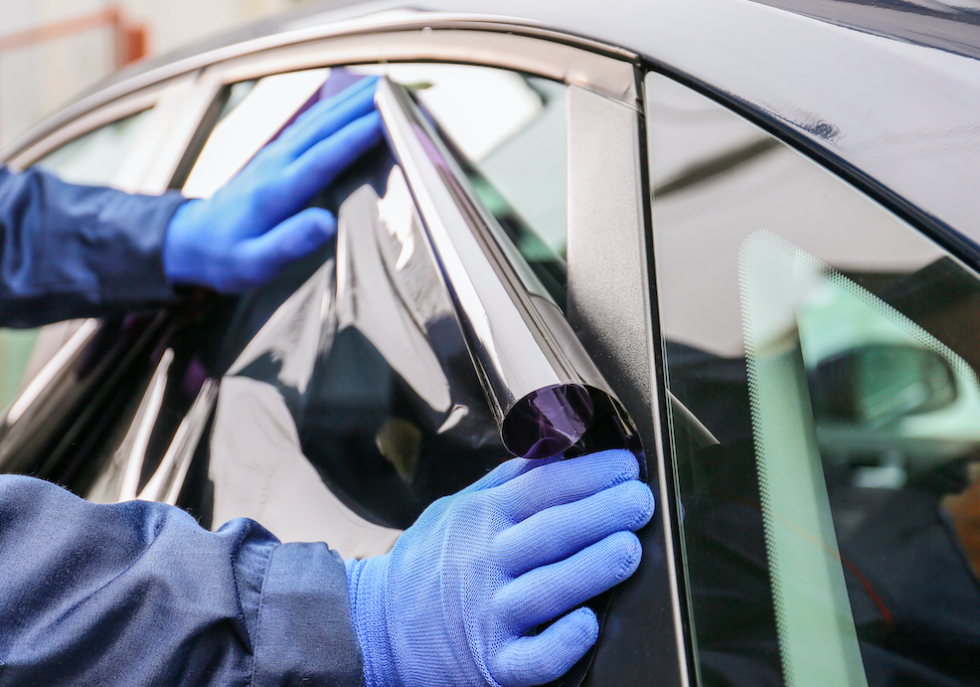
Choosing the right window tint for your car is not simply a matter of deciding how dark you want the windows to look.
Modern automotive films can differ significantly in heat rejection, UV protection, glare control, optical clarity, privacy, construction, warranty, and price. Two films with a similar shade can perform very differently under the Los Angeles sun.
That is why the best window tint depends on what matters most to you.
A driver mainly interested in appearance and privacy may be perfectly happy with a quality dyed film. Someone who spends hours commuting in Southern California heat may prefer ceramic or nano-ceramic film. A driver who wants to preserve the factory appearance may prefer a virtually clear heat-rejecting film.
Luxury Glass Tinting offers professional automotive window tinting in Los Angeles using premium LLumar options that include dyed, ceramic, nano-ceramic, and virtually clear films.
This guide explains how the major tint technologies differ, which specifications actually matter, and how to choose a film based on your vehicle, budget, comfort goals, appearance preferences, and California requirements.
Quick Answer: Which Car Window Tint Should You Choose?
There is no single film that is best for every driver.
A useful way to think about the options is:
| Your Priority | Film Type to Consider |
|---|---|
| Affordable styling and privacy | Quality dyed film |
| Strong heat rejection without extreme darkness | Ceramic film |
| Premium solar and infrared performance | Nano-ceramic film |
| Maximum visibility and subtle appearance | Virtually clear ceramic film |
| Reflective solar performance | Metallized film, where appropriate |
| High-tech light appearance | Premium multilayer optical products such as 3M Crystalline |
| Darker rear-cabin privacy | Appropriate darker film on legally permitted glazing |
The best decision comes from comparing the specific product, not simply the category name.
Start With Your Goal, Not the Tint Percentage
Many customers begin by saying:
“I want 20% tint.”
That describes appearance, but it does not explain what you want the film to accomplish.
Before choosing a shade, decide whether your priority is heat control, UV protection, privacy, glare reduction, styling, visibility, or a balance of several benefits.
For Los Angeles driving, heat rejection is often one of the biggest priorities. But a dark film is not automatically a high-performance heat-control film.
This is where film technology becomes important.
Understanding VLT Before Choosing a Tint
VLT stands for Visible Light Transmission.
It measures the percentage of visible light that passes through the glazing.
Higher VLT means a lighter appearance.
Lower VLT means a darker appearance.
A 70% film appears relatively light, while 20% or 5% film looks much darker.
However, the number printed for the film does not necessarily equal the finished window VLT because the vehicle’s factory glass already reduces some visible light.
For example, if factory glass transmits 80% of visible light and you install a 50% VLT film, the resulting glazing would theoretically transmit approximately 40%:
0.80 × 0.50 = 0.40
That distinction matters for both appearance and legal compliance.
Darkness and Heat Rejection Are Not the Same Thing
This is probably the most important buying lesson.
A very dark inexpensive film may reject less total solar energy than a lighter premium ceramic film.
Darkness tells you how much visible light passes through.
It does not tell you everything about how the film handles infrared radiation or total solar energy.
If your main goal is keeping the cabin more comfortable, compare the actual film performance rather than assuming the darkest film must be the coolest.
What Is TSER?
Total Solar Energy Rejected, or TSER, is a useful measurement when comparing heat-control performance.
It represents the percentage of total incoming solar energy rejected by the glazing system.
Generally, the higher the TSER, the more total solar energy the glazing rejects.
This is often more useful than comparing tint darkness alone.
It is also valuable when comparing large infrared-rejection claims because infrared measurements can be reported differently between manufacturers.
What About Infrared Rejection?
Ceramic and nano-ceramic tint is frequently marketed using an infrared-rejection percentage.
Infrared radiation is an important contributor to the heat people feel from sunlight.
However, a film advertised with “90% IR rejection” should not automatically be interpreted as rejecting 90% of all solar heat.
Manufacturers may report infrared performance over different wavelength ranges.
That makes TSER, VLT, UV rejection, and the manufacturer’s complete performance data more useful than one marketing percentage by itself.
Dyed Window Tint: Good Value for Style and Privacy
Dyed tint is usually one of the most affordable professional automotive-film options.
It is especially suitable for drivers who want a darker appearance, additional privacy, glare reduction, and basic solar performance without paying for the highest-performance ceramic technology.
A quality dyed film can look excellent.
The assumption that every dyed tint quickly turns purple is outdated.
Poor-quality dyed films can discolor over time, but reputable manufacturers produce color-stable dyed films specifically designed for durability.
LLumar’s current FormulaOne Classic, for example, uses deep-dyed construction and is marketed with long-term color stability, UV protection, scratch resistance, and a transferable limited lifetime warranty.
Luxury Glass Tinting currently offers premium dyed film for customers who want a clean charcoal appearance at a more budget-conscious price.
Who Should Choose Dyed Tint?
Dyed tint makes the most sense when your main priorities are appearance, privacy, glare control, and price.
If maximum heat rejection is your primary goal, ceramic technology may be worth the additional cost.
Metallized Window Tint: Strong Solar Performance With a Reflective Character
Metallized films incorporate extremely thin metallic components that help reflect solar energy.
Depending on the product, they can provide strong heat control, UV protection, glare reduction, and durability.
LLumar continues to offer metallized automotive tint as part of its current product range.
However, the idea that metallized tint is automatically “higher quality” than dyed film is too simplistic.
They are different technologies.
Metallized film may have a slightly more reflective appearance, which some drivers like and others do not.
Metal-containing constructions have also historically raised concerns about interference with certain electronic signals. The actual effect depends on the exact film and vehicle, so it is better to check the manufacturer’s specifications rather than assume every metallized product causes a problem.
What About Hybrid Window Tint?
The term hybrid tint is used differently across the automotive-film market.
Traditionally, it has often described products combining dyed and metallic technologies.
Other manufacturers may use “hybrid” to describe different multilayer constructions.
That means “hybrid” should not be treated as one standardized performance category.
A hybrid product might provide a useful balance of appearance, solar performance, reflectivity, and price—but the word itself does not tell you how well the film performs.
Instead, compare the film’s VLT, TSER, UV rejection, reflectivity, construction, warranty, and manufacturer data.
The original claim that hybrid films automatically avoid the signal concerns associated with metallic films is also too broad. If the product contains metallic components, its construction should be checked directly.
Carbon Window Tint: Understand the Product, Not Just the Label
Carbon tint is another term frequently used in the market.
These products may use carbon-based components to create a dark, stable appearance while avoiding conventional metallic construction.
A good carbon film can provide attractive color, heat control, and signal compatibility.
But “carbon” does not automatically mean:
- Better than all dyed film
- Better than all ceramic film
- Maximum heat rejection
- Lifetime color stability
- A specific matte appearance
Performance is product-specific.
For a consumer, the important question is not:
“Is this carbon tint?”
It is:
“What are the VLT, TSER, UV, warranty, construction, and tested performance of this specific product?”
Luxury Glass Tinting’s current automotive lineup focuses primarily on LLumar dyed and ceramic technologies rather than selling customers based on a generic “carbon” label.
Ceramic Window Tint: Premium Performance Without Metal
Ceramic film is one of the most popular premium automotive tint technologies.
Quality ceramic film uses non-metallic ceramic technology to manage solar energy while maintaining good optical clarity.
Ceramic film can provide strong heat control while remaining relatively light in appearance.
This is one of its biggest advantages.
Drivers no longer need to assume that strong solar performance requires extremely dark glass.
Luxury Glass Tinting currently offers ceramic window tinting using premium LLumar film for Los Angeles drivers who want a balance of heat rejection, UV protection, clarity, appearance, and signal compatibility.
Ceramic Tint Is Especially Useful When You Want:
Strong solar heat control, lighter shade options, non-metallic construction, UV protection, glare reduction, premium appearance, and good optical clarity.
Ceramic film usually costs more than dyed tint, but it makes the strongest case for drivers who place significant value on cabin comfort.
Nano-Ceramic Window Tint: Premium Heat Control
Nano-ceramic is generally positioned above conventional dyed film and many standard ceramic products in terms of solar performance.
These films use extremely small ceramic particles engineered to target solar and infrared energy while maintaining clarity.
Luxury Glass Tinting currently offers LLumar FormulaOne Stratos as its premium nano-ceramic option.
LLumar describes Stratos as its top-of-the-line FormulaOne tint and uses heat-absorbing nano-ceramic particles to control infrared energy.
For Los Angeles drivers who spend significant time commuting, parking outdoors, or driving vehicles with large areas of glass, nano-ceramic film can be an attractive premium upgrade.
Who Should Choose Nano-Ceramic Tint?
It makes the strongest sense when heat rejection and comfort are among your highest priorities and you are willing to pay more for premium performance.
It is not automatically necessary for every driver.
If you mainly want privacy and styling, premium dyed or standard ceramic tint may offer better value.
Virtually Clear Window Tint: Performance Without the Dark Look
You do not need dark windows to benefit from modern automotive-film technology.
Virtually clear films can provide UV and solar-control performance while changing the factory appearance very little.
Luxury Glass Tinting currently offers LLumar AIR clear window film.
LLumar uses nano-ceramic technology in AIR to provide heat and UV performance while maintaining high transparency.
This can be useful for drivers who want:
Maximum visibility, minimal styling changes, stronger UV protection, additional solar performance, or extra performance over factory privacy glass without making the rear windows significantly darker.
Virtually clear film also demonstrates why judging tint entirely by darkness is a mistake.
What Is Crystalline Window Tint?
“Crystalline tint” is often discussed as though it were a generic category like dyed or ceramic film.
More accurately, Crystalline is a specific automotive window-film series from 3M.
3M’s current Crystalline Series uses a proprietary multilayer optical film construction with more than 200 extremely thin layers and nano-technology.
It is designed to reject substantial solar energy while maintaining relatively high visible-light transmission.
Current 3M information states that Crystalline can reject up to 64% of total solar energy in applicable configurations while using non-metallized technology designed to avoid electronic-signal interference.
Crystalline is therefore better described as a specific premium product technology, not a generic film class that every installer carries.
Luxury Glass Tinting’s current premium automotive offering is centered around LLumar products such as Stratos, Pinnacle, Classic, and AIR.
Is Ceramic Tint Better Than Crystalline?
There is no useful universal answer because you would be comparing a broad technology category with a specific product family.
The better comparison is between the exact products.
For example, you could compare:
LLumar FormulaOne Stratos versus 3M Crystalline at similar VLT levels.
Then compare actual:
- VLT
- TSER
- UV performance
- IR data
- Appearance
- Warranty
- Manufacturer support
- Installer quality
- Price
That produces a much more meaningful buying decision than simply comparing brand labels.
Luxury Glass Tinting’s Current Automotive Tint Options
For customers in Los Angeles, Luxury Glass Tinting currently organizes its primary automotive offering around four useful performance levels.
Premium Dyed: FormulaOne Classic
Classic is a strong fit for drivers who want an affordable custom appearance, additional privacy, and reliable glare control.
It is the logical starting point when budget matters.
Ceramic: FormulaOne Pinnacle
Pinnacle is designed for drivers who want stronger heat control and UV performance while maintaining a clean charcoal appearance and non-metallic construction.
It is a strong middle-to-premium choice for daily driving.
Premium Nano-Ceramic: FormulaOne Stratos
Stratos is the premium option for drivers prioritizing solar and infrared performance.
It makes the most sense when maximum comfort is more important than minimizing price.
Virtually Clear: LLumar AIR
AIR is designed for drivers who want heat and UV performance with minimal visual change.
It can also complement factory privacy glass where additional solar-control performance is desired.
Which Film Is Best for Los Angeles Heat?
For strong Los Angeles solar exposure, ceramic or nano-ceramic film will usually be the most relevant category to investigate.
That does not mean you should automatically buy the most expensive film.
Consider your actual use.
If your car spends most of the day in covered parking and you drive only short distances, the difference between premium dyed and top-tier nano-ceramic may matter less to you.
If you spend hours commuting, park outdoors regularly, or drive a vehicle with extensive glazing, higher-performance ceramic can become much easier to justify.
Which Tint Is Best for Privacy?
Privacy depends heavily on VLT.
Lower-VLT film makes the cabin more difficult to see into.
For rear glazing where California provides greater flexibility, a darker film can provide meaningful additional privacy.
But remember that privacy affects visibility in both directions.
Very dark film also reduces how much light reaches your eyes when you look outward at night.
If you drive frequently after dark, balance privacy against nighttime visibility.
Which Tint Is Best for UV Protection?
Do not choose UV protection based on darkness.
Many premium light and virtually clear automotive films are designed to block approximately 99% or more of UV radiation.
A lighter high-quality film can therefore provide stronger verified UV protection than an unknown low-quality dark film.
Look for the manufacturer’s published UV specification.
Which Tint Is Best for Night Driving?
Generally, higher-VLT film preserves more nighttime visibility.
This does not mean you must leave the windows completely clear.
Premium ceramic technology gives drivers more flexibility because good heat performance does not necessarily require a very dark shade.
If nighttime visibility is a concern, prioritize a lighter VLT and strong solar-control technology.
Which Tint Is Best for a Tesla or Vehicle With a Large Glass Area?
Vehicles with extensive glass can experience significant solar exposure.
Ceramic or nano-ceramic film is often attractive in these applications because it can provide strong heat control while preserving visibility.
However, the right approach depends on the individual vehicle, glazing, roof construction, desired shade, and California requirements.
Not every piece of glass should automatically receive the same film or VLT.
Does Factory Privacy Glass Mean You Don’t Need Tint?
Not necessarily.
Factory privacy glass is typically darkened glass rather than a high-performance aftermarket solar-control film.
It provides appearance and privacy.
Its darkness does not tell you how much total solar energy or UV radiation it rejects.
A compatible clear or ceramic film can sometimes be applied over factory privacy glass when additional solar-control performance is desired.
California Law Should Influence Your Film Choice
For Los Angeles drivers, the film you like must also be appropriate for the window where it will be installed.
Under current California Vehicle Code §26708, qualifying clear, colorless, transparent material installed on the front side windows immediately beside the driver and front passenger must have at least 88% VLT itself.
The completed glazing must also meet the referenced federal 70% minimum light-transmission requirement, along with additional UV and certification requirements.
Rear-side windows behind the driver are treated differently, and the rear window has an outside-mirror condition.
The current statute was amended effective January 1, 2026.
That means a shade that is appropriate for a rear passenger window may not be appropriate for the driver’s side window.
Do Not Choose Tint From a Generic “Legal Percentage” Chart
California regulations are more detailed than a one-number graphic.
Legal compliance can depend on:
Window location, film VLT, existing glass, finished glazing VLT, color, certification, and windshield placement.
Ask the installer how the proposed film applies to your specific vehicle and window.
What About Warranty?
Warranty is worth considering because tint is expected to remain on the vehicle for years.
Ask what the written warranty covers.
Common warranty concerns can include:
- Bubbling
- Peeling
- Cracking
- Adhesive failure
- Discoloration
- Film construction defects
LLumar currently states that its premium automotive window tint products are backed by manufacturer limited lifetime warranty coverage, subject to the specific terms and restrictions of the product and installation.
Do not simply ask whether the installer says the tint has a “lifetime warranty.”
Ask to see what that warranty actually covers.
Professional Installation Matters as Much as Film Choice
Even excellent film can look bad if installed poorly.
Professional automotive tinting requires careful glass preparation, precise film fitting, clean handling, moisture removal, controlled heat shaping on curved glass, edge finishing, and inspection.
Common signs of poor installation can include contamination, bad cuts, lifting edges, creases, persistent air bubbles, and misalignment.
Luxury Glass Tinting installs professional automotive film in Los Angeles and also offers mobile window tinting for customers with suitable home or workplace installation locations.
How to Choose Your Tint Step by Step
The simplest selection process is to decide your priorities in this order: first determine where on the vehicle the film will be installed and what California requirements apply; next decide whether your main objective is heat rejection, privacy, appearance, UV protection, or a combination; then choose the appropriate film technology; compare VLT, TSER, UV and manufacturer specifications; select a shade that preserves comfortable nighttime visibility; and finally compare warranty and installer quality before purchasing.
That produces a much better result than simply choosing the darkest film within your budget.
Frequently Asked Questions
What is the best type of window tint for a car?
There is no universal best film. Ceramic and nano-ceramic are strong premium choices for heat control, dyed film offers good value for style and privacy, and virtually clear ceramic film works well when visibility and subtle appearance are priorities.
Is ceramic tint worth the extra money?
It can be, especially if heat rejection and comfort matter. Drivers mainly interested in appearance and privacy may find quality dyed film to be better value.
Is nano-ceramic better than ceramic?
Nano-ceramic products are often positioned as higher-performance ceramic technologies, but actual performance depends on the specific film. Compare VLT, TSER, UV, IR data, and warranty.
Is dyed tint bad?
No. Quality modern dyed film can provide excellent appearance, privacy, glare control, and durability. Premium dyed films are much different from inexpensive low-quality products associated with rapid purple discoloration.
Does dyed tint fade?
Low-quality dyed products can discolor, but quality color-stable dyed films are engineered to resist fading. Check the manufacturer’s warranty.
Is metalized tint better than ceramic?
Not universally. Metallized film can provide strong solar performance and a slightly reflective appearance. Ceramic is often preferred when non-metallic construction, subtle appearance, and signal compatibility are priorities.
Does metalized tint interfere with GPS?
Certain metal-containing films have historically raised signal-interference concerns, but performance varies by product and vehicle. Check the exact manufacturer’s specifications.
What is hybrid tint?
Hybrid is not a universally standardized tint class. It often refers to a film combining more than one construction technology, traditionally dye and metal. Compare the exact product rather than relying on the label.
Is carbon tint better than ceramic?
Not automatically. “Carbon” and “ceramic” describe different technologies or marketing categories. Premium ceramic usually makes a stronger case when maximizing solar performance is the goal, but actual product specifications should be compared.
What is Crystalline tint?
Crystalline is a premium 3M automotive window-film product family using proprietary multilayer optical film technology and nano-technology. It should not be treated as a generic tint category.
Does darker tint block more heat?
Not necessarily. A lighter high-performance ceramic film can reject more solar energy than a darker entry-level film.
Does darker tint block more UV?
No. Light and virtually clear films can provide approximately 99% or more UV protection when specifically engineered to do so.
What tint is best if I do not want dark windows?
Virtually clear ceramic film or another premium high-VLT solar-control product is usually the category to consider.
What tint is best for Los Angeles?
For drivers prioritizing heat control, ceramic or nano-ceramic film is especially attractive. Dyed film remains a strong value option for appearance and privacy.
What is the difference between 20% and 50% tint?
A 20% VLT film transmits significantly less visible light and appears darker than a 50% VLT film. Final window VLT also depends on the vehicle’s existing glass.
Is the same tint percentage suitable for every window?
No. Appearance, nighttime visibility, factory glass, and California law vary by window location.
What Window Tint Should You Choose?
For most drivers, the answer comes down to priorities.
If you want good looks and privacy at the lowest reasonable professional price, choose a quality dyed film.
If you want better heat rejection and premium everyday comfort, choose ceramic.
If you want top-tier heat and infrared performance, investigate premium nano-ceramic options such as LLumar FormulaOne Stratos.
If you want UV and solar performance without making the glass look significantly darker, consider virtually clear film such as LLumar AIR.
And if you are comparing products marketed as carbon, hybrid, metallized, or Crystalline, compare their actual technical specifications rather than assuming the category name tells you which one performs best.
Luxury Glass Tinting provides professional automotive window tinting in Los Angeles and can recommend a film based on your vehicle, budget, heat-rejection needs, UV goals, desired appearance, privacy requirements, and legal considerations.
The right tint is not simply the darkest film or the most expensive film.
It is the product that delivers the best combination of VLT, TSER, UV protection, visibility, appearance, warranty, installation quality, and legal fit for the way you actually use your car.