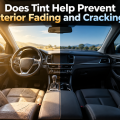
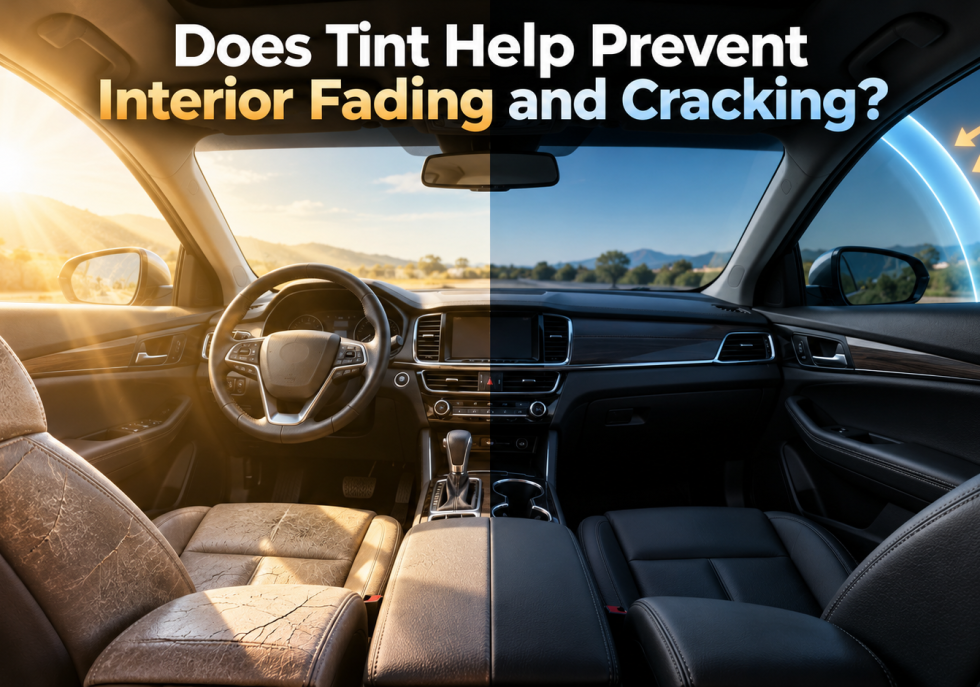
A car interior can look immaculate when new, yet years of sunlight can leave its dashboard pale, its leather seats discolored, and its trim brittle. For drivers regularly parked in the Los Angeles sun, the question is simple: can window tint prevent interior fading and cracking?
Yes, quality automotive window film can slow sun-related deterioration by reducing ultraviolet (UV) exposure and, depending on the product, solar heat. It cannot stop every form of aging or guarantee that dashboards will never crack. Material quality, temperature changes, cleaning products and maintenance still influence how your cabin ages.
Here is how the protection works, what the performance figures mean, and how to make it part of a practical interior-care routine.
Why Does Sunlight Damage Car Interiors?
Sun damage is not caused by one type of radiation. Vehicle upholstery and trim are exposed to a combination of ultraviolet light, visible sunlight, and heat. The effect builds through repeated exposure, especially when a car spends hours parked outside.
Ultraviolet radiation and fading
UV radiation carries enough energy to trigger chemical changes in dyes, pigments and polymers. Over time, those changes can produce fading, chalking and loss of surface strength. A rich black dashboard may become greyish, while coloured seat panels can fade unevenly where sunlight reaches them most often.
Heat and material aging
Solar energy warms the dashboard, seat coverings and steering wheel. Repeated heating and cooling cause materials to expand and contract. Over time, some plastics and vinyl surfaces may become less flexible, making existing stress points more susceptible to splitting.
Heat can also accelerate aging in adhesives, coatings, and trim components. However, the exact causes of cracked dashboards vary by vehicle, material composition, and environmental conditions. A window film cannot correct a manufacturing defect or repair damage that has already formed.
Wear, friction and cleaning chemicals
Everyday abrasion, harsh solvents, and inadequate care contribute to interior wear. Leather seats, for example, suffer from repeated contact and sunlight. Protecting them therefore requires more than darkening the windows.
How Does Window Tint Prevent Interior Fading?
Most automotive window tint is applied to the inside surface of the glass. A properly selected UV-blocking window film filters much of the UV radiation that would otherwise reach interior surfaces.
The International Window Film Association explains that suitable films can reject up to 99% of harmful UV radiation and help reduce fading. LLumar similarly advertises up to 99% UV blockage across relevant automotive products.
That figure refers to UV rejection under specified testing conditions, not to eliminating 99% of all interior deterioration. Visible light, heat, oxygen, humidity and everyday wear can still change upholstery and trim. Window tint interior protection reduces exposure, not an aging-proof guarantee.
The benefit is especially relevant to areas repeatedly illuminated through side and rear windows: outer seat bolsters, door trims and portions of the dashboard.
Does Factory Glass Already Protect the Interior?
Yes, but protection varies between windows. Laminated windscreens often provide strong UV protection even before aftermarket film is fitted. Side windows may behave differently.
A 2016 study in JAMA Ophthalmology measured UVA protection in 29 vehicles. Windscreens blocked an average of 96% of UVA radiation, compared with 71% for side windows. The study demonstrated substantial variation between vehicles; its findings are not a specification for every model sold today.
Factory privacy glass also needs careful interpretation. Darker-looking glass restricts some visible light, but the appearance alone does not prove strong UV or infrared rejection. If UV protection for your car interior is a priority, ask about the existing glass and the combined glass-and-film performance.
Can Tint Help Prevent Dashboard Cracking?
It can reduce two important contributors: UV exposure and incoming solar energy. UV filtering helps limit some forms of polymer deterioration, while films with strong solar rejection can reduce heat entering through treated glass.
However, not all dashboard heat arrives through the side windows. A large windscreen admits sunlight directly onto the dashboard, and the windscreen may already be highly UV protective. Solar heating still occurs because visible and infrared radiation can pass through glazing.
That is why you should think of preventing dashboard cracking as reducing avoidable exposure rather than promising permanent prevention. Park in the shade, use a reflective windscreen sunshade when stationary, and follow your vehicle manufacturer’s guidance for trim care. If a dashboard already has a split, tint will not close it.
Does Window Tint Protect Leather Seats?
Leather seat protection involves preserving both the finish and the underlying material. UV exposure can change color and surface coatings, while heat and repeated movement increase wear over time. Coated automotive leather can also deteriorate from inappropriate cleaning products.
Tint can help by filtering UV reaching the seats and reducing some solar heating. This is particularly useful for leather directly beside side windows, where one bolster may fade faster than the other.
To protect leather seats from the sun, combine film with regular, gentle cleaning and use a conditioner or protectant only when the vehicle or upholstery manufacturer recommends one. Not all synthetic leathers, perforated seats, and coated hides require the same treatment. Avoid greasy dressings and products that leave seats slippery.
Ceramic vs Dyed Tint: Which Protects Interiors Better?
Both good dyed films and ceramic films can provide high UV rejection. The key difference is often solar heat performance, rather than UV protection alone.
Dyed window film can offer useful UV filtering, privacy, and glare control at a more accessible price. Total heat rejection depends on the specific film and shade.
Ceramic window film uses engineered ceramic materials to manage solar energy and is often chosen for stronger heat control at comparable visible light levels. A quality ceramic product may therefore be attractive for vehicles regularly exposed to strong sunshine.
Luxury Glass Tinting offers LLumar products including Classic dyed film, Pinnacle ceramic, and Stratos premium nano-ceramic through its automotive window tinting service. Rather than choosing by category alone, compare published figures for the exact film and shade.
Which Window Tint Specifications Matter Most?
A technical specification sheet is more informative than a claim such as “maximum sun protection”. Focus on the following measures:
- UV rejection: the share of measured ultraviolet radiation blocked by the tested glass-and-film combination, within the manufacturer’s stated wavelength range.
- VLT (Visible Light Transmission): how much visible light passes through. A lower VLT means darker glazing but does not automatically mean better UV protection.
- TSER (Total Solar Energy Rejection): the percentage of total incoming solar energy rejected by the tested glazing. Higher TSER generally indicates stronger overall solar heat control.
- IRER (Infrared Energy Rejection): a broader measure of infrared energy rejection, including energy that may be absorbed and subsequently released inward.
For long-term interior fade protection film, examine UV performance first, then compare TSER for added heat management. Use figures measured under comparable conditions. Neither “99% UV protection” nor a high infrared figure predicts exactly how many years your upholstery will last.
Can Light or Clear Window Tint Protect Upholstery?
Yes. A film doesn’t have to look dark to block UV. Modern clear and lighter films can offer substantial UV filtering while preserving a natural appearance.
This matters for drivers who want sun protection without noticeably changing their vehicle’s styling. Luxury Glass Tinting lists LLumar AIR clear film as an option, although the legality of any application depends on the specific window and combined-glass characteristics.
Do not assume that a product described as clear is automatically lawful across the entire windscreen or on front side windows. California Vehicle Code section 26708 restricts aftermarket automotive glazing treatments, with specific exceptions. Ask the installer to verify compliance for each proposed window before fitting.
Seven Practical Ways to Reduce Interior Sun Damage
Even the best tint performs more effectively as part of a broader care plan:
- Park under cover when practical. Shade reduces the time direct sunlight falls on exposed surfaces.
- Use a fitted windscreen sunshade. It adds protection where dashboard exposure can be particularly intense while parked.
- Keep surfaces clean. Dust and dirt can increase abrasion, especially on seat bolsters and steering wheels.
- Choose approved interior products. Follow manufacturer instructions for leather, vinyl, plastics, and synthetic upholstery.
- Avoid harsh chemical cleaners. Strong solvents and abrasive tools can damage protective finishes.
- Maintain adequate ventilation and cabin cooling. Reduce unnecessary heat exposure when safe and appropriate.
- Inspect vulnerable areas. Early discoloration, sticky trim, peeling coatings or small splits deserve attention before they worsen.
These simple interior sun-damage prevention habits complement film rather than replace it. Never leave children or pets in a parked car; tinted windows cannot make a closed vehicle safe in hot weather.
Does Window Tint Protect Against Existing Fading?
Film slows future exposure; it cannot restore color that has already been lost. A faded fabric panel, hardened leather surface or cracked vinyl dashboard may need specialist repair, recoloring or replacement.
If you have recently bought a used vehicle, document its current condition before installation. This makes later changes easier to recognize and avoids confusing old damage with film performance.
The best time to add protection is before obvious damage occurs. Nevertheless, an older car may still benefit because reducing continuing exposure can help preserve the remaining materials.
Frequently Asked Questions
1. Does window tint completely stop interior fading?
No. Quality film can block up to 99% of measured UV radiation, one significant contributor to fading. Visible sunlight, heat, and normal aging remain, so fading may still occur more slowly.
2. Can tinted windows stop a dashboard from cracking?
Tint may reduce UV exposure and solar heating through treated glass, helping limit some stresses associated with aging. It cannot guarantee crack prevention or repair an existing split.
3. Is ceramic tint better for leather seats?
Ceramic film often offers stronger total solar heat rejection than basic dyed alternatives, which can help with heat-exposed seats. Both product types can provide excellent UV rejection. Compare actual specifications.
4. Does 99% UV rejection mean 99% less fading?
No. UV rejection measures a particular part of sunlight, not every cause of material deterioration. Heat, visible light, friction, and maintenance also affect how interiors age.
5. Do factory-tinted windows protect against UV damage?
Some do, but the protection depends on the glass. Dark factory privacy glass doesn’t automatically indicate its UVA or solar heat performance. Check the vehicle specifications rather than relying on appearance.
6. Can clear window film prevent interior sun damage?
Clear film can reduce UV exposure without making the glass noticeably darker. Its solar heat performance varies, and any proposed application must meet California’s glazing requirements.
7. Will window tint protect cloth and synthetic-leather seats?
It can help reduce UV-related color change and deterioration across fabric, vinyl, and synthetic upholstery. Cleaning practices, abrasion and the materials’ own durability still matter.
8. Is tint worth installing on an older vehicle?
It can be. Although it will not undo faded or cracked areas, an appropriate film may help reduce continued UV exposure and solar heat for the remaining interior surfaces.
Protect Your Car’s Interior Before Damage Builds Up
Window tint can help prevent interior fading and cracking by reducing UV exposure and, with suitable films, solar heat entering through the windows. It is not a complete substitute for shade, careful cleaning, and routine maintenance, but it is a useful layer of long-term protection.
If you drive or park regularly in Los Angeles, explore Luxury Glass Tinting’s ceramic window tinting or contact the Culver City team for help comparing LLumar films, compliant shades and performance specifications for your vehicle.