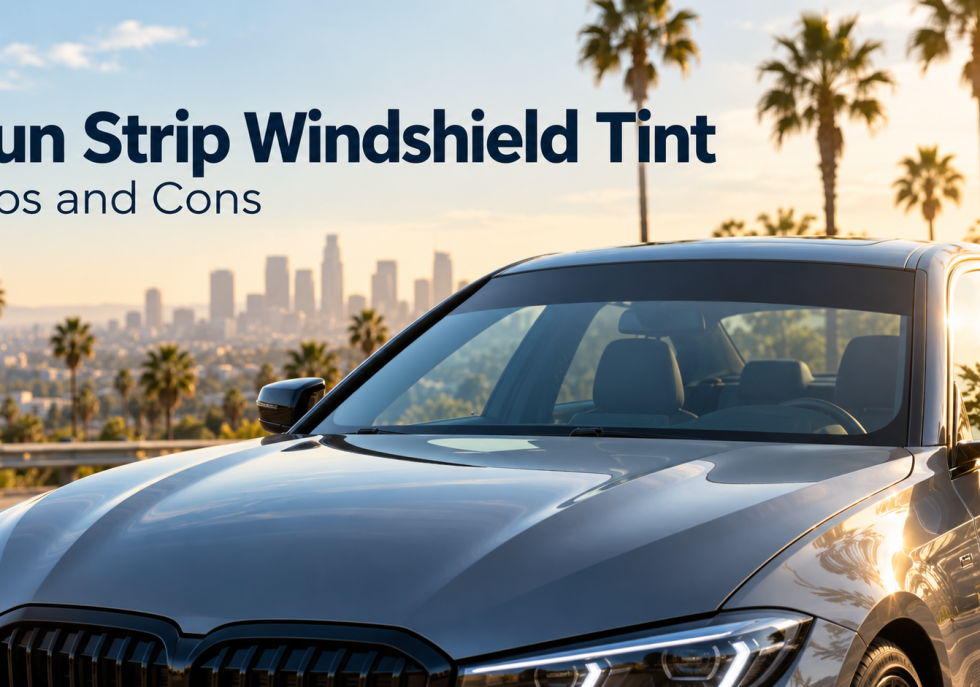
The Californian sun can make an ordinary drive uncomfortable, particularly when bright light strikes the top of your windscreen. A windshield sun strip tint is a narrow band of film designed to reduce that glare without darkening the entire windscreen. It is also called a visor strip or eyebrow tint.
Is it worth fitting? For drivers bothered by sunlight entering through the upper glass, a properly positioned strip can be an affordable, discreet improvement. Its limitations are equally important: it offers only localized shading, it cannot replace your vehicle’s sun visors, and an incorrectly sized or reflective strip can compromise visibility or break California law.
Here are the advantages, drawbacks, legal dimensions, and installation essentials.
What Is a Windscreen Sun Strip?
A sun visor strip tint is a horizontal band applied near the upper edge of the front windscreen. Most aftermarket versions fit to the interior glass, although some vehicles leave the factory with a darker-shade band built into the windscreen itself.
The strip sits above the main forward viewing area. Instead of tinting all the glass, it selectively dims incoming light where the sun appears high in the driver’s field of view. It may have a straight lower edge, a shaped contour or a gradual fade from dark to clear.
Its purpose is glare reduction, not privacy or whole-cabin cooling.
The Pros of a Sun Strip Windshield Tint
1. Less uncomfortable glare from overhead sunlight
A strip’s biggest advantage is reducing sun-strip glare. When bright sunlight enters near the top of the glass, the darker band reduces the visible light coming through that small area.
It is not a cure for every low-sun problem. At sunrise or sunset, the sun can sit below the strip’s lower edge and still shine straight into your eyes. The standard visor remains useful.
2. An inexpensive, targeted upgrade
Compared with tinting multiple side windows, applying one narrow windshield strip film uses less material and usually involves a smaller installation job. That makes it appealing when your main complaint is overhead glare rather than high cabin temperature or lack of privacy.
3. A cleaner, more finished appearance
A modest charcoal or smoke band can complement factory glass and existing legal window tint.
Choose sun strip tint styles that preserve visibility and meet the legal boundary.
4. Less light through the covered area
A quality strip reduces incoming visible light through the glass it actually covers. Depending on the film, it may also reject UV and solar energy within that band. However, it covers only a small fraction of the windscreen, so don’t expect substantial reductions in total cabin temperature.
Most laminated windscreens already block considerable UV radiation. A sun strip should therefore be chosen primarily for its glare control and appearance, not marketed as comprehensive UV protection for vehicle occupants.
5. A relatively straightforward change
Because coverage is limited, the fitting can be simpler than a complete windscreen treatment. Professional installers can cut the film to the allowable dimensions, shape it to the glass, and assess nearby equipment.
The Cons of a Windscreen Sun Strip
1. It only works where the strip is positioned
The biggest drawback is limited coverage. Side glare, reflections from the road and sunlight below the band can remain unchanged. If your main concern is cabin heat, tinting a narrow top section is unlikely to deliver the benefits of a properly specified, legally permitted solar-control treatment over a larger glazing area.
2. Excessive height can interfere with visibility
A band that extends too far down may obscure traffic signals, overhead signs, pedestrians on slopes, or features of the road ahead. Even if it looks stylish when parked, it may be distracting while driving.
3. Certain colors and finishes are not permitted
Bright mirrored finishes and dramatic colors are not necessarily lawful. California specifically restricts red and amber material on the allowed top strip and prohibits added reflections that increase glare for other drivers.
4. Poor fitting can look worse than no strip
Crooked edges, trapped dirt, scratches, bubbles, and adhesive failure are particularly visible against the sky. Curved windscreens need careful shaping.
5. It may conflict with existing equipment
Modern windscreens can accommodate forward-facing cameras, rain sensors, light sensors and toll transponders. Added film must not obstruct or interfere with their operation. Never cover a camera’s viewing area merely to maintain an unbroken band of color.
California Sun Strip Height Regulations Explained
Is a top-of-windshield tint legal in Los Angeles? California Vehicle Code section 26708(c) allows transparent material on the topmost portion of a windscreen, but only when specific conditions are satisfied.
The most important measurement is unusual: the strip’s bottom edge must be at least 29 inches above the undepressed driver’s seat, measured from a point five inches in front of the bottom of the backrest, with the seat in its rearmost and lowermost position and the vehicle on a level surface.
The statute also requires that the material:
- Is not red or amber.
- Has no opaque lettering; any other lettering must not impair primary-color recognition or distort the view.
- Does not reflect sunlight or headlamp glare towards other road users more than the untreated windscreen.
- Remove or replace it if tearing, bubbling, or wear prevents clear vision.
Do not rely on a universal ‘top four inches’ or ‘above the AS-1 line’ rule. A professional should confirm the exact permitted area for your vehicle.
The top-strip rule does not authorize unrestricted full-windscreen tint. Consult the current California Vehicle Code before installation.
Sun Strip vs Full Windshield Tint
A sun strip vs full windshield tint comparison starts with different aims. The strip targets overhead glare and changes the look of the upper glass. Full-windscreen film provides broader solar control, usually with a much lighter appearance, but it also affects a much larger viewing area.
In California, ordinary aftermarket full-windscreen film is generally restricted and should not be promoted as automatically legal because it is clear or ceramic. Only qualifying applications under statutory exceptions may be considered. A compliant visor band is therefore the more straightforward option for many drivers seeking targeted glare relief.
Luxury Glass Tinting’s automotive tinting service describes its LLumar options and can help explain their intended uses.
Which Sun Strip Tint Style Is Best?
Solid charcoal or smoke: A consistent shade with a defined lower edge. This is a classic look, but an excessively dark band may seem visually abrupt.
Gradient shade: The tint transitions from darker at the roofline to lighter further down. It can look softer, though the finished lower edge must still comply with the legal boundary.
Subtle ceramic strip: A specialist ceramic film may offer strong solar management within the limited covered area, but it does not guarantee greater glare reduction than a darker conventional film.
Coloured or reflective designs: These need particular caution. Red or amber top-strip materials are prohibited in California, while reflective treatments must satisfy the rule on glare towards other motorists.
Choose a design after checking both the actual windscreen and the driver’s seated view.
How Much Does a Windscreen Sun Strip Cost?
Sun strip cost depends on film grade, vehicle shape, cutting complexity, and the installer. Luxury Glass Tinting’s published car tint pricing guide gives indicative Los Angeles-area ranges of $30–$ 60 for a standard windscreen visor strip and $50–$ 100 for ceramic.
These are guide prices, not a confirmed quote for your vehicle. Ask whether removal of existing film, specialist shaping, or work around a mirror housing is included.
What Happens During Visor Strip Installation?
Professional visor strip installation begins with a glass inspection and assessment of the allowable position. The installer should identify camera and sensor zones, clean the interior glass, prepare a suitably sized pattern, shape the material where needed, and apply it carefully to minimize contamination and trapped fluid.
The installer should check visibility from the driving position. The band must not interfere with the view, mirror equipment or safety systems.
Freshly fitted film may show minor moisture marks as it dries. Follow the manufacturer’s cleaning instructions; avoid rubbing the film or pressing at its edges.
Is a Sun Strip Right for Your Driving Routine?
A strip makes sense if you regularly experience harsh light through the upper windscreen, want a restrained custom finish, and prefer not to change the rest of the glass. Commuters across Culver City and Los Angeles may find it useful when the sun’s position repeatedly aligns with the top of the windscreen.
It is less suitable if most troublesome glare appears at eye level below the permitted band, if you want meaningful whole-cabin cooling, or if your vehicle’s camera arrangement leaves no suitable fitting area.
Frequently Asked Questions
1. Is a windshield sun strip tint legal in California?
Yes, provided it meets California Vehicle Code section 26708(c), including the exact height measurement, color restrictions, and glare requirements. A strip is not legal solely because it sits above an AS-1 mark.
2. How wide can a windscreen sun strip be?
There is no universal inch-depth allowance for every California vehicle. The statute sets a minimum height for the bottom edge relative to the driver’s seat, measured in a prescribed way. Have the permitted area assessed on your car.
3. Does a sun strip reduce glare at sunset?
Sometimes. It helps when sunlight passes through the covered upper part of the windscreen. If the sun is below the strip, it may offer little benefit. Use the vehicle’s adjustable visor when needed.
4. How much does sun strip tint cost in Los Angeles?
Luxury Glass Tinting’s published guide lists approximate ranges of 30–60 for standard film and 50–100 for ceramic. The finished price depends on your vehicle, material, and any preparation work.
5. Is ceramic sun strip tint better than dyed film?
Ceramic film can provide stronger heat-management performance in the covered area, but the difference in visible glare depends on the shade and VLT. A narrow ceramic strip does not automatically cool the entire cabin.
6. Can a windshield eyebrow tint block an ADAS camera?
Yes, if installed over a camera’s field of view or if it conflicts with the vehicle manufacturer’s instructions. An installer should identify sensing areas and avoid any incompatible application.
7. Will a sun strip replace the sun visor?
No. The strip is fixed in place, whereas the visor can be adjusted when the sun moves lower or to one side. The two can complement one another, but the strip does not cover every glare angle.
8. Can I remove or replace a sun strip later?
Usually, a specialist can remove aftermarket film and replace it. Professional removal is safer than scraping near cameras, mirrors, or interior trim.
Final Verdict: Is a Sun Strip Worth It?
A well-designed windshield sun strip tint offers targeted overhead glare reduction, a smart appearance, and a relatively modest installation cost. The trade-offs are limited coverage, potential visibility issues, and strict placement rules. Size and legality matter more than choosing the darkest possible shade.
For vehicle-specific guidance, explore Luxury Glass Tinting’s automotive tinting options or contact the Culver City team to discuss an appropriate, California-compliant windscreen strip and obtain a quotation.