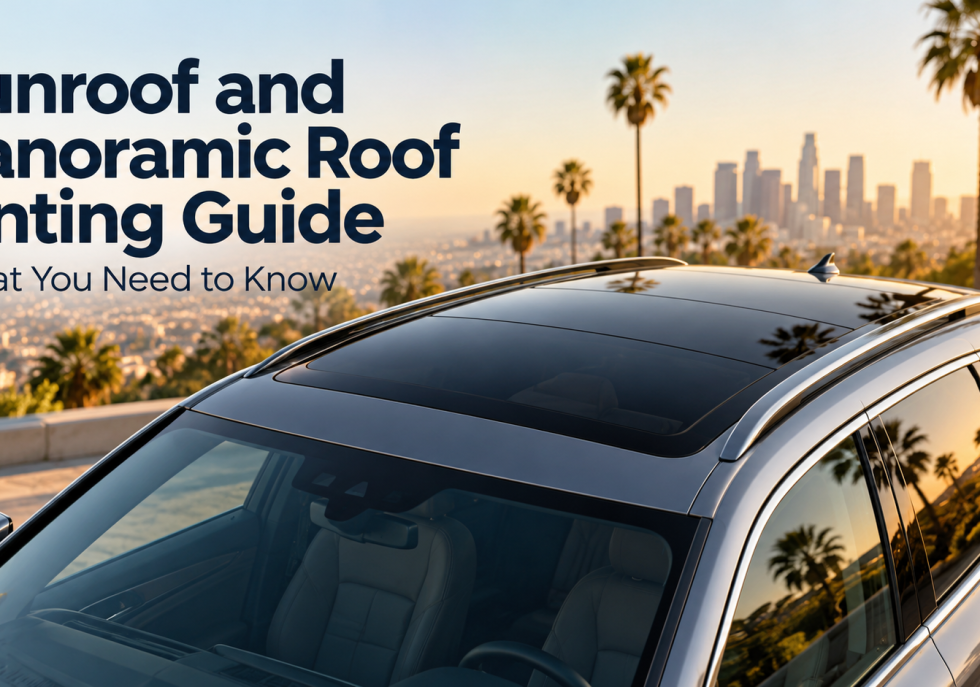
A glass roof makes a car feel brighter and more spacious, but it also places a large glazed surface directly above the occupants. On sunny Los Angeles journeys, that can leave drivers wondering whether sunroof tinting will make the cabin more comfortable without sacrificing the open-roof feeling.
The short answer: professionally selected roof film can reduce solar energy, glare, and unwanted visibility through glass. However, not every sunroof or panoramic panel is suitable for aftermarket tint. Check the existing glazing, its heat-absorbing coatings, the film’s specifications, and the vehicle manufacturer’s guidance first. This guide explains the options, costs, and safety considerations, including those for Tesla glass roofs.
What Is Sunroof and Panoramic Roof Tinting?
Sunroof tinting means applying an automotive window film to an approved glass roof panel, normally on its interior surface. A conventional sunroof is often a smaller opening above the front seats. A moonroof usually refers to a glass panel, though manufacturers use the terms differently. A panoramic roof tint covers one or more larger panels extending further along the passenger compartment.
Some roofs slide or tilt; others are fixed, affecting access, seals, and mechanisms. The tint itself may be nearly clear, gently smoked, or darker for increased shading and privacy.
Factory-darkened glass is not the same thing as an added solar-control film. Some original roof glass already manages heat, so assess whether upgrading is worth it.
How Does Sunroof Heat Rejection Film Work?
Sunlight contains ultraviolet (UV), visible, and infrared (IR) radiation. Different window-film technologies absorb or reflect parts of that energy. A sunroof heat rejection film seeks to reduce solar energy transmitted into the cabin through the roof.
A ceramic formulation uses engineered ceramic materials to manage infrared energy without necessarily requiring a very dark shade. Film products vary considerably, and the word ceramic alone does not guarantee roof compatibility.
When reviewing a specification sheet, look for:
- VLT (Visible Light Transmission): the percentage of visible light admitted through the tested glazing. Lower VLT looks darker.
- TSER (Total Solar Energy Rejection): the percentage of total incident solar energy rejected by the glass-and-film assembly.
- IRER (Infrared Energy Rejection): an infrared performance metric that should be read alongside TSER, rather than treated as whole-sun heat rejection.
- UV rejection: the UV protection measured over the manufacturer’s specified wavelengths.
Compare like-for-like test results. A claim of 95% infrared rejection does not mean the entire vehicle will become 95% cooler.
Five Potential Benefits of Panoramic Sunroof Tint
1. Reduced overhead heat
The main reason for panoramic roof heat reduction is comfort beneath a large glazed panel. A suitable film can reduce some of the solar energy reaching heads, shoulders, and seats. Outcomes depend on roof area, weather, original glass, and the selected film. It will not prevent an unattended car from becoming dangerously hot.
2. Less harsh overhead glare
Roof glass can admit uncomfortable brightness, particularly for rear passengers. A darker film reduces visible light in the covered area. Clearer ceramic films may offer strong solar control with less change in daylight, but typically provide less visible glare reduction than darker options.
3. Additional UV management
A good film can provide UV protection for glass roofs, helping reduce exposure and fading of interior materials. Nevertheless, factory laminated or specially coated roof glass may already block substantial UV. Tesla, for example, says its vehicle glass blocks up to 99% of harmful ultraviolet rays. Ask what extra protection a film would provide on your exact car.
4. Improved privacy
Glass roof privacy tint makes it more difficult to see through the panel, especially in daylight. Privacy varies with lighting, film shade, and whether you have a factory blind. A dark roof is not a substitute for keeping valuables out of sight.
5. A more balanced cabin appearance
A carefully chosen film can make the roof look consistent with the side windows. A lighter film may preserve the open-sky experience.
Ceramic, Dyed or Clear Film: Which Should You Choose?
Sunroof ceramic film is often appealing when heat rejection matters more than darkening. Premium non-metalized products may also minimize concerns about signal attenuation. However, an installer must verify that the specific film is approved for the actual roof construction.
Dyed film is generally chosen for lower cost and shading, but its solar-control performance can differ significantly from ceramic alternatives. A clear or lightly coloured film can maintain daylight while reducing some solar energy, provided its published results support that claim.
Do not simply select the darkest product. Heavy absorption may affect the temperature of certain glazing assemblies, which matters when the roof is already heavily tinted or heat-treated. The safest choice is a film approved for that glass, not the film with the biggest advertising percentage.
Can Aftermarket Roof Tint Cause Glass Problems?
This is the most important technical question to settle before installation. A glass roof may contain tempered, laminated, coated or multi-layer glazing, sometimes combined with dark factory tint and specialized bonding. Adding a film changes how solar energy is transmitted, absorbed and reflected.
Under some conditions, additional absorption or uneven temperature distribution can increase thermal stress. Existing edge damage, manufacturing characteristics and mounting constraints may also influence breakage risk. That does not mean ceramic tint automatically cracks sunroofs; it means compatibility must never be guessed.
Ask the installer to identify the glazing type and consult the film manufacturer’s glass-compatibility guidance. If the vehicle maker advises against aftermarket material, or the glass-film combination cannot be approved, consider a removable shade instead. Check both glass and film warranty terms, including any exclusions for modifications or thermal damage.
Tesla Roof Tint: Special Considerations for Model 3 and Model Y
Tesla roof tint generates interest because Model 3 and Model Y have expansive glass areas. However, Tesla roof glazing is not plain, untreated glass. Tesla describes its vehicle glazing as incorporating UV protection, optical clarity and structural safety characteristics. Roof design and original treatments can differ by model year.
Consequently, installing more film does not automatically deliver a dramatic additional benefit. Start by identifying the exact vehicle and original roof glass. Then ask whether the proposed film is approved for that combination, what its measured TSER is, and whether the vehicle warranty could be affected by the modification.
A removable roof shade is a worthwhile comparison. Tesla sells a Model Y glass-roof sunshade intended to reduce incoming visible light. Unlike adhesive film, a suitable removable shade can be removed when you want more daylight, though it has different thermal and appearance characteristics.
Luxury Glass Tinting’s Tesla window tinting service discusses Model 3 and Model Y glazing, including roof-related requests. Assess the model before promising installation.
What Happens During Panoramic Sunroof Tint Installation?
An oversized glass roof film installation requires more preparation than a small rectangular side window. A responsible process includes these stages:
- Inspect the roof: look for chips, cracks, unusual coatings, existing film and possible water leaks; identify tempered or laminated construction where possible.
- Confirm compatibility: check the vehicle and film manufacturers’ instructions, suitable film series and warranty implications.
- Measure the panels: plan cuts around contours, trims, seals and any moving roof sections without interfering with operation.
- Prepare the glass: protect interior trim, electrical fittings and headlining before cleaning away dust and contaminants.
- Fit approved film: use an appropriate installation solution and controlled techniques to position the material and remove trapped liquid.
- Inspect the result: check edges, optical appearance, roof operation where relevant, and the customer’s written aftercare instructions.
Overhead water control matters: avoid flooding headlining, switches, or electrical assemblies. Do not apply strong heat indiscriminately to factory glass or surrounding materials.
How Much Does Glass Roof Tint Cost?
Glass roof tint cost depends on the number and size of panels, film grade, vehicle design, and installation difficulty. Luxury Glass Tinting’s published car window tint pricing guide lists indicative sunroof/panoramic-roof ranges of 50–150 for standard film and 100–400 for ceramic film.
These are planning figures, not guaranteed prices or confirmation that every panoramic roof can be tinted. Large Tesla or SUV roof sections, removal of old film, and particularly complex access may change a quotation. Ask whether the quote includes all panels, the precise product, installation and warranty documentation.
Is Panoramic Roof Tint Legal in California?
California’s well-known tint limits focus on windscreens and specified side and rear windows. A fixed glass roof isn’t governed by the same visible-light-transmission rule as a front side window. That does not mean every roof modification is automatically permitted.
Roof glazing must remain compatible with applicable vehicle safety standards, and any film must not interfere with required visibility, roof mechanisms, or safety equipment. Do not extend a roof-film installation onto the windscreen or rear glass without separately checking the rules for those surfaces. For current requirements, consult California Vehicle Code section 26708.
Caring for Newly Tinted Roof Glass
Once the film is installed, residual moisture may create temporary haze or small drying patterns. Do not press on them, scrape the surface or attempt to speed drying with a hairdryer.
Follow your installer’s instructions before cleaning the film or operating a movable sunroof. After the approved waiting period, use a clean microfibre cloth with a film-compatible, mild cleaner. Avoid abrasive pads and sharp tools. If a corner lifts, the panel becomes unusually distorted, or the roof develops a new noise or fault, seek a professional inspection.
Frequently Asked Questions
1. Is sunroof tinting worth it in Los Angeles?
It can be worthwhile if overhead sunlight is uncomfortable and your roof is approved for the proposed film. The improvement depends on the original glazing and measured solar performance. A factory-treated roof may need little additional protection.
2. Can you tint a panoramic sunroof safely?
Some panoramic roofs can accept carefully selected film, but not every glass-and-film combination is suitable. Confirm construction, thermal compatibility, manufacturer instructions, and warranty implications before installation.
3. Does ceramic sunroof tint make the cabin cooler?
It may reduce incoming solar energy and improve perceived comfort. TSER is more informative than a stand-alone infrared-rejection claim. No film guarantees a fixed cabin-temperature reduction under every condition.
4. Does a Tesla glass roof need additional tint?
Not necessarily. Tesla roof glass already includes protective glazing features. Whether another film is worthwhile depends on your model year, heat concerns, and approved compatibility. A removable roof shade is another option.
5. How much does panoramic roof tinting cost?
Luxury Glass Tinting’s published pricing guide suggests about $400 for ceramic roof film, with standard-film roof treatments around 50–$ 150. Request an exact quote for the vehicle and coverage.
6. Will a darker roof tint provide more UV protection?
Not automatically. UV rejection is a separate specification from visible darkness. Existing roof glass may already offer high UV protection, so check the complete glass-and-film performance.
7. Does sunroof film affect opening and closing?
Correctly fitted film should not obstruct an approved moving roof, but tight seals, sliding mechanisms, and panel edges need careful assessment. Do not operate a newly treated roof until the installer says it is safe.
8. Is a removable shade better than roof tint?
A shade is easy to remove and can block noticeable overhead light without permanently changing the glass. Tint offers a different appearance and may provide measured solar control. Choose based on compatibility, comfort and flexibility.
Final Verdict: Choose the Right Film for the Glass
Sunroof tinting can improve overhead comfort, glare management, and privacy, especially in vehicles with extensive roof glazing. But the correct first step is verifying the existing glass, not choosing the darkest shade or highest advertised IR figure.
If you are considering a panoramic roof tint in Los Angeles or Culver City, explore Luxury Glass Tinting’s automotive window tinting options or contact the team with your vehicle model, year, and roof type. They can assess suitable products, explain the limitations and provide a vehicle-specific quotation.