
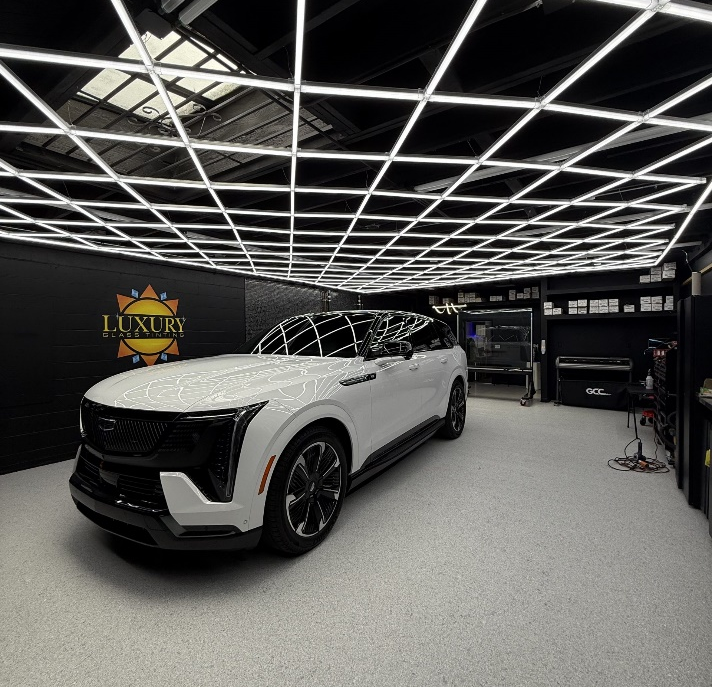
A vehicle does not need to be old before its paint starts showing wear.
Every drive exposes the exterior to small hazards that can gradually change the appearance of the finish: freeway debris, insects, bird droppings, tree sap, road tar, contaminated wash tools, parking contact, and constant environmental exposure.
Some damage happens instantly. Other damage accumulates slowly enough that you may not notice it until the paint no longer has the clean, uniform finish it had when the vehicle was new.
For Los Angeles drivers, this matters even more when a vehicle spends significant time on freeways, in outdoor parking, or exposed to intense sunlight and city contamination.
One of the most effective ways to add physical protection is Paint Protection Film, commonly called PPF or clear bra.
PPF creates a transparent sacrificial layer over vulnerable painted surfaces so many common chips, scratches, stains, and contaminants reach the film before they reach the factory finish.
But before deciding whether PPF is worthwhile, it helps to understand exactly what your paint is facing.
Your Paint Is a System, Not Just a Color Layer
Modern automotive paint is made up of several layers.
Although the exact construction varies by manufacturer, the visible finish generally includes a colored basecoat protected by a clear coat.
That clear coat provides gloss and serves as an important protective surface.
When people say their paint is scratched, faded, etched, or chipped, the damage may involve different layers.
A light swirl might affect only the upper surface.
A stone chip can penetrate much farther.
A severe impact can expose primer or substrate underneath.
This distinction matters because a product that helps with contamination or light scratches is not necessarily capable of stopping physical impact.
That is where PPF differs from waxes, sealants, and coatings.
1. Rock Chips Can Happen in Seconds
Freeway debris is one of the most obvious threats to automotive paint.
A small rock thrown by another vehicle can strike your:
- Front bumper
- Hood
- Front fenders
- Side mirrors
- Rocker panels
at significant relative speed.
The result may be a small chip that is barely noticeable at first.
Repeated exposure can eventually leave the entire front end covered in small marks.
Los Angeles drivers who spend substantial time on the 405, 10, 101, 5, 110, or other busy highways may be especially familiar with this type of wear.
PPF is particularly effective in these areas because it provides a physical layer designed to absorb many common stone and road-debris impacts before they reach the paint.
Current 3M Paint Protection Film, for example, is specifically engineered to protect automotive paint against stone chips, scratches, road debris, bug damage, stains, and outdoor weathering.

Can a Paint Chip Cause Rust?
Sometimes—but it depends on the vehicle and what material is underneath the paint.
If a chip exposes bare steel, moisture and environmental contamination can eventually contribute to corrosion.
However, not every body panel is steel.
Modern vehicles can use:
- Aluminum
- Composite materials
- Plastics
- Galvanized steel
- Other coated materials
So it is inaccurate to say that every rock chip automatically leads to rust.
The immediate concern is that the protective paint system has been damaged.
Deep chips should be evaluated and repaired appropriately rather than simply ignored.
2. Sand, Gravel, and Road Grit Create Gradual Wear
Paint damage does not always arrive as one obvious rock strike.
Small particles can repeatedly hit lower portions of the vehicle.
This can create a sandblasted appearance on:
- Rocker panels
- Lower doors
- Wheel-arch areas
- Rear impact zones
- Front bumper
Drivers with low cars, performance vehicles, wide tires, or significant freeway mileage may notice this type of wear more quickly.
PPF can be installed specifically on these high-impact areas instead of requiring full-body coverage.
3. Bug Splatter Can Damage Automotive Finishes
Insects are easy to treat as nothing more than a cleaning problem.
They should not always be left on the vehicle indefinitely.
Manufacturers—including Tesla in its current owner guidance—recommend promptly removing dead insects and other potentially corrosive contaminants from painted surfaces.
Bug residue can become more difficult to remove after:
- Heat exposure
- Repeated sun
- Extended contact
- Drying onto the surface
The best strategy is simple:
remove bug contamination promptly and gently.
PPF gives the vehicle a replaceable protective surface over the original finish, but the film should still be cleaned.
It is protective—not maintenance-free.
4. Bird Droppings Can Etch the Finish
Bird droppings are another contaminant that should be removed as soon as practical.
Tesla’s current cleaning instructions, for example, specifically identify bird droppings among substances that should be removed promptly to prevent exterior paint damage.
The problem can become worse when contamination sits on a hot surface.
Rather than aggressively scrubbing dried material, soften it and use an appropriate automotive-safe cleaning method.
PPF can help by placing the contaminant on the protective film rather than directly on the vehicle’s clear coat.
However, premium PPF is generally described as stain-resistant, not stain-proof.
Prompt cleaning still matters.
5. Tree Sap Can Become Extremely Difficult to Remove
Parking beneath trees has obvious benefits in Los Angeles.
Shade helps keep vehicles cooler.
But tree sap can create another problem.
Sap can harden and bond strongly to exterior surfaces.
Trying to scrape it away aggressively can introduce scratches.
Professional PPF manufacturers therefore recommend appropriate contaminant-removal techniques rather than using sharp tools or harsh abrasive products.
Again, the advantage of PPF is that the contamination is affecting a replaceable protective layer first.
6. Road Tar and Automotive Contaminants Can Stain Surfaces
Road construction and everyday driving can leave:
- Tar
- Oil residue
- Grease
- Road film
- Industrial fallout
on vehicle surfaces.
Tesla’s current vehicle-care guidance identifies tar, grease, oil, industrial fallout, insects, bird droppings, and tree resin among substances that should be removed promptly.
Some premium PPF products are specifically designed for resistance to road tar and automotive-fluid staining.
That does not mean harsh chemicals can be left on the film indefinitely.
It means there is another protective surface between the contaminant and factory paint.
7. Washing Your Car Can Create Scratches
Ironically, cleaning a car can contribute to cosmetic damage when poor washing techniques are used.
Common problems include:
- Dirty wash mitts
- Reusing contaminated towels
- Automatic brush washes
- Scrubbing dry paint
- Dragging grit across the surface
- Using abrasive cleaning products
These can create fine scratches and swirl marks.
They are often particularly visible on:
- Black paint
- Dark blue
- Deep red
- Other dark glossy colors
A careful wash process begins by rinsing loose contamination away before physical contact with the surface.
PPF does not mean you can use any wash technique without consequences.
The film itself can still be scratched.
However, many premium films include self-healing topcoats designed to reduce the appearance of certain light surface marks.
What Does Self-Healing PPF Actually Mean?
“Self-healing” is one of the most misunderstood PPF terms.
It does not mean:
- Every scratch disappears
- Deep cuts repair themselves
- Damaged paint underneath heals
- Dents disappear
- Punctured PPF repairs itself
Self-healing refers primarily to minor scratches and swirl marks in the film’s topcoat.
3M’s current PPF uses self-healing technology that allows minor marks in the film to diminish when heat is applied.
XPEL similarly states that its PPF can self-heal minor scratches and swirls, while deeper scratches that penetrate the film may require repair or replacement.
So self-healing is useful—but it has limits.
8. Parking Can Damage Paint Without a Collision
You do not need to be involved in a crash for parking to affect the exterior.
Daily contact can create wear around:
- Door edges
- Door-handle cups
- Rear loading ledges
- Bumpers
- Mirrors
- Rocker panels
Examples include:
- Fingernails behind door handles
- Keys
- Rings
- Bags
- Shoes
- Loading luggage
- Opening a door close to a wall
These areas can be protected individually with small PPF installations.
For many daily drivers, targeted high-wear protection can provide excellent value even when full-body PPF is unnecessary.
9. Sun and Environmental Exposure Affect the Finish Over Time
Los Angeles vehicles receive substantial outdoor exposure.
The effect is more complicated than simply saying:
“UV rays destroy car paint.”
Modern automotive paint systems are engineered for outdoor durability and incorporate protection against environmental exposure.
Nevertheless, years of:
- UV radiation
- Heat
- Atmospheric contamination
- Washing
- Weathering
- Chemical exposure
can contribute to changes in appearance.
Premium PPF products are engineered to withstand outdoor weathering themselves.
3M’s current Series 100 PPF specifically lists protection against harsh UV exposure among its intended performance characteristics.
That should not be turned into a promise that PPF makes paint permanently immune to fading.
It provides an additional protective layer against the environment.

Do Teslas Have Softer Paint Than Other Cars?
There is no strong basis for making a blanket claim that all Tesla paint is softer than average.
That statement is commonly repeated online but varies by vehicle, paint system, production process, model, color, location, and individual experience.
It is better not to build a professional PPF recommendation around an unsupported generalization.
Tesla’s own current vehicle-care instructions do confirm something more useful: owners should promptly remove bird droppings, tree resin, dead insects, tar, grease, oil, and industrial fallout to prevent exterior damage.
Teslas face the same general road hazards as other vehicles.
Owners may choose PPF because they want to preserve the condition of prominent painted panels—not because every Tesla has inherently defective or unusually soft paint.
Is PPF Worth It for a Tesla?
It can be, particularly for Tesla owners who:
- Drive frequently on Los Angeles freeways
- Park outside
- Want to preserve the factory finish
- Plan to keep the vehicle long term
- Are particular about rock chips
- Prefer a cleaner front end
Common starting areas include:
- Front bumper
- Hood
- Front fenders
- Mirrors
- Rocker areas
The appropriate coverage should depend on the owner’s actual driving rather than the badge on the vehicle.
Wax Helps—But It Does a Different Job
Wax can improve:
- Gloss
- Water behavior
- Surface feel
- Short-term environmental protection
Modern paint sealants can provide similar maintenance benefits with different durability.
These products are useful.
But they are extremely thin compared with Paint Protection Film.
They should not be expected to absorb the same kind of physical impact as a urethane film.
A rock can still chip paint through wax.
So wax is not “bad” or obsolete.
It simply solves a different problem.
Ceramic Coating Is Also Different From PPF
Ceramic coating is another product frequently compared with Paint Protection Film.
A ceramic coating can provide:
- Hydrophobic behavior
- Easier cleaning
- Chemical resistance
- Surface slickness
- Gloss enhancement
But it is not equivalent to PPF for absorbing physical stone impacts.
A simple way to think about it is:
PPF = physical protection
Ceramic coating = surface-maintenance and chemical/hydrophobic benefits
For owners who want both, compatible ceramic coating can sometimes be applied over PPF.
Some modern PPF products already include hydrophobic topcoat technology.
Paint Protection Film: The Sacrificial Layer
PPF is designed to take wear that would otherwise reach the painted surface.
Current premium films are generally urethane-based protective materials installed over vulnerable automotive panels.
Depending on the product, PPF can help protect against:
- Stone chips
- Road debris
- Light scratches
- Swirl marks
- Bug contamination
- Road tar
- Staining
- Everyday environmental exposure
The key word is:
help.
No protective film makes a vehicle indestructible.
What PPF Cannot Do
A responsible installer should explain PPF’s limitations as clearly as its benefits.
Paint Protection Film cannot guarantee protection from:
- Major collisions
- Deep gouges
- Severe rock impacts
- Dents
- Body damage
- Every chemical
- Every stain
- Every scratch
A sufficiently severe impact can damage the film and the surface underneath.
PPF reduces risk—it does not eliminate it.

Nearly Invisible Does Not Mean Literally Invisible
Quality clear PPF is designed to maintain the original appearance of the paint.
Modern films can provide excellent clarity and gloss.
However, describing them as literally invisible under every condition would be unrealistic.
Depending on:
- Coverage
- Panel shape
- Lighting
- Film edge location
- Installation method
you may still be able to see a transition under close inspection.
Full-panel installations can minimize some visible boundaries compared with partial coverage.
Choosing PPF Coverage Based on Your Driving
Not every vehicle requires full-body film.
Front Bumper
A logical starting point because it receives direct road debris.
Full Front
Usually includes:
- Front bumper
- Full hood
- Front fenders
- Mirrors
This can make sense for frequent freeway drivers.
High-Wear Areas
Additional protection can target:
- Door edges
- Door-handle cups
- Rockers
- Loading ledges
Full-Body PPF
Provides the broadest protection and may appeal to owners of:
- Luxury vehicles
- Exotic cars
- Collector cars
- Premium EVs
- Rare paint colors
- Long-term vehicles
The correct package is the one matched to your risk and budget.
Does PPF Guarantee Higher Resale Value?
No.
Keeping factory paint in better cosmetic condition can make a vehicle more attractive to future buyers.
But resale price depends on many factors:
- Mileage
- Mechanical condition
- Accident history
- Market demand
- Model
- Service history
- Interior condition
- Exterior condition
PPF is therefore best described as helping preserve cosmetic condition, not guaranteeing a specific resale return.
Does PPF Save Money on Repainting?
It can potentially reduce the need to repair some damage that would otherwise affect the paint.
However, the claim:
“PPF always costs less than repainting”
is too broad.
The economics depend on:
- PPF coverage
- Film cost
- Vehicle
- Type of damage
- Paint repair
- Labor
- Ownership period
A targeted front-end installation may make financial sense for a freeway-driven vehicle even if the owner never calculates an exact dollar return.
The main value is preventive protection.
PPF Works Best Before Damage Happens
Paint Protection Film is primarily preventative.
That means a vehicle with clean new paint is an ideal candidate.
You can still apply film to an older vehicle, but existing:
- Chips
- Scratches
- Stains
- Repainted areas
- Clear-coat damage
should be assessed first.
PPF will not magically repair what is already underneath it.
Can Paint Be Corrected Before PPF?
In some cases, yes.
If the paint has correctable surface defects, professional preparation or paint correction may improve the appearance before transparent film is installed.
The appropriate work depends on the condition of the vehicle.
Not every car needs extensive correction.
The installer should inspect the finish before recommending additional services.
Can PPF Be Installed Over Repainted Panels?
Sometimes.
But refinished surfaces deserve additional caution.
Paint adhesion and quality vary.
That can affect both:
- PPF installation
- Future removal
Tell the installer if a panel has been repainted.
The film manufacturer’s warranty may also treat refinished panels differently from factory paint.
Professional PPF Installation Matters
PPF installation is possible as a DIY project, but large automotive panels and complex bodywork require considerable skill to install cleanly.
Professional installation involves:
- Detailed paint inspection
- Washing and decontamination
- Coverage planning
- Film fitting
- Precise alignment
- Controlled stretching
- Edge finishing
- Inspection
Complex bumpers can include:
- Sensors
- Grilles
- Recesses
- Compound curves
- Trim
Poor installation can create:
- Creases
- Contamination
- Poorly aligned edges
- Lifted corners
- Excessive stretch
- Visible defects
XPEL recommends professional PPF installation for the best results.
Luxury Glass Tinting’s current PPF installation service includes paint inspection, professional surface decontamination, precise film alignment, clean edge finishing where possible, post-installation attention to critical edges, and final quality inspection.
Avoid Unsupported Certification Claims
A company should only describe an installer as “master certified,” manufacturer-certified, or factory-trained when that credential is current and verifiable.
The installation itself should be evaluated according to:
- Experience
- Finished work
- Film selection
- Preparation
- Process
- Warranty
- Aftercare support
Clear evidence is more useful than an unsupported title.
How to Care for PPF
PPF is designed for daily driving, but proper maintenance helps it remain clear and attractive.
General good practices include:
- Wash regularly
- Rinse loose grit before touching the surface
- Use soft microfiber materials
- Remove insects and bird droppings promptly
- Avoid harsh abrasive chemicals
- Be careful around film edges
Follow the exact manufacturer’s aftercare instructions for the film installed on your vehicle.
Be Careful With Pressure Washing
Pressure washing may be acceptable with many PPF products when done correctly.
However, concentrated high-pressure water directed near a film edge can contribute to lifting.
Maintain appropriate distance and avoid directing water aggressively into:
- Seams
- Edges
- Corners
Manufacturer recommendations should take priority.
Does PPF Last Forever?
No.
PPF durability depends on:
- Film manufacturer
- Product
- Installation quality
- Mileage
- Climate
- Parking
- Maintenance
- Environmental exposure
For example, current 3M Paint Protection Film Series 100 carries a 10-year consumer warranty, subject to its warranty terms.
Other manufacturers and products may have different coverage.
Do not assume one warranty period applies to every PPF.
Can PPF Be Removed Later?
Yes.
High-quality PPF is designed to be removable.
Professional removal is particularly advisable when:
- The film is old
- Large areas are covered
- Panels were repainted
- The film has deteriorated
XPEL states that properly removed quality PPF is designed to leave healthy paint intact.
Existing paint condition remains an important factor.
When Should PPF Be Replaced?
Individual film sections may need replacement after:
- Severe stone impact
- Deep cuts
- Punctures
- Lifting
- Significant staining
- Accident damage
One advantage of PPF is that a damaged film panel can often be removed and replaced without redoing the entire vehicle.
Whether the paint underneath remains undamaged depends on how severe the incident was.
Common Paint Protection Myths
Myth: Wax Stops Rock Chips
False.
Wax is too thin to provide meaningful stone-impact protection.
Myth: Ceramic Coating Replaces PPF
False.
Coatings provide different benefits and do not create the same physical barrier.
Myth: PPF Makes Paint Damage-Proof
False.
PPF reduces many common forms of damage but cannot stop every impact.
Myth: Every PPF Scratch Self-Heals
False.
Self-healing generally applies to minor surface scratches and swirls in compatible film topcoats.
Myth: Tesla Paint Always Needs PPF Because It Is Softer
Unsupported as a blanket claim.
Teslas face normal paint hazards, and PPF should be selected according to driving and protection goals.
Myth: PPF Guarantees Higher Resale Value
False.
It may help preserve cosmetic condition, but resale value depends on many factors.
Myth: PPF Makes Maintenance Unnecessary
False.
Film still needs regular cleaning and proper care.
Frequently Asked Questions
What damages car paint the most?
Common threats include road debris, stone chips, insects, bird droppings, tree sap, road tar, poor washing techniques, scratches, and long-term environmental exposure.
Are rock chips preventable?
You cannot prevent every stone from hitting the vehicle, but PPF can significantly reduce damage from many common road impacts.
Should bird droppings be removed immediately?
Remove them as promptly as practical using a safe cleaning method. Vehicle manufacturers such as Tesla specifically recommend prompt removal of potentially corrosive contaminants.
Can bug splatter permanently damage paint?
Extended contamination can contribute to staining or etching, particularly when residue remains on hot exterior surfaces. Prompt cleaning reduces the risk.
Does sunlight fade car paint?
Automotive paint is engineered for outdoor exposure, but long-term UV, heat, chemical, and environmental weathering can contribute to changes in appearance.
Does PPF protect against UV exposure?
Premium PPF is engineered to resist outdoor UV weathering and provides another layer over the paint. It should not be described as guaranteeing zero fading forever.
Does PPF stop rock chips?
It can significantly reduce many common chip impacts but cannot guarantee protection from every stone or severe impact.
Does PPF stop scratches?
It can reduce light scratches and surface wear. Deep cuts can penetrate the film.
Does PPF self-heal?
Many premium films self-heal light scratches and swirl marks in the film’s topcoat when exposed to heat. Deep damage will not simply disappear.
Is PPF worth it for a new car?
A new car can be an excellent candidate because PPF is most effective as preventive protection before significant damage accumulates.
Is PPF worth it for a Tesla?
It can be if protecting paint from freeway debris, scratches, stains, and daily wear is a priority. Tesla ownership alone does not mean every vehicle needs full-body PPF.
Is PPF better than ceramic coating?
For physical protection against stone chips and scratches, PPF is the better starting point. Ceramic coating focuses more on hydrophobic behavior, gloss, chemical resistance, and easier maintenance.
Can you use PPF and ceramic coating together?
Yes, when the products are compatible. Some PPF also includes hydrophobic topcoat technology.
Can PPF be removed?
Yes. Professional removal is recommended, particularly on older film or refinished panels.
Does PPF guarantee higher resale value?
No. It can help preserve paint condition, which may improve buyer appeal, but the final resale value depends on the overall vehicle and market.
Protect Your Paint Before the Damage Accumulates
Most automotive paint damage does not happen because the owner suddenly stops caring for the vehicle.
It happens gradually.
One freeway trip creates a chip.
One bird dropping sits too long.
One dirty wash mitt adds a swirl.
One bag scratches the loading ledge.
Eventually, those small imperfections become visible across the entire vehicle.
Paint Protection Film provides a practical way to place a replaceable protective surface between the factory finish and many of those everyday hazards.
Luxury Glass Tinting offers professional Paint Protection Film installation in Los Angeles with coverage selected according to your:
- Vehicle
- Driving habits
- Parking environment
- Paint condition
- Ownership plans
- Budget
For many Los Angeles drivers, full-front PPF is a practical starting point because it protects the bumper, hood, fenders, and mirrors that receive significant road-debris exposure.
Other drivers may only need targeted high-wear protection.
Owners seeking the broadest cosmetic preservation can consider full-body coverage.
The goal is not to pretend that your vehicle can never be damaged.
It is to reduce the everyday wear that would otherwise reach the paint first—and keep more of the original finish in better condition for longer.