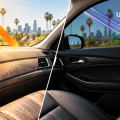
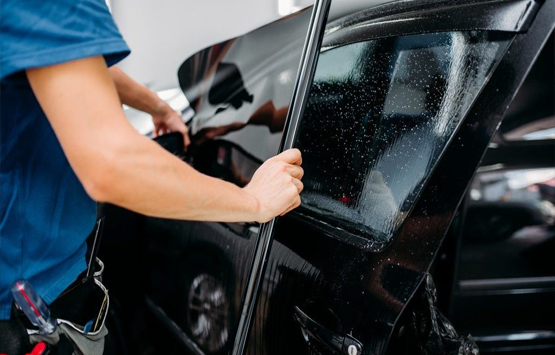
Window tinting has come a long way from the dark, reflective films many people remember. Today’s automotive and architectural window films are designed to address a range of needs, including solar heat control, UV protection, glare reduction, privacy, appearance, and energy efficiency.
Despite these advances, several misconceptions continue to influence how people choose window tint for their cars, homes, and businesses.
Some believe that all window tinting is illegal, that film always makes glass darker, or that installing tint will damage windows. Others assume every film provides security protection or guarantees lower energy bills.
The reality is more nuanced.
At Luxury Glass Tinting, we help Los Angeles customers choose professional automotive, residential, and commercial window tinting solutions based on the actual glass, appearance, privacy, and comfort requirements.
Here are 12 common window tinting myths—and what you should know before selecting a film.
Myth #1: Window Tinting Is Illegal
The truth: Window tinting is not universally illegal, but automotive applications must comply with the laws that apply to the specific windows and materials.
California has detailed regulations governing material applied to vehicle glass.
California Vehicle Code Section 26708 treats windshields, front side windows, rear side windows, and rear glass differently.
For qualifying clear, colorless, transparent material applied to the front side windows, the current statute requires:
- The material itself to transmit at least 88% of visible light.
- The finished glass-and-material combination to meet the applicable federal minimum of 70% visible light transmission.
- Compliance with additional UV-protection and certification requirements.
Other provisions apply to rear windows, windows behind the driver, and certain medical situations.
This means it is inaccurate to claim that every vehicle window in Los Angeles follows one universal tint percentage.
The right approach is to select a product and application that satisfy current California requirements.
For residential and commercial properties, vehicle tint regulations do not apply in the same way. However, building requirements, glazing warranties, local rules, and property restrictions may still matter.
Myth #2: Window Tinting Will Damage Your Windows
The truth: Properly selected film can be installed safely on compatible glass, but choosing the wrong film can create problems.
Modern window film is engineered for specific automotive and architectural applications.
Professionally installed film does not automatically harm glass.
However, residential and commercial windows may contain:
- Single-pane glass
- Double-pane insulated glass
- Triple-pane glass
- Tempered glass
- Laminated glass
- Factory-tinted glass
- Low-E coatings
These glazing systems can respond differently to solar energy.
Some films increase the amount of solar energy absorbed by the glass. On certain glazing systems, an unsuitable product can increase the risk of thermal-stress breakage.
The International Window Film Association recommends following manufacturer film-to-glass compatibility guidelines, particularly for specialized or Low-E glazing.
The takeaway: Window tint does not inherently ruin windows, but professional product selection and glass compatibility are essential.
Myth #3: Window Tinting Always Reduces Visibility
The truth: Tint affects visible-light transmission, but the degree of change depends on the film and shade.
One of the most misunderstood measurements in window tinting is Visible Light Transmission, or VLT.
VLT indicates the percentage of visible light passing through glass or a glass-and-film system.
A higher VLT allows more visible light through, while a lower VLT creates a darker appearance.
For example:
| VLT | General Appearance |
|---|---|
| 70% or higher | Very light |
| 50% | Light |
| 35% | Moderately dark |
| 20% | Dark |
| 5% | Extremely dark |
These figures describe appearance, not legal suitability.
Quality window film can reduce uncomfortable daytime glare. However, darker products also reduce the amount of light available for seeing outside, which can affect visibility in low-light conditions.
This makes shade selection particularly important for drivers who frequently travel at night.
For homes and commercial buildings, spectrally selective and other high-VLT products can manage solar heat while preserving substantial natural daylight.
Learn more about Visible Light Transmission before choosing a film.
Myth #4: Window Tinting Is Only for Cars
The truth: Window films are used on vehicles, homes, commercial buildings, and many other glass surfaces.
Automotive tinting is only one part of the window-film industry.
Modern film technology is available for several applications.
Automotive Window Tinting
Automotive film can improve cabin comfort, reduce glare, provide UV protection, increase privacy, and enhance a vehicle’s appearance.
Residential Window Tinting
Residential film can reduce unwanted solar heat, improve daytime privacy, manage glare, and help protect floors, furniture, and other interior materials.
Commercial Window Tinting
Commercial film can help improve comfort in offices, storefronts, restaurants, and other buildings by controlling heat and glare while supporting privacy and appearance goals.
Decorative Window Film
Frosted, patterned, gradient, and other decorative films can provide privacy or design features on glass doors, partitions, bathrooms, and office interiors.
Safety and Security Window Film
Specialized safety and security films are designed for glass-retention applications and certain impact-related risks.
The important point is that automotive, architectural, decorative, and security films are not automatically interchangeable.
Each product should be selected for its intended application.
Myth #5: Window Tinting Is Too Expensive
The truth: Window tinting costs vary, and premium film is not necessary for every customer.
The price depends on several factors, including the type of film, amount of glass, installation complexity, and required performance.
For vehicles, pricing can be influenced by:
- Film technology
- Vehicle size
- Number of windows
- Glass curvature
- Existing tint removal
- Installation requirements
- Warranty coverage
Residential and commercial pricing also depends on the size and number of panes, glass construction, accessibility, film type, and installation conditions.
Premium ceramic, nano-ceramic, spectrally selective, and specialty products may cost more than basic films.
But paying more does not automatically mean the product is the right choice.
If appearance and basic privacy are your priorities, a quality standard film may be appropriate.
If you want stronger solar control or specific thermal performance, premium products may offer greater value.
The takeaway: Compare the film’s specifications, warranty, installation quality, and your actual needs—not price alone.
Myth #6: Darker Window Tint Always Blocks More Heat
The truth: Film darkness and heat rejection are different measurements.
A dark window film reduces visible light, but that does not necessarily mean it provides the strongest solar heat control.
Modern ceramic and nano-ceramic films can reject substantial solar energy while allowing relatively high levels of visible light through.
This is why a lighter premium ceramic film can sometimes outperform a darker entry-level film in heat rejection.
Two important measurements are:
VLT — Visible Light Transmission: Measures how much visible light passes through the glazing.
TSER — Total Solar Energy Rejected: Measures how much total solar energy is rejected by the glass-and-film system.
For residential and commercial windows, Solar Heat Gain Coefficient (SHGC) is another useful measurement. A lower SHGC generally indicates less solar heat entering the building.
Rather than asking only how dark a film is, ask how it performs against the specific type of solar energy you want to control.
Myth #7: Only Dark Window Tint Can Block UV Rays
The truth: UV protection depends on film technology, not just darkness.
Many high-quality automotive and architectural films can block approximately 99% or more of ultraviolet radiation, depending on the product.
The Skin Cancer Foundation notes that appropriate clear automotive window film can provide substantial UV protection.
This matters because side, rear, and sunroof glass may provide less UVA protection than modern laminated windshields.
In homes and offices, UV-blocking film can also help reduce exposure to furniture, flooring, artwork, upholstery, and other interior materials.
However, UV radiation is not the only contributor to fading. Visible light, heat, material composition, and environmental conditions also matter.
Therefore, window film can help reduce fading but cannot eliminate it completely.
A nearly clear film may provide excellent UV protection even if it barely changes the glass’s appearance.
Myth #8: Window Tint Gives You Complete Privacy Day and Night
The truth: Privacy depends on the film and surrounding lighting conditions.
Window film can provide useful visual privacy, but not every privacy film works the same way.
Reflective and dual-reflective films can make it harder to see into a home or office during daylight when the outside environment is brighter than the interior.
At night, however, the lighting relationship can reverse.
When interior lights are on and the outside is dark, reflective daytime privacy may decrease significantly.
If you need privacy around the clock, consider films specifically designed for that purpose, such as:
- Frosted film
- Opaque film
- Blackout film
- Whiteout film
- Decorative privacy film
In vehicles, darker tint can increase privacy but should never be treated as a guarantee that occupants or belongings cannot be seen.
For homeowners, the right solution depends on whether you want to preserve exterior views or create a permanently obscured surface.
Myth #9: All Window Tinting Makes Glass Shatterproof
The truth: Ordinary solar-control film is not the same as dedicated safety and security film.
Standard automotive and architectural window tint primarily addresses solar control, UV protection, glare, privacy, and appearance.
Specialized safety and security films are different products.
Properly specified safety film can help keep broken glass fragments together after certain types of impact or breakage.
Security-film systems may also use perimeter attachment methods to help retain broken glass within a frame and delay forced entry.
However, the outcome depends on the film, glass, framing, attachment method, installation, and type of impact.
Even specialized security film does not make ordinary glass impossible to break or bulletproof.
For offices, storefronts, and other buildings where broken-glass retention is a concern, ask about dedicated safety and security window film rather than assuming ordinary solar tint provides the same performance.
Myth #10: Window Tinting Guarantees Lower Energy Bills
The truth: Window film can improve energy performance, but savings depend on the building.
Solar-control film can reduce unwanted solar heat entering through windows.
This may reduce the amount of cooling required to maintain comfortable indoor temperatures.
For Los Angeles homes and commercial buildings with extensive sun-facing glass, that can be particularly beneficial.
However, the amount of energy saved depends on:
- Window size and orientation
- Existing glazing
- Film performance
- Exterior shading
- Insulation
- HVAC efficiency
- Climate
- Utility rates
- Thermostat settings
- Building occupancy
Some Low-E architectural films can also influence thermal transfer and provide benefits during cooler periods.
It would be misleading to guarantee that every installation will reduce electricity bills by the same percentage.
The U.S. Department of Energy identifies SHGC and thermal performance as important considerations when evaluating windows in different climates.
For larger commercial projects, energy modeling can provide a more useful estimate of potential savings and return on investment.
Myth #11: Window Tint Always Bubbles, Peels, or Fades Quickly
The truth: Quality film is designed for long-term use, but its lifespan depends on the product and installation.
Poor-quality film or incorrect installation can cause:
- Bubbling
- Peeling
- Delamination
- Adhesive failure
- Color changes
- Lifting edges
However, these problems should not be assumed to occur quickly with every aftermarket film.
Modern quality films are manufactured for durability and are often supported by written warranties.
A clean installation also depends on careful glass preparation, accurate cutting, proper application, and appropriate curing.
Immediately after installation, some residual moisture may cause temporary haze or moisture patterns.
This does not automatically mean the film has failed.
Curing time varies according to film construction, weather, humidity, and other conditions.
Before purchasing, ask what the manufacturer’s warranty covers and follow the installer’s aftercare instructions.
Myth #12: DIY Tinting Delivers the Same Results as Professional Installation
The truth: DIY tinting is possible, but installation quality and product selection can make a significant difference.
Installing window film requires more than cutting a sheet to fit the glass.
Professional installers use suitable preparation methods, specialized tools, film-shaping techniques, and product-specific installation procedures.
Automotive glass can be difficult because of its curved surfaces, movable windows, seals, and defroster elements.
Residential windows create different challenges because film compatibility must be evaluated against the glazing construction.
Common DIY problems include:
- Dust contamination
- Uneven edges
- Wrinkles
- Creases
- Poor adhesion
- Trapped air
- Incorrect film selection
- Glass-compatibility issues
A professional installer should also explain the product’s performance specifications, warranty, curing requirements, and care instructions.
For complex automotive, architectural, Low-E, or safety/security applications, professional assessment and installation are particularly important.
How to Choose the Right Window Tint for Your Needs
Once the most common myths are understood, choosing film becomes easier.
Start by identifying the problem you want to solve.
| Your Main Goal | Film Characteristics to Prioritize |
|---|---|
| Reduce car interior heat | TSER, solar performance, ceramic or nano-ceramic options |
| Improve car appearance | VLT, color, reflectivity, factory-glass matching |
| Protect against UV | Verified UV-rejection specification |
| Reduce home cooling demand | SHGC, TSER, glass compatibility |
| Preserve natural daylight | Higher-VLT spectrally selective or ceramic film |
| Improve daytime privacy | Reflective or dual-reflective film |
| Get consistent visual privacy | Frosted, opaque, or decorative privacy film |
| Improve year-round thermal performance | Compatible Low-E film |
| Help retain broken glass | Dedicated safety/security film system |
Not every product will be appropriate for every vehicle or building.
A quality installer should recommend film according to your priorities rather than trying to sell one universal solution.
Common Questions About Window Tinting
Is window tinting legal in Los Angeles?
Window tinting is permitted in California subject to applicable laws. Automotive requirements depend on the window position and material. Qualifying clear front-side-window material is subject to specific 88% film-VLT and 70% combined-glazing requirements, along with other conditions.
Does window tint make it harder to see at night?
Darker films reduce visible-light transmission and may affect nighttime visibility. A lighter film can provide glare or solar-control benefits while preserving more visible light.
Can ceramic window tint reject heat without being dark?
Yes. Modern ceramic and nano-ceramic films can provide strong solar-control performance at relatively high VLT levels. Compare the manufacturer’s specifications for the actual product.
Can clear window film block UV rays?
Yes. Some virtually clear films are designed to block approximately 99% or more of UV radiation while causing minimal visible change to the glass.
Will residential window film damage double-pane windows?
Not necessarily. Many films can be used on compatible insulated glazing, but the film must be approved for the particular glass construction and coating configuration.
Does residential tint provide privacy at night?
Some types do, particularly frosted or opaque films. Reflective daytime privacy films often provide less privacy at night when the inside is brighter than the outside.
Will window tint reduce my energy bills?
It may reduce heating or cooling demand, depending on the film and building. The amount of potential savings varies and should not be guaranteed without evaluating the property.
Does standard window tint protect against break-ins?
Standard solar-control film is not a substitute for a dedicated security system. Properly specified safety/security film can help retain broken glass and may delay forced entry, but does not guarantee protection.
How long does window film last?
Lifespan varies by film, glass, exposure, installation, maintenance, and application. Review the written manufacturer warranty for the exact product.
Is professional window tinting worth it?
Professional installation can be worthwhile because it combines film-selection guidance, appropriate preparation, precise installation, warranty information, and aftercare support.
Professional Window Tinting in Los Angeles
Many window tinting myths begin with the assumption that every film performs the same way.
In reality, modern window film comes in different technologies designed for different purposes.
The right automotive film can improve solar heat control, UV protection, glare reduction, privacy, and appearance.
The right residential film can help improve indoor comfort, daylight management, daytime privacy, and solar performance.
Commercial film can address workplace glare, perimeter hot spots, UV exposure, privacy, appearance, and specific security needs when appropriate products are selected.
Luxury Glass Tinting provides professional automotive window tinting, residential window tinting, and commercial window tinting throughout Los Angeles and surrounding communities.
Whether you want premium ceramic tint for your vehicle, solar-control film for your home, or a specialized commercial solution, the most important step is choosing a product that matches your glass and the results you actually need.
Good window tinting is not about believing marketing myths. It is about understanding the technology, comparing verified performance, and selecting the right film for the application.