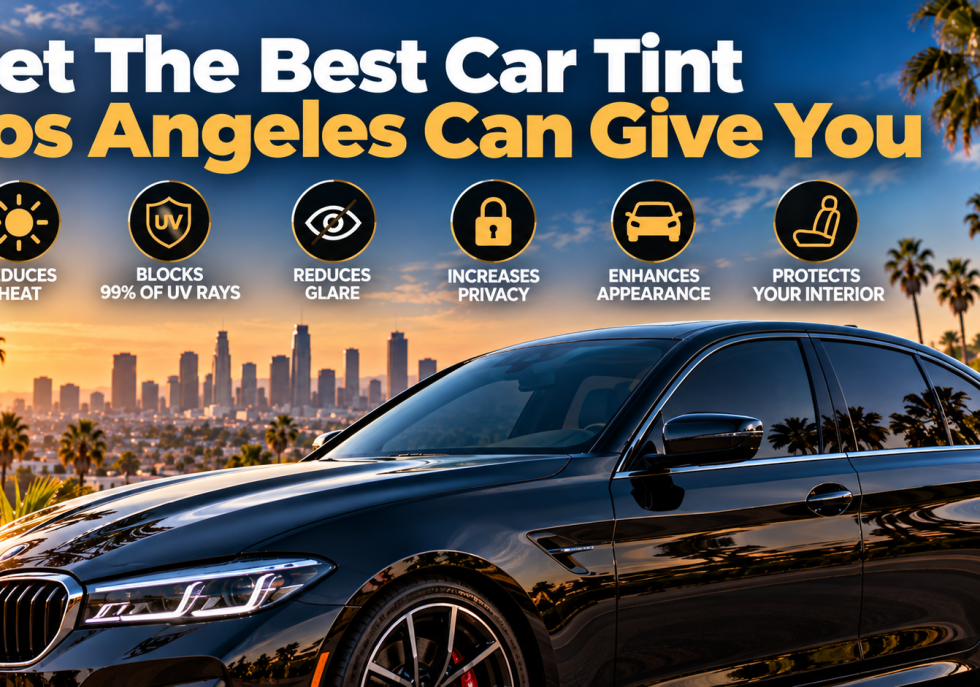
Choosing the best car tint in Los Angeles is about much more than making your windows darker. With year-round sunshine, long commutes, and vehicles frequently parked outdoors, Los Angeles drivers often want window film that can improve cabin comfort, reduce glare, provide UV protection, increase privacy, and complement the appearance of the vehicle.
The challenge is that not all automotive window films perform the same way.
Two films can look nearly identical while providing very different levels of solar heat rejection, UV protection, optical clarity, durability, and long-term color stability. The quality of the installation also has a major impact on how the finished tint looks and performs.
If you are comparing automotive window tinting in Los Angeles, focus on measurable performance, film quality, appropriate shade selection, warranty coverage, and professional installation rather than darkness or price alone.
What Makes a Car Tint the Best Choice for Los Angeles?
There is no single window tint that is automatically best for every driver.
The right film depends on how you use your vehicle and which benefits matter most to you.
A Los Angeles commuter who regularly drives during peak afternoon sunlight may prioritize heat rejection and glare control. Someone who parks outdoors may place greater value on UV protection and interior preservation. Another driver may primarily want privacy and a clean, factory-inspired appearance.
The best approach is to identify your priorities first and then compare films using their actual specifications.
Factory Privacy Glass Is Not the Same as Automotive Window Film
Many SUVs, trucks, and other vehicles leave the dealership with darker rear glass. This is often referred to as factory privacy glass.
However, dark factory glass and professionally installed aftermarket window film are not necessarily the same thing.
Factory-colored glass can provide privacy and reduce visible light, but darkness alone does not tell you how much solar heat or UV radiation the glass manages.
Aftermarket automotive films are specifically engineered to provide different combinations of solar control, UV protection, glare reduction, privacy, and appearance.
This distinction is important because a window can look dark without providing the same performance as a premium solar-control film.
Look for UV Protection
UV protection is one of the most important characteristics to compare when selecting automotive window tint.
High-quality window films can block up to 99% of harmful ultraviolet radiation, depending on the product.
This can provide additional protection for drivers and passengers while helping reduce UV exposure to leather, dashboards, upholstery, steering wheels, door panels, and other interior surfaces.
The darkness of the tint does not determine its UV protection.
A virtually clear automotive film can provide substantial UV blocking when designed for that purpose, while a very dark film should not automatically be assumed to provide better protection.
Check the manufacturer’s specifications for the exact film being installed.
Choose Car Tint Based on Heat Rejection, Not Darkness
Los Angeles drivers frequently choose window tint because of cabin heat.
One of the biggest mistakes is assuming that the darkest tint automatically keeps a vehicle the coolest.
It does not.
Tint darkness primarily relates to visible light transmission. Solar heat rejection depends on the technology and construction of the film.
Modern ceramic and nano-ceramic films can provide strong solar performance without requiring extremely dark windows.
When heat control is important, one useful specification is Total Solar Energy Rejected (TSER). TSER indicates how much total solar energy the glazing-and-film system rejects.
Manufacturer infrared specifications can also be useful, but they should be interpreted carefully because testing methods and wavelength ranges may differ between products.
A film with an impressive infrared percentage is not automatically the highest-performing film overall.
Understand VLT Before Choosing Your Tint Shade
Visible Light Transmission, or VLT, describes how much visible light passes through the glazing system.
A higher VLT allows more visible light through and generally creates a lighter appearance. A lower VLT allows less visible light through and generally creates a darker appearance.
VLT affects appearance, privacy, glare, and visibility, but it should not be used as a substitute for heat-rejection specifications.
For example, a relatively light premium ceramic film may provide stronger solar performance than a much darker entry-level dyed film.
When choosing your shade, think about daytime appearance, nighttime visibility, privacy, existing factory glass, interior color, and California legal requirements.
Compare the Main Types of Automotive Window Tint
The film technology you select can have a significant effect on price and performance.
Dyed Window Tint
Dyed film is traditionally one of the more affordable automotive tint options.
It provides a darker appearance, privacy, and glare reduction and can be a practical choice for drivers whose main priorities are styling and budget.
Performance varies by product, and entry-level dyed films may provide less solar heat rejection and long-term color stability than premium technologies.
Metalized Window Tint
Metalized films incorporate metallic components that can help manage solar energy and provide good durability.
Some drivers like their performance, while others prefer non-metallic films because certain metal-containing products may affect some radio-frequency or electronic signals.
The appearance can also be more reflective depending on the particular film.
Carbon Window Tint
Carbon film offers a non-metallic option with a darker, generally non-reflective appearance.
Quality carbon films can provide a good balance between heat control, privacy, appearance, and price.
They can be a useful middle-ground option for drivers who want stronger performance than a basic dyed film without moving to the highest-priced premium film.
Ceramic Window Tint
Ceramic window tint is one of the most popular premium options for Los Angeles drivers.
High-quality ceramic films use non-metallic materials engineered to manage solar energy while maintaining good optical clarity.
Depending on the particular product, ceramic tint can provide strong heat rejection, UV protection, glare reduction, electronic signal compatibility, and long-term color stability.
Nano-Ceramic Window Tint
Nano-ceramic films use extremely small ceramic particles engineered to manage solar energy without relying on metallic construction.
Premium nano-ceramic products are often selected when heat rejection and cabin comfort are top priorities.
Luxury Glass Tinting currently offers premium ceramic and nano-ceramic car window tinting options in Los Angeles for drivers with different comfort, privacy, and appearance goals.
Is Ceramic Tint Worth It in Los Angeles?
For many Los Angeles drivers, ceramic tint is worth comparing with conventional film because of the amount of sunlight vehicles experience throughout the year.
The biggest advantage is that premium ceramic technology can provide strong solar performance without requiring extremely dark glass.
That can be particularly useful for commuters, drivers who regularly park outdoors, rideshare drivers, families, and vehicle owners who want cabin comfort without sacrificing optical clarity.
Ceramic film typically costs more than entry-level dyed film, so it is not automatically the right choice for every budget.
The decision should be based on actual specifications and the amount of value you place on heat rejection, clarity, UV protection, longevity, and non-metallic construction.
Privacy Matters, but Visibility Matters Too
Privacy is one of the most visible benefits of automotive tint.
A properly selected shade can make the cabin less visible from outside and give occupants a greater sense of privacy.
However, the darkest possible window is not necessarily the best window.
Very dark tint can reduce outward visibility at night or in poor lighting conditions. Shade selection should balance privacy with safe visibility, appearance, and legal requirements.
Privacy also varies with lighting. A vehicle that appears extremely private in bright daylight may be easier to see into under different lighting conditions.
Glare Reduction Can Improve Driving Comfort
Los Angeles drivers regularly encounter intense sunlight, reflective pavement, glass buildings, and low-angle morning or evening sun.
Window film can reduce the amount of visible light entering through treated glass, helping reduce uncomfortable glare.
Glare reduction can make daily driving more comfortable, but again, more darkness is not always better.
A professional installer should help you choose a film that provides useful glare control while preserving appropriate visibility after dark.
Protect Your Vehicle’s Interior From Sun Exposure
Automotive interiors experience substantial solar exposure over time.
UV radiation, visible light, and heat can contribute to fading and deterioration of leather, upholstery, dashboards, trim, and other interior materials.
Quality window film can reduce several components of that exposure and help interior materials maintain their appearance for longer.
No tint can guarantee that a vehicle’s interior will never fade, but reducing solar exposure can be an important part of protecting a vehicle that spends significant time outdoors.
California Window Tint Laws Matter
Selecting the best tint also means choosing an installation that complies with California requirements.
California regulates material applied to automotive windows, and different requirements can apply depending on whether the film is installed on the windshield, front side windows, rear side windows, or rear glass.
Because legal compliance depends on window position, existing glazing, film characteristics, and the particular application, drivers should avoid relying entirely on generic tint-percentage charts found online.
A professional Los Angeles tint installer should be familiar with current requirements and explain appropriate options before installation.
Drivers should also verify current California regulations themselves, particularly when considering front-window or windshield applications.
The Installer Is Just as Important as the Film
Premium window film cannot compensate for poor installation.
Automotive tint installation requires careful glass cleaning, contamination control, accurate film cutting, shaping around curved glass, correct application techniques, edge finishing, and final inspection.
Poor installation can result in visible contamination, creases, lifting edges, inconsistent cuts, peeling, or premature failure.
It is also normal for freshly installed window film to require a curing period. Residual moisture may temporarily affect appearance immediately after installation, which is why a new tint should not always be judged the moment the vehicle leaves the installation area.
Professional installation and proper aftercare give premium film the best opportunity to perform as intended.
What Should a Window Tint Warranty Cover?
Warranty coverage should be part of your comparison when choosing a film and installer.
Do not assume every “lifetime warranty” means exactly the same thing.
Ask whether the warranty comes from the film manufacturer, installer, or both, and determine what conditions are actually covered.
Depending on the product, warranty protection may address issues such as bubbling, peeling, cracking, adhesive failure, delamination, or discoloration.
Luxury Glass Tinting states that its premium ceramic installations include manufacturer-backed warranty protection, but customers should always review the terms applying to the exact film selected.
How Much Does Quality Car Tint Cost in Los Angeles?
There is no single price that accurately represents every automotive tint installation.
Pricing varies according to the vehicle, number and size of windows, film technology, existing film removal, installation complexity, and product selected.
A sedan using standard dyed film will not necessarily cost the same as a large SUV receiving premium nano-ceramic film.
Instead of looking for the cheapest quote, compare what each quote actually includes.
Knowing the exact film brand, product line, coverage, performance specifications, warranty, and installation scope provides a much better comparison than price alone.
How to Choose the Best Car Tint in Los Angeles
Start with the problem you actually want the film to solve.
For strong heat control, prioritize TSER and overall solar-performance specifications. For UV protection, verify the film’s published UV performance. For privacy, compare VLT while considering nighttime visibility. For premium overall performance, ceramic or nano-ceramic film is worth evaluating. For a budget-conscious styling upgrade, a quality dyed or carbon film may be sufficient.
Then evaluate the installer.
Film quality, installation quality, legal compliance, warranty terms, aftercare, and the installer’s ability to explain performance data all matter.
The best tint is not necessarily the darkest, most expensive, or most heavily advertised film. It is the product that delivers the performance you need and is installed correctly on your vehicle.
Frequently Asked Questions About Car Tint in Los Angeles
What is the best car tint for Los Angeles heat?
Premium ceramic and nano-ceramic films are popular choices when solar heat control is a priority because they can provide strong solar performance without relying on extremely dark shades. The best product should still be chosen by comparing its actual specifications.
Does darker tint block more heat?
Not necessarily. Darkness primarily affects visible light transmission. Heat rejection depends on film construction and solar performance. A lighter premium film can outperform a darker basic film.
Can car tint block 99% of UV rays?
Many quality automotive films are designed to block up to 99% of harmful UV radiation. Check the manufacturer’s specifications for the exact product being installed.
What is VLT in window tint?
VLT means Visible Light Transmission. It represents how much visible light passes through the glazing system. Lower VLT generally means a darker appearance, while higher VLT means a lighter appearance.
What is TSER?
TSER stands for Total Solar Energy Rejected. It measures the percentage of total solar energy rejected by the glazing-and-film system and is an important specification when comparing films for heat control.
Is factory privacy glass the same as ceramic tint?
No. Factory privacy glass primarily changes the appearance and visible-light transmission of the glass. Ceramic aftermarket film is engineered to provide additional solar-control characteristics depending on the product.
Is ceramic window tint worth the extra cost?
Ceramic tint can be worth the additional investment for drivers who prioritize heat rejection, UV protection, optical clarity, electronic signal compatibility, and premium long-term performance.
How long does car window tint last?
There is no universal lifespan. Longevity depends on film quality, installation, sun exposure, vehicle use, maintenance, and warranty terms. Premium professionally installed films are generally designed for longer-term performance than entry-level products.
How long should I wait before rolling down tinted windows?
Newly installed film requires time to cure. Follow the installer’s instructions and keep the treated windows closed during the initial curing period. The exact timing can vary with the film and environmental conditions.
Get Professional Car Tint in Los Angeles
Finding the best car tint Los Angeles can offer comes down to more than picking a shade from a display.
A quality installation should balance solar heat rejection, UV protection, glare control, privacy, visibility, appearance, legal compliance, film durability, and warranty protection.
Luxury Glass Tinting currently installs LLumar automotive films in Los Angeles, including dyed, ceramic, nano-ceramic, and virtually clear options. Film selection can be matched to your comfort, appearance, heat-rejection, and privacy goals.
Explore professional automotive window tinting in Los Angeles to compare available film options and choose a setup that fits the way you drive.