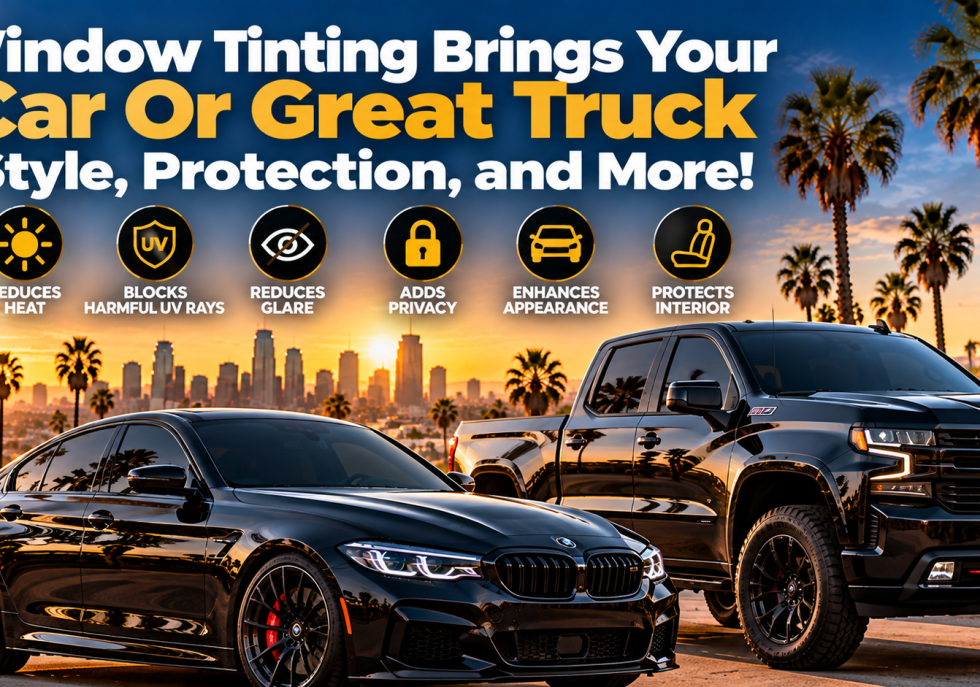
Whether you drive a daily commuter, luxury sedan, SUV, pickup truck, or commercial vehicle, professional window tinting can improve both the appearance and everyday comfort of your vehicle.
Quality automotive window film can help reduce solar heat, block harmful UV radiation, control glare, improve privacy, and protect interior materials from prolonged sun exposure. It can also give cars and trucks a cleaner, more uniform appearance without requiring a major exterior modification.
For Los Angeles drivers who spend significant time in strong Southern California sunshine, choosing the right film can make a noticeable difference.
Luxury Glass Tinting provides professional automotive window tinting and mobile installation options for cars, trucks, SUVs, and other vehicles throughout the Los Angeles area.
Why Tint the Windows on Your Car or Truck?
Automotive window tint combines style with practical performance.
Depending on the film you choose, window tint can help with:
-
Solar heat control
-
UV protection
-
Glare reduction
-
Daytime privacy
-
Interior protection
-
Vehicle appearance
-
Driving comfort
The exact results depend on the film technology, shade, existing vehicle glass, and quality of the installation.
That is why choosing automotive tint based solely on how dark it looks is usually a mistake.
Reduce Solar Heat Inside Your Vehicle
One of the biggest reasons Los Angeles drivers tint their vehicles is cabin heat.
Sunlight entering through automotive glass carries solar energy that can make seats, dashboards, steering wheels, and other surfaces uncomfortable.
Solar-control window film is designed to reduce the amount of this energy entering the vehicle.
However, darkness and heat rejection are not the same thing.
A very dark basic film may not provide the same solar performance as a lighter premium ceramic or nano-ceramic film.
When heat reduction is a priority, look at measurable specifications such as Total Solar Energy Rejected (TSER) and the manufacturer’s complete solar-performance data.
The International Window Film Association recommends evaluating total solar performance instead of relying solely on a large infrared-rejection percentage.
Block Harmful UV Radiation
Ultraviolet protection is another important benefit of quality automotive film.
Vehicle windshields typically provide substantial UV protection because of their laminated construction, but side, rear, and sunroof glass may allow greater UVA exposure.
High-quality automotive films can block up to 99% of harmful UV radiation, depending on the product.
Reducing UV exposure can benefit drivers and passengers who spend long periods on the road and can also help protect:
-
Leather seats
-
Fabric upholstery
-
Dashboards
-
Door panels
-
Steering wheels
-
Plastic and vinyl trim
A darker film does not automatically provide stronger UV protection. Even relatively clear automotive films can offer significant UV blocking when engineered for that purpose.
Reduce Glare for More Comfortable Driving
Bright sunlight can make everyday driving uncomfortable, particularly during early-morning and late-afternoon hours.
Window tint can reduce visible-light glare entering through treated windows, helping make the cabin more comfortable.
This can be useful when dealing with:
-
Low-angle sunlight
-
Reflections from pavement
-
Bright surrounding vehicles
-
Reflective buildings
-
Long daytime commutes
The goal should be to reduce distracting glare without making nighttime visibility unnecessarily difficult.
This is one reason shade selection should be based on how and when you drive rather than appearance alone.
Improve Privacy
Tinted windows can make occupants and belongings less immediately visible from outside.
The amount of privacy depends on several factors, including:
-
Visible Light Transmission
-
Interior color
-
Exterior lighting
-
Window angle
-
Existing factory privacy glass
-
Film reflectivity
Window tint can provide useful privacy, but it should not be treated as a theft-prevention system.
Valuables should still be removed from view when possible.
Give Your Car or Truck a Cleaner Appearance
Window tint can dramatically change a vehicle’s appearance without altering the paint or body.
A consistent tint can visually connect the windows with the roofline and body of the vehicle, creating a more finished appearance.
This can work particularly well on:
-
Pickup trucks
-
SUVs
-
Luxury sedans
-
Sports cars
-
EVs
-
Work vehicles
-
Commercial fleets
Trucks and SUVs often already have darker factory rear glass. A professional installer can help select a film for the front or other windows that creates a more balanced appearance while considering performance and California regulations.
Understand VLT Before Choosing a Tint Shade
Visible Light Transmission, or VLT, describes how much visible light passes through the glazing system.
Higher VLT means more visible light passes through and the glass generally looks lighter.
Lower VLT means less visible light passes through and the glass generally appears darker.
This measurement is important for privacy, appearance, glare control, visibility, and legal compliance.
However, VLT does not directly tell you how much solar heat a film rejects.
A lighter premium window film can provide stronger solar heat control than a darker basic film.
That distinction is important when choosing tint for hot Southern California driving conditions.
What Types of Automotive Window Tint Are Available?
Different film technologies offer different combinations of performance, appearance, and price.
Dyed Window Tint
Dyed film is generally one of the more affordable choices.
It can provide:
-
A darker appearance
-
Privacy
-
Glare reduction
-
Basic customization
It can be appropriate when style and budget are the main priorities.
Carbon Window Tint
Carbon film provides a non-metallic option with a generally non-reflective appearance.
Quality carbon films can provide a useful balance of:
-
Heat control
-
Privacy
-
Appearance
-
Color stability
-
Value
Performance varies considerably between products, so compare manufacturer specifications.
Metalized Window Tint
Metalized film uses metallic components to manage solar energy.
It can provide good solar control and durability, but some metal-containing films may affect certain electronic or radio-frequency signals depending on their construction and the vehicle.
Ceramic Window Tint
Ceramic film is a premium option for drivers who prioritize solar heat rejection, UV protection, optical clarity, and non-metallic construction.
Modern ceramic films can provide strong solar performance without requiring extremely dark glass.
Nano-Ceramic Window Tint
Nano-ceramic film uses extremely small ceramic particles engineered to manage solar energy while maintaining clarity and electronic signal compatibility.
For Los Angeles drivers focused on cabin comfort, premium ceramic and nano-ceramic films are often worth comparing with basic film options.
Mobile Window Tinting for Cars and Trucks
Convenience can matter as much as film selection.
Luxury Glass Tinting currently offers mobile window tinting in Los Angeles with appointments at homes and workplaces in most service areas.
Mobile service can be particularly convenient for:
-
Pickup truck owners
-
Busy professionals
-
Multi-car households
-
Business vehicles
-
Fleet vehicles
-
Customers who prefer not to wait at a tint shop
The installation process still requires a suitable working environment.
A professional mobile appointment should include confirmation of your vehicle and location, film and shade selection, careful glass preparation, installation, final inspection, and aftercare guidance.
Window Tinting for Pickup Trucks
Pickup trucks present their own tinting considerations.
Many trucks already have darker factory glass behind the driver while the front side windows remain considerably lighter.
This difference can create an uneven appearance.
Professional tinting can help produce a more cohesive look while also providing additional solar-control benefits depending on the film chosen.
Truck owners should consider:
-
Existing factory privacy glass
-
Desired appearance
-
Front-window visibility
-
Cabin heat
-
Film performance
-
California requirements
The same shade applied over different factory glass can create different final results, so a professional should account for the vehicle’s existing glazing before installation.
Window Tinting for Commercial Vehicles
Commercial vehicles can also benefit from professional automotive film.
Drivers may spend many hours inside work vehicles, making glare, solar heat, and UV exposure important considerations.
Window film may also create a more consistent and professional appearance across multiple company vehicles.
When tinting commercial or fleet vehicles, consider:
-
Driver visibility
-
Daily driving hours
-
Film durability
-
Solar heat performance
-
Warranty coverage
-
Vehicle consistency
-
Legal compliance
Film selection should prioritize practical driving conditions rather than simply creating the darkest appearance possible.
Check California Window Tint Laws Before Installation
California does not use a universal “35% tint” rule for every automotive window.
California Vehicle Code Section 26708 treats different window positions differently.
For qualifying clear, colorless, transparent material installed on the front side windows, current law requires the film itself to have a minimum VLT of 88%. The glass-and-film combination must also satisfy the applicable 70% federal glazing requirement, along with additional UV and certification requirements.
Windows to the rear of the driver are treated differently under the statute, and rear-window applications have additional provisions involving outside mirrors.
Windshield rules are also more specific than the frequently repeated claim that California simply permits a fixed “top four-inch” or “top six-inch” tint strip.
Because the requirements depend on the particular window and installation, drivers should not rely on generic tint-law charts.
An experienced installer can explain suitable options, but vehicle owners should also verify current California regulations before installation.
What About Reflective Window Tint?
Reflectivity can influence both appearance and visibility.
Some films have a more reflective exterior appearance, while ceramic, carbon, and other options may produce a more neutral finish.
California law contains requirements concerning material that reflects sunlight or headlight glare, particularly where visibility and other drivers are concerned.
There is no responsible reason to publish a blanket statement that every vehicle window may simply use “35% reflective tint.”
Instead, choose a film specifically intended and appropriate for automotive use in California.
Do You Need Two Side Mirrors With Rear Window Tint?
California Vehicle Code contains an exception relating to rear-window material when the vehicle has outside mirrors on both the left and right sides positioned to provide the driver with a specified rearward view.
Because the law is more detailed than simply saying “rear tint requires two mirrors,” the vehicle’s configuration and actual application should be considered.
Your installer should review the planned coverage before installation.
Can Window Tint Reduce Air-Conditioning Use?
Heat-rejecting window film can reduce solar heat entering the vehicle and may reduce how hard the air-conditioning system needs to work in certain conditions.
However, it would be inaccurate to guarantee that installing window tint will produce a specific improvement in fuel economy.
Fuel consumption depends on numerous factors, including:
-
Vehicle design
-
Driving speed
-
Weather
-
Air-conditioning use
-
Engine or drivetrain
-
Traffic
-
Vehicle load
The more defensible benefit is reduced solar heat gain and improved cabin comfort, rather than guaranteed fuel savings.
Professional Installation Matters
High-quality film still needs to be installed correctly.
Automotive window tint installation involves:
-
Thorough glass preparation
-
Accurate film cutting
-
Contamination control
-
Film shaping
-
Proper application
-
Edge finishing
-
Final inspection
Poor installation can result in contamination, uneven edges, creases, lifting film, or premature failure.
Automotive film also requires a curing period.
Some residual installation moisture may initially remain between the glass and film, so temporary haze or moisture patterns can be normal during curing.
Follow the installer’s instructions before rolling down treated windows or cleaning the film.
What Should You Ask Before Getting Your Car or Truck Tinted?
Before choosing an installer, ask:
-
What film brand and product line will be installed?
-
Is the film dyed, carbon, metalized, ceramic, or nano-ceramic?
-
What is its VLT?
-
What is its TSER?
-
How much UV radiation does it block?
-
Is the film appropriate for my existing factory glass?
-
Which options comply with California requirements?
-
What warranty is included?
-
Do you provide mobile service at my location?
-
How long will the film need to cure?
Clear answers make it much easier to compare film and installation quality.
Frequently Asked Questions About Car and Truck Window Tinting
Does window tint keep cars and trucks cooler?
Solar-control automotive film can reduce solar energy entering through vehicle glass and improve cabin comfort. The amount depends on the film, glass, vehicle design, and sun exposure.
Does darker tint reject more heat?
Not necessarily. Darkness relates primarily to visible light transmission, while heat rejection depends on the film’s technology and overall solar performance.
Can automotive tint block 99% of UV rays?
Many quality automotive films can block up to 99% of harmful UV radiation. Verify the performance specifications of the exact film being installed.
Is ceramic tint good for trucks?
Yes. Ceramic film can be a strong choice for pickup trucks when heat rejection, UV protection, optical clarity, and a non-metallic construction are priorities.
Can factory-tinted truck windows receive additional film?
In many cases, film can be installed over compatible factory privacy glass, but the existing glazing needs to be considered when choosing the film and predicting final VLT and appearance.
Is 35% tint legal on front windows in California?
Do not rely on that blanket rule. California’s current statute contains a specific exception for qualifying clear, colorless front-side-window material with at least 88% VLT in the material itself and a 70% minimum requirement for the combined glazing system, along with additional conditions.
Does window tint reduce glare?
Yes. Automotive window film can reduce visible-light glare and improve visual comfort. Shade selection should still preserve appropriate nighttime visibility.
Does mobile tinting provide the same type of professional installation?
It can when the working environment is suitable and the installer follows proper preparation and quality-control procedures. The quality depends on film, installer experience, working conditions, and installation technique rather than simply whether the work is performed at a shop or on-site.
Give Your Car or Truck Style, Protection, and Comfort
Professional automotive window tint can provide much more than a darker appearance.
The right film can improve your vehicle with solar heat control, UV protection, glare reduction, privacy, interior protection, and a cleaner exterior look.
For Los Angeles cars and trucks, film selection should be based on measurable performance, visibility, California requirements, your existing factory glass, and how you use the vehicle.
Luxury Glass Tinting provides professional automotive window tinting for daily commuters, luxury cars, SUVs, pickup trucks, sports cars, and commercial vehicles, along with mobile window tinting at homes and workplaces across most Los Angeles service areas.
Choosing the right film and having it professionally installed can give your car or truck a refined appearance while improving comfort every time you drive.