
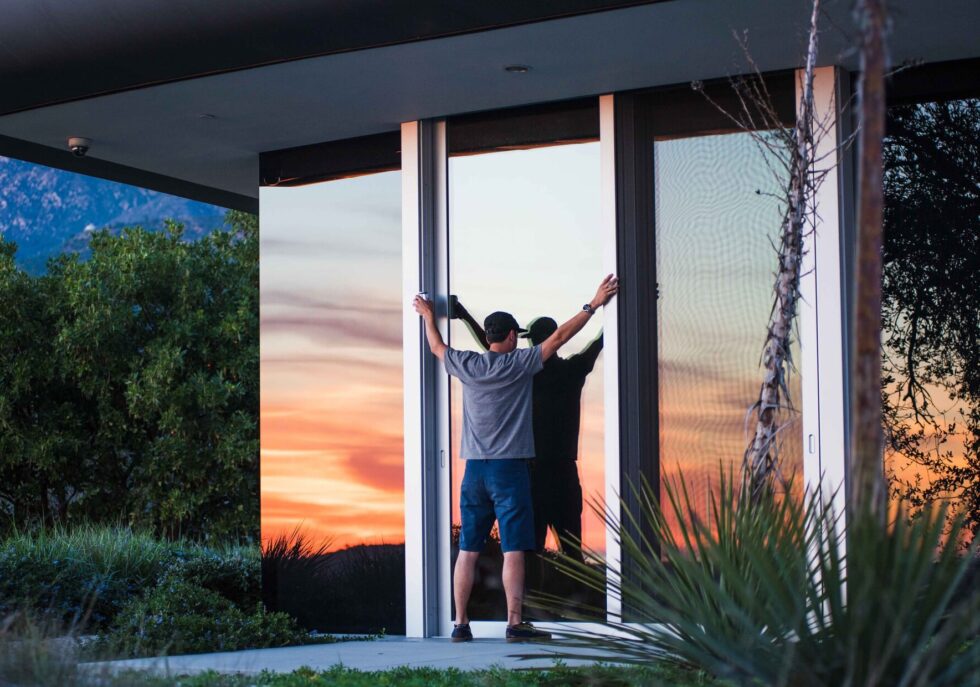
There is no single “best” window tint for every room in a home.
A west-facing living room that becomes uncomfortably hot in the afternoon does not have the same problem as a bathroom window that needs privacy after dark. A front-door sidelight may need visual screening without losing daylight, while large scenic windows may need solar heat reduction without noticeably changing the view.
That is why the best home window tint should be chosen according to what the glass needs to do.
For most homeowners, the decision comes down to several priorities: solar heat control, glare reduction, natural light, daytime privacy, nighttime privacy, interior fading, appearance, or dedicated glass protection.
Luxury Glass Tinting provides residential window tinting in Los Angeles with multiple film technologies designed around those different goals.
This guide compares seven of the most useful residential window-film categories and explains where each one works best.
Quick Answer: What Are the Best Types of Home Window Tint?
The best film depends on the room and the problem.
| Film Type | Best For |
|---|---|
| Solar control film | Hot, bright rooms and glare |
| Spectrally selective film | Heat reduction while preserving daylight and views |
| Reflective film | Solar control plus daytime privacy |
| Dual-reflective film | Solar control, daytime privacy, and clearer interior viewing |
| Frosted privacy film | More consistent day-and-night privacy |
| Decorative privacy film | Privacy plus design |
| Safety and security film | Broken-glass retention and specialized protection |
Several additional technologies—including ceramic, neutral, specialty, Harmony, and Low-E films—can sit within or alongside these broader categories.
The right recommendation should start with the room rather than with the darkest sample on a shade card.
A Better Way to Choose Home Window Tint
Many homeowners begin by asking:
“What is your darkest tint?”
or:
“Which film blocks the most heat?”
Those questions can lead to the wrong product.
A darker film is not automatically the best solar performer. A mirrored film is not automatically private at night. Frosted film provides excellent privacy but removes the clear outdoor view. Security film has an entirely different purpose from ordinary solar tint.
A better starting point is:
What problem is this particular window creating?
For example, if the issue is afternoon heat, look at solar performance.
If the issue is a bathroom that feels exposed at night, look at frost.
If the issue is a street-facing living room where you still want to see outside, reflective or dual-reflective film may make more sense.
If the concern is broken glass or forced entry, evaluate dedicated safety/security film rather than ordinary residential tint.
That room-by-room approach usually creates a much better whole-home result.
1. Solar Control Film
Solar control film is one of the most useful residential window-film categories for rooms that receive substantial direct sunlight.
Its primary purpose is to manage incoming solar energy before as much of that energy reaches the occupied interior.
Depending on the specific film, solar-control technology can help reduce:
Solar heat gain. Less unwanted solar energy entering through the window can make sun-exposed rooms more comfortable.
Glare. Reducing excessive visible light can make televisions, computers, tablets, and other screens easier to use.
UV exposure. Premium solar-control films can provide substantial UV reduction, helping reduce an important contributor to interior fading.
Solar-control film is particularly relevant for bright living rooms, kitchens, family rooms, bedrooms, and home offices where strong sunlight makes the space harder to use.
How Solar Control Window Film Reduces Heat
Incoming sunlight contains energy across several parts of the solar spectrum.
Architectural film changes how that energy is:
reflected, absorbed, and transmitted through the glazing.
The practical result can be less solar energy reaching the room.
For homeowners comparing heat-control film, technical measurements such as SHGC and TSER are more useful than simply comparing how dark the films look.
What Is SHGC?
Solar Heat Gain Coefficient measures the fraction of solar radiation admitted through a glazing system that ultimately becomes heat indoors.
Generally:
Lower SHGC = less solar heat gain.
What Is TSER?
Total Solar Energy Rejected measures how much total incoming solar energy is rejected by the glazing system.
Generally:
Higher TSER = greater total solar-energy rejection.
These numbers help explain why a relatively light high-performance film can sometimes outperform a darker-looking product.
Is Solar Control Film the Best Choice for Every Hot Room?
Not necessarily.
“Solar control” is a broad category.
Depending on how much daylight, reflectivity, privacy, and view preservation you want, the better option might be:
ceramic, neutral, reflective, dual-reflective, specialty, or spectrally selective film.
The category describes the job; the specific technology determines how that job is accomplished.
2. Spectrally Selective Film
Spectrally selective film is one of the strongest choices when a homeowner says:
“I want less heat, but I do not want my windows to look dark.”
These films are designed to reduce more unwanted solar energy while transmitting relatively high levels of visible light.
Lawrence Berkeley National Laboratory describes spectrally selective glazing as admitting substantial daylight while preventing as much solar heat transmission as practical.
That balance makes this type of film particularly useful for homes where:
natural light, open views, and a bright interior are important parts of the design.
Where Spectrally Selective Film Works Best
It is particularly well suited to large:
living-room windows, open-plan areas, picture windows, sliding glass doors, and view-focused spaces.
Luxury Glass Tinting currently offers spectrally selective residential film specifically for homeowners who want to keep the view bright while reducing heat with minimal change to the appearance of the glass.
Spectrally Selective Film vs. Dark Tint
Traditional darker film reduces visible light as part of its performance.
Spectrally selective technology is designed to create a better separation between:
solar heat control and visible daylight transmission.
This can produce a lighter, more natural-looking result.
That does not mean every spectrally selective product is visually invisible or that every product performs identically.
Compare the exact film’s:
VLT, SHGC, TSER, reflectance, and compatibility with your glass.
Is Spectrally Selective Film the Same as Ceramic Film?
Not necessarily.
The terms describe different aspects of film technology.
A ceramic architectural film may also provide excellent high-VLT solar performance.
A spectrally selective film is specifically characterized by the way it manages different wavelengths of solar energy while preserving relatively high visible-light transmission.
For homeowners, the practical question is more important than the label:
Which film gives me the heat reduction, daylight, reflectivity, and appearance I want?
3. Reflective Film
Reflective window film is a strong option when solar control and daytime privacy are both priorities.
During bright exterior conditions, the outside surface of the glass can appear more mirror-like.
This helps reduce visibility into the home while allowing occupants to maintain an outward view.
Luxury Glass Tinting currently recommends reflective residential film for strong daytime privacy and solar control in bright spaces.

Best Uses for Reflective Home Window Film
Reflective film can work especially well on:
street-facing living rooms, front-facing windows, ground-floor rooms, and larger panes where solar exposure and outside visibility are both concerns.
It can simultaneously address:
solar heat, glare, and daytime privacy.
Does Reflective Privacy Film Work at Night?
Not reliably when the interior becomes brighter than outside.
This is one of the most important facts homeowners should understand before choosing reflective film.
The International Window Film Association notes that privacy from highly reflective residential films can be significant during the day but can virtually disappear when there is more light inside than outside.
During daylight:
Outside brighter → stronger reflected privacy effect.
At night with interior lights on:
Inside brighter → outside visibility into the room may increase.
That is why reflective film is best described as a daytime privacy solution, not guaranteed 24-hour one-way glass.
When Reflective Film Is the Right Choice
Choose reflective film when you want a combination of:
strong solar control, glare reduction, daytime privacy, and outward viewing.
If privacy is critical after dark, pair it with:
curtains or blinds,
or consider frosted privacy film where maintaining a clear view is less important.
4. Dual-Reflective Film
Dual-reflective film solves some of the aesthetic issues associated with highly mirrored solar film.
It is generally designed with:
a more reflective exterior surface and a less reflective interior appearance.
This allows homeowners to gain strong solar performance while reducing the amount of mirror-like reflection they see from inside.
Luxury Glass Tinting currently positions dual-reflective residential film as an option that helps keep the indoor view clearer while reducing harsh glare and improving comfort.
Why Interior Reflectivity Matters
Highly reflective film can work well during daylight.
At night, however, a brightly lit room can cause the inside surface of the window to behave more like a mirror.
That can interfere with:
city views, garden views, exterior landscaping, or other nighttime sightlines.
Dual-reflective film is designed to make that interior viewing experience more comfortable.
Does Dual-Reflective Film Give Nighttime Privacy?
It can improve nighttime outward viewing, but that should not be confused with guaranteed nighttime privacy.
If the inside of the home is much brighter than outside, people outside may still be able to see in.
So dual-reflective film is useful for:
daytime privacy + solar performance + reduced interior reflection
rather than guaranteed 24-hour visual privacy.
Best Rooms for Dual-Reflective Film
It can be an excellent option for:
living rooms, dining areas, front rooms, large sliding doors, and other view-sensitive glazing.
It is especially useful where standard reflective film would feel too mirror-like from inside.
5. Frosted Privacy Film
Frosted privacy film solves a completely different problem.
Instead of depending on reflected light, frost obscures the view through the glass.
That makes it one of the most dependable residential choices when privacy needs to continue:
during the day and after dark.
Frosted window film can allow diffused daylight into the room while preventing a clear direct view through the glass.
Best Rooms for Frosted Window Film
Frost works particularly well for:
bathrooms, front-door sidelights, entry doors, ground-floor bedrooms, stair windows, shower glass, and interior partitions.
These are spaces where clear visibility through the pane is usually less valuable than privacy.
Why Frosted Film Works Better at Night
Reflective privacy depends strongly on lighting conditions.
Frost does not.
The film scatters and obscures the view through the pane regardless of which side is brighter.
That is why it is generally much more dependable for:
bathrooms and bedrooms that still need privacy after interior lights are switched on.
Does Frosted Window Film Still Let Light In?
Yes.
A translucent frosted film can maintain substantial diffused natural light while blocking detailed visibility.
The result can make a room feel:
bright but screened,
rather than dark and closed off.
This is particularly valuable for bathrooms and entryways where natural daylight is desirable but clear glass feels too exposed.
Can People See Silhouettes Through Frosted Film?
Possibly.
Frost is not automatically the same as total opacity.
With:
strong backlighting, a person standing very close to the glass, and a lighter translucent frost,
blurred silhouettes or movement may still be visible.
For more complete visual blocking, consider:
denser frost, whiteout, blackout, or another opaque privacy treatment.
The Main Trade-Off With Frosted Film
Frost works in both directions.
If someone outside cannot clearly see you, you also cannot maintain a clear outward view through the frosted area.
That makes it excellent for bathrooms.
It may be less appropriate for a large living-room window overlooking a garden or city view.
Partial frost or gradient film can sometimes provide a better compromise.
6. Decorative Privacy Film
Decorative film combines privacy with design.
Instead of treating glass only as a surface to cover, decorative window film can turn it into an architectural feature.
Depending on the product, decorative films may include:
frosted effects, etched-style designs, gradients, geometric patterns, textures, colored films, or stained-glass-inspired effects.
Where Decorative Window Film Works Best
Common residential applications include:
front doors, sidelights, bathrooms, stair windows, home-office glass, interior partitions, shower glass, and feature panels.
It is especially useful when plain frost feels too simple but conventional tinted glass does not fit the design.
Decorative Film Can Replace the Look—Not the Material—of Specialty Glass
Film can create an appearance inspired by:
etched, patterned, sandblasted, or decorative glass
without requiring the existing pane to be replaced.
That can make it a practical retrofit where the glass is still in good condition.
Film does not become actual etched or specialty glass, but it can provide a similar visual concept with greater flexibility.
Decorative Film Does Not Automatically Provide Solar Performance
This is an important distinction.
Decorative film is primarily designed for:
privacy, appearance, and light diffusion.
Some products also provide significant:
UV reduction or solar control.
Others do not.
If heat reduction or interior protection is important, check the exact product’s specifications instead of assuming every patterned or frosted film performs like dedicated solar-control film.
Decorative vs. Frosted Privacy Film
Frosted film is itself a type of decorative privacy treatment, but the terms are useful for different homeowner searches.
Frosted film usually describes a uniform privacy finish.
Decorative privacy film can include frost plus patterns, textures, gradients, or other design elements.
Choose frost when simplicity and privacy are the priorities.
Choose decorative film when the glass itself should contribute to the room’s design.
7. Safety and Security Film
Safety/security film belongs on this list because some residential glass problems are not about:
heat, glare, or privacy.
They are about what happens when the glass breaks.
Dedicated window security film uses thicker specialty film and aggressive adhesive to help keep fractured glass associated with the film after impact.
The International Window Film Association explains that correctly specified safety/security film can help hold broken glass together and reduce hazards associated with loose or falling fragments.
Where Residential Security Film Makes Sense
Potential applications include:
ground-floor windows, glass entry doors, door sidelights, and other accessible or vulnerable glazing.
The correct system depends on:
glass type, frame construction, film, attachment method, and the protection objective.
Safety Film Is Not the Same as Ordinary Residential Tint
Standard:
solar-control film, reflective film, ceramic tint, frost, and decorative film
should not automatically be promoted as security products.
Dedicated safety/security film is specifically engineered around broken-glass behavior.
Does Security Film Make Windows Unbreakable?
No.
Glass protected with security film can still break.
The benefit is that the film can help hold fractured pieces together.
For certain forced-entry applications, appropriately specified security film—particularly when used with the correct attachment system—can also help delay entry.
The IWFA specifically cautions that safety/security film should not be represented as bullet-resistant, and the complete glazing system matters.
Security film should therefore be described as:
glass retention and added resistance
rather than:
unbreakable, burglar-proof, or bulletproof glass.
Which Home Window Tint Is Best for Each Room?
A useful way to choose film is to match each room with its dominant problem.
| Room or Window | Strong Starting Option | Main Goal |
|---|---|---|
| Hot west-facing living room | Solar control or spectrally selective | Heat and glare |
| Bright room where view matters | Spectrally selective or high-clarity solar film | Heat with daylight |
| Street-facing living room | Reflective or dual-reflective | Daytime privacy + heat |
| Bathroom | Frosted privacy film | Day/night privacy + daylight |
| Front-door sidelight | Frosted or decorative privacy film | Privacy + appearance |
| Bedroom near sidewalk/neighbors | Frosted, or dual-reflective plus nighttime coverings | Privacy |
| Interior glass partition | Decorative/frosted film | Visual screening |
| Vulnerable accessible glass | Dedicated safety/security film | Broken-glass retention |
The strongest whole-home plan may use several of these films together.
What About Ceramic Home Window Film?
Ceramic is one of the most important residential technologies even though this guide groups films according to seven broader homeowner needs.
Luxury Glass Tinting currently offers ceramic residential film as a premium option for:
strong heat control, glare reduction, low reflectivity, and a natural-looking finish.
Ceramic can be an excellent choice for large, sun-exposed windows where homeowners do not want a heavily mirrored appearance.
It should not, however, automatically be treated as superior to every other product.
Reflective film may be stronger when daytime privacy is the priority.
Spectrally selective film may be preferable when preserving maximum daylight matters.
Low-E film may be more relevant when year-round thermal performance is part of the goal.
What About Neutral Window Film?
Neutral film can provide solar benefits with a more subtle visual appearance.
Luxury Glass Tinting currently positions neutral residential film around:
heat and glare reduction with minimal change to the home’s style.
This can be a good solution for architecture where highly reflective glass would look inappropriate.
What About Low-E Film?
Low-E film deserves consideration when the homeowner wants to address more than summer solar heat.
Low-E means low emissivity.
Depending on the specific product and glass, Low-E film can influence radiant heat transfer and may help with both:
summer solar performance and cooler-season heat retention.
It should not be confused with ordinary solar tint.
Not every home film provides the same winter thermal benefit.
Should Every Window in the House Have the Same Film?
Usually not.
The original principle behind a good whole-home tint plan is simple:
different rooms create different problems.
A bathroom needs privacy.
A west-facing family room needs heat control.
An entry sidelight may need decorative screening.
A view window may need high-visible-light-transmission solar film.
Accessible glass near an entrance may require specialized security film.
Using one product across every pane may appear simpler, but it can create unnecessary compromises.
For example, a film that works beautifully on the front elevation may be:
too reflective for the rear of the house,
too transparent for a bathroom,
or too dark for a room that already receives limited daylight.
A Room-by-Room Tint Plan Can Still Look Consistent
Using different films does not mean the house has to look mismatched.
A professional plan can consider:
exterior appearance, color, reflectivity, neighboring panes, room use, and window orientation
so different performance needs are handled without making the home look patchy.
The goal is not to install as many different products as possible.
The goal is to use different products only where they solve different problems.
How to Compare Home Window Film Properly
Shade should not be the only specification you review.
When solar performance matters, compare SHGC and TSER.
When daylight matters, compare Visible Light Transmission (VLT).
When appearance matters, look at:
interior and exterior reflectance.
When privacy matters, ask whether it works:
during the day, at night, or regardless of lighting.
When security matters, ask:
what exact film is being proposed, how it interacts with the glass and frame, and whether an attachment system is required.
These questions produce a much better recommendation than simply asking for a film described as “premium.”
Glass Compatibility Matters
Before permanent architectural film is installed, the existing glazing should be considered.
Homes can contain:
single-pane, double-pane/insulated, tempered, laminated, Low-E, factory-tinted, or coated glass.
Window film changes how solar energy is:
transmitted, absorbed, and reflected.
That means not every film is appropriate for every glazing configuration.
Manufacturer film-to-glass guidance should be followed, particularly on:
insulated and Low-E windows.
Can Film Be Installed on Double-Pane Windows?
Often, yes.
The film must simply be compatible with the insulating-glass configuration.
Do not accept the blanket claim that:
all film damages double-pane glass
or:
every film is safe for every double-pane unit.
The answer depends on the film and glazing.
Can Window Film Go on Low-E Glass?
Sometimes.
Low-E coatings come in different types and can be positioned on different surfaces within a glazing system.
Film suitability therefore depends on:
the coating, glass construction, film, and desired performance.
A proper residential consultation should identify the glazing before the film is selected.
Common Mistakes Homeowners Make When Choosing Window Tint
The most common mistake is choosing by darkness alone.
A darker film does not automatically deliver better total solar performance.
Another common mistake is expecting reflective film to provide the same privacy after dark. Highly reflective privacy can weaken significantly when the room becomes brighter than outside.
A third mistake is treating every window in the house as though it has the same job.
And finally, homeowners sometimes confuse ordinary privacy or solar film with dedicated security film.
A better decision starts by identifying whether each pane needs:
heat control, glare reduction, daylight preservation, daytime privacy, consistent privacy, decorative design, or glass protection.
Frequently Asked Questions
1. What is the best window film for a home?
There is no single best film for every home.
The best choice depends on what a room needs most.
Solar-control or spectrally selective film can work well for hot rooms.
Reflective and dual-reflective films can provide daytime privacy and solar control.
Frost is usually stronger for consistent day-and-night privacy.
Decorative film is useful when design matters.
Dedicated safety/security film is appropriate when broken-glass retention is the priority.
2. Is home window film only for heat reduction?
No.
Residential window film can be selected for several purposes, including:
heat control, glare reduction, UV protection, daytime privacy, consistent visual privacy, decorative design, or specialized safety/security performance.
Different films address different objectives.
3. Which type of residential window tint is best for hot rooms?
Solar-control film is the broad category to consider.
For hot rooms where maintaining daylight is especially important, spectrally selective, specialty, neutral, or ceramic film may be appropriate.
For rooms where strong daytime privacy is also important, reflective or dual-reflective film can be useful.
Compare SHGC and TSER rather than choosing according to darkness alone.
4. What is the best privacy window film for bathrooms?
Frosted privacy film is usually one of the best choices.
It obscures direct visibility while allowing diffused daylight into the room, and its privacy does not rely on the exterior being brighter than the interior.
For greater visual blocking, denser frost, whiteout, or another opaque film may be appropriate.
5. Should every window in the house use the same film?
No.
A whole-home film plan is usually more effective when different windows are treated according to:
orientation, solar exposure, privacy, daylight, room use, and appearance.
The same product may work on several windows, but there is no technical reason every pane must use one film.
6. What is the difference between decorative privacy film and frosted privacy film?
Frosted film creates a uniform translucent privacy appearance.
Decorative privacy film is a broader category that can include:
frost, patterns, gradients, textures, and other visual designs.
Both can obscure visibility while maintaining varying amounts of natural light.
7. Is safety and security film the same as regular residential window tint?
No.
Dedicated safety/security film is engineered specifically to help retain fractured glass.
Ordinary solar, ceramic, reflective, or decorative film should not automatically be marketed as a security product.
Security performance depends on the film, existing glass, frame, attachment method, and threat being addressed.
8. How do I choose the right home window film?
Start with the problem each window creates.
Ask:
Is the room too hot?
Look at solar-control performance.
Do I want to preserve a bright view?
Consider spectrally selective or high-clarity options.
Do I need daytime privacy?
Consider reflective or dual-reflective film.
Do I need privacy after dark?
Consider frost or another obscuring film.
Do I want decorative glass?
Look at decorative privacy film.
Am I concerned about broken glass or forced entry?
Evaluate a dedicated safety/security film system.
Then confirm that the chosen film is compatible with the existing glass.
Choose the Film by the Problem—not Just the Shade
The seven best types of home window tint do not compete for one universal first place.
Each one is best at a different job.
Solar control film is useful when excessive heat and glare are the main problems.
Spectrally selective film is valuable when you want solar performance while preserving more daylight.
Reflective film works well when daytime privacy and heat control need to work together.
Dual-reflective film offers solar performance while reducing interior reflection.
Frosted privacy film is one of the strongest choices when privacy must remain more consistent after dark.
Decorative privacy film combines visual screening with design.
Safety and security film addresses broken-glass retention and specialized protective needs rather than ordinary solar comfort.
Luxury Glass Tinting offers professional residential window tinting in Los Angeles along with decorative privacy film, white frost window film, and specialized window security film installation.
The strongest residential tint plan starts with the rooms that are already causing the biggest problems.
Then each pane can be matched to the film that actually solves them.