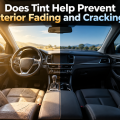

A bright Los Angeles home can feel open, warm, and inviting.
But the sunlight that makes a living room beautiful can also leave behind a less desirable effect over time: unevenly faded flooring, washed-out upholstery, discolored rugs, aging artwork, and finishes that no longer look the way they did when they were installed.
The process is usually gradual.
You may not notice it from day to day.
Then one afternoon you move a rug, rotate a sofa cushion, or remove a picture frame and discover that the protected area underneath is noticeably different from the surface that has been exposed to sunlight.
That is sun-related fading.
And ultraviolet radiation is only part of the story.
Interior deterioration can also be influenced by:
- Visible light
- Solar heat
- Material chemistry
- Dye stability
- Age
- Humidity
- Environmental conditions
Professional residential window tinting can reduce several of the solar factors contributing to interior fading while preserving natural light and outdoor views.
Luxury Glass Tinting offers residential film options in Los Angeles ranging from nearly clear and spectrally selective films to ceramic, neutral, reflective, dual-reflective, and Low-E technologies.
The right choice depends on what you want to protect—and how much you want the windows to change in appearance.
Quick Answer: Does Window Film Help Prevent Interior Fading?
Yes—but reduce is the important word.
Quality solar-control window film can block a very large percentage of ultraviolet radiation while also reducing visible light and solar heat to varying degrees.
Those factors can help slow fading and deterioration of:
- Hardwood floors
- Furniture
- Upholstery
- Rugs
- Carpeting
- Artwork
- Photographs
- Curtains
- Decorative finishes
No film can guarantee that interiors will never fade.
Materials continue to age, and sunlight is only one part of the process.
The best window film creates a balance between:
fade protection + daylight + heat control + appearance + outdoor visibility.
What Actually Causes Furniture and Flooring to Fade?
It is tempting to blame fading entirely on UV radiation.
That is too simplistic.
Interior fading is a photochemical and environmental process influenced by several factors.
The International Window Film Association identifies important contributors that include:
- Ultraviolet radiation
- Visible light
- Heat
- Humidity
- Dye and material stability
- Chemical exposure
The percentage attributable to each factor is not universal.
A hardwood floor does not react exactly like a printed photograph.
Leather does not age exactly like synthetic upholstery.
Artwork, textiles, wood finishes, plastics, and fabrics all respond differently.
That is why statements such as:
“UV causes exactly 40% of all fading.”
should be treated cautiously.
The real answer depends on the material.
UV Radiation Is an Important Contributor
Ultraviolet radiation contains more energy than visible light and can trigger chemical changes in many materials.
Over repeated exposure, UV can contribute to:
- Pigment breakdown
- Discoloration
- Loss of vibrancy
- Surface deterioration
This is one reason UV-blocking technology is such an important part of high-performance window film.
But removing UV does not make an interior immune to fading.
Visible light and heat continue to matter.
Visible Light Can Also Fade Interiors
If you want to understand why even excellent UV protection cannot guarantee zero fading, consider museum displays.
Museums often control more than UV.
They may also limit:
- Visible-light intensity
- Exposure duration
- Temperature
- Humidity
Why?
Because visible light itself can contribute to the degradation of light-sensitive materials.
That creates a practical trade-off for homeowners.
The strongest theoretical fade protection would involve:
- Very little UV
- Very little visible light
- Very little heat
But most homeowners do not want to live in museum-like darkness.
Residential window-film selection is therefore about finding a practical balance.
Solar Heat Is Another Part of the Equation
A sunny window does more than illuminate the room.
Solar energy can heat:
- Floors
- Furniture
- Artwork
- Window treatments
- Interior surfaces
Higher temperatures can accelerate certain forms of material aging and deterioration.
This means a film designed for interior preservation may benefit from reducing:
- UV
- Excess visible light
- Solar heat
rather than focusing only on one part of the solar spectrum.
Why Fading Often Looks Uneven
Sun damage rarely affects a room uniformly.
One side of a sofa may receive sunlight while the other remains shaded.
A rug can protect the hardwood beneath it while surrounding areas receive daily exposure.
A section of artwork near a window may be brighter for hours each afternoon.
This can create:
- Light and dark flooring zones
- Uneven upholstery color
- Furniture fading on one side
- Noticeable rug outlines
- Inconsistent wood tones
The differences often become more obvious when furniture or décor is moved.
Which Home Interiors Are Most Vulnerable?
Any light-sensitive material can change over time, but several household surfaces commonly show solar aging.
Hardwood Flooring
Hardwood can change color after repeated light exposure.
Depending on the wood species and finish, exposure may cause:
- Lightening
- Darkening
- Yellowing
- Uneven coloration
Wood does not all react in exactly the same way.
Some species naturally change dramatically with age and light.
Window film can reduce incoming solar factors but cannot guarantee that hardwood will maintain precisely the same color forever.
Area Rugs and Carpeting
Rugs and carpets are particularly prone to visible differences because sections may be:
- Exposed to sunlight
- Shaded by furniture
- Covered by another object
Over time, this can create obvious contrast between exposed and protected areas.
Upholstered Furniture
Fabric sofas and chairs can experience:
- Color loss
- Uneven fading
- Material aging
especially when positioned directly beside large windows or sliding glass doors.
Rotating cushions may help even out exposure, but reducing the incoming solar load addresses the problem at the window.

Leather Furniture
Leather can respond to prolonged heat and sunlight with changes in:
- Color
- Surface condition
- Moisture balance
- Appearance
Window film cannot replace appropriate leather care, but reducing direct solar exposure can become part of a broader preservation strategy.
Artwork and Photography
Artwork can be particularly sensitive because:
- Pigments vary
- Inks vary
- Papers vary
- Dyes vary
- Previous conservation conditions vary
A painting that looks stable in ordinary room light may still accumulate solar exposure when positioned near a window.
For valuable or irreplaceable artwork, window film should be considered one component of conservation, not the entire preservation plan.
Lighting duration, placement, framing, temperature, and humidity can also matter.
Curtains and Drapes
Ironically, the window covering used to protect a room can itself fade because it sits directly in the solar path.
High-performance film can reduce the exposure reaching:
- Drapes
- Blinds
- Shades
as well as the furnishings deeper inside the room.
Cabinetry and Decorative Woodwork
Cabinet finishes exposed to repeated sunlight may age differently from shaded cabinetry.
This is especially noticeable in:
- Kitchens
- Built-in shelving
- Window seats
- Wood wall panels
where part of the finish receives direct light every day.
Does Ordinary Window Glass Block UV?
Glass already provides some UV protection.
But “glass blocks UV” is too broad a statement.
Different glass constructions have different transmission characteristics.
A homeowner interested in protecting interiors should not assume that simply having modern glass means:
- All UVA is blocked
- All fading factors are controlled
- Additional solar management provides no benefit
The exact glazing matters.
How UV-Blocking Window Film Works
Modern solar-control films incorporate technologies designed to absorb or otherwise manage ultraviolet radiation before it reaches the interior.
The Skin Cancer Foundation advises consumers specifically seeking UV protection to look for films marketed for:
- UV protection
- Solar control
rather than assuming that every decorative or darkening film performs identically.
Products earning the Foundation’s Seal of Recommendation must demonstrate blocking of at least 99% of solar UVA and UVB.
That makes exact product selection more important than simply asking for “tint.”
Does Window Film Block 99% of UV?
Many quality solar-control films can block around 99% or more of UV radiation.
However, this should be verified for the exact film.
Do not assume that every:
- Decorative film
- Frosted film
- Privacy product
- Static-cling film
provides identical UV performance.
If protecting floors, furnishings, or artwork is your main objective, ask to see the UV specification of the proposed film.
Nearly Clear Film Can Still Provide UV Protection
A major misconception is that strong UV protection requires dark windows.
It does not.
Modern specialty films can be nearly clear while offering substantial UV reduction and meaningful solar performance.
This is particularly valuable when homeowners want to protect:
- Scenic views
- Architectural glass
- Bright interiors
- Light-colored design schemes
without making the windows noticeably dark.
Darker Film Does Not Automatically Mean Better UV Protection
Visible darkness and UV rejection are different characteristics.
A dark decorative product is not automatically superior to a lighter premium solar film for UV protection.
Likewise, a nearly clear solar-control film may provide excellent verified UV performance.
Choose film according to specifications, not appearance alone.
What About Ceramic Residential Window Film?
Ceramic architectural film can be an excellent option when homeowners want strong solar performance with:
- Low reflectivity
- Good optical clarity
- UV protection
- Heat control
- Reduced glare
- A relatively neutral appearance
Luxury Glass Tinting currently offers residential ceramic window film among its Los Angeles home-film options.
Ceramic technology can be particularly attractive where the goal is to protect interiors without creating a strongly mirrored exterior.
Ceramic Film Is Not the Only Good Option
The term ceramic is often used as shorthand for “premium.”
But ceramic is not automatically the best film for every home.
Depending on your priorities, other technologies may make more sense.
For example:
Spectrally Selective Film
Good when maintaining a bright view and minimizing visual change are priorities.
Specialty Film
Useful where optical clarity matters strongly.
Neutral Film
Offers a more understated appearance while controlling solar exposure.
Reflective Film
Can provide stronger solar control and daytime privacy.
Dual-Reflective Film
Provides solar performance with lower interior reflection.
Low-E Film
May be appropriate when year-round thermal performance is part of the goal.
The strongest recommendation depends on the room.
Spectrally Selective Film for View-Focused Homes
Some Los Angeles homes have windows precisely because the view is part of the architecture.
Large glass overlooking:
- Hills
- Gardens
- City views
- Coastal areas
should not necessarily be made dark simply to protect the interior.
Spectrally selective film is designed to manage more solar energy while retaining relatively high visible-light transmission.
That can create an attractive compromise:
better solar control with minimal visual change.
Luxury Glass Tinting currently offers spectrally selective residential film specifically for homeowners who want to keep rooms visually bright while rejecting heat.
Specialty Film for Minimal Appearance Change
Another option is specialty film engineered around optical clarity.
Current LLumar specialty residential film uses advanced solar-control technology to reduce heat while maintaining natural views, with products capable of blocking more than 99% of UV radiation.
This type of film may make sense for:
- High-end homes
- Large scenic windows
- Appearance-sensitive façades
- Historic-style properties
- Homeowners who simply do not like dark tint
Neutral Window Film
Neutral film offers a subtle tint rather than a mirror-like appearance.
It can help with:
- Heat
- Glare
- UV exposure
while maintaining a relatively natural-looking window.
For homes where the exterior architecture matters, this can be a stronger aesthetic fit than highly reflective film.
Reflective Film
Reflective residential film provides stronger reflection of incoming solar energy and can offer:
- Heat control
- Glare reduction
- Daytime privacy
- UV reduction
The trade-off is appearance.
The exterior may look significantly more reflective.
Interior reflection can also become more noticeable after dark.
Homeowners should evaluate samples before selecting reflective film solely because it offers strong solar performance.
Dual-Reflective Film
Dual-reflective film combines a more reflective outward-facing surface with a less reflective interior side.
That can provide:
- Strong solar control
- Daytime privacy
- Reduced interior mirror effect
- Better nighttime outward views than many traditional reflective films
For large living-room windows, this may be a useful balance between:
fade control + comfort + privacy + view.
Low-E Film and Interior Preservation
Low-E film focuses on more than UV alone.
Low-E means low emissivity.
Depending on the product and glazing, Low-E film can influence radiant heat transfer and improve certain aspects of year-round thermal performance.
If the goal includes both:
- Summer solar management
- Cooler-season thermal performance
a Low-E option may be worth considering.
Does Window Film Reduce Solar Heat?
Yes, solar-control film can reduce solar heat gain through treated glass.
The amount depends on:
- Film
- Glass
- Window orientation
- Exterior shading
- Sun exposure
This can improve comfort in rooms where sunlight produces noticeable hot spots.
For fading protection, lower solar heat is useful because heat is one of several factors involved in material aging.
What Is SHGC?
Solar Heat Gain Coefficient, or SHGC, measures the fraction of solar radiation admitted through a glazing system that ultimately becomes heat indoors.
It ranges between 0 and 1.
Generally:
Lower SHGC = less solar heat gain.
This is useful when comparing heat-control performance.
What Is TSER?
Total Solar Energy Rejected, or TSER, indicates the percentage of total solar energy rejected by the glazing system.
Generally:
Higher TSER = greater total solar-energy rejection.
If your priorities include:
- Interior preservation
- Comfort
- Reduced solar heat
TSER can be more useful than simply comparing the darkness of two films.
Visible Light Still Matters for Fading
This creates an important design decision.
A homeowner who wants the maximum possible fade reduction may be tempted to choose the darkest film.
But reducing visible light also changes:
- Interior brightness
- Outdoor views
- Window appearance
- The overall character of the room
This is why film selection is ultimately a compromise.
You are not simply asking:
“Which film blocks the most?”
A better question is:
“How much solar protection can I get while keeping this room looking the way I want?”

How to Protect Valuable Artwork Without Turning a Room Dark
For valuable artwork, several strategies may work together.
Consider:
- UV-blocking solar film
- Appropriate visible-light management
- Moving highly sensitive pieces away from direct sunlight
- UV-protective framing where appropriate
- Managing exposure duration
- Controlling heat and humidity
Window film can be very useful.
It should not replace professional conservation advice for:
- Museum-quality pieces
- Historic objects
- Rare textiles
- Highly valuable artwork
Is Window Film Better Than Blinds for Fade Protection?
They solve the problem differently.
Blinds and Curtains
Can block substantial amounts of:
- Visible light
- Direct sun
when closed.
But they only work while they are actually closed.
Window Film
Works continuously on treated glass without requiring daily adjustment.
It can reduce:
- UV
- Heat
- Glare
- Visible light to varying degrees
while still allowing an outdoor view with many film types.
For some homes, the best strategy combines both.
Use film for constant baseline solar control and shades when stronger temporary protection is needed.
What About Exterior Shading?
Exterior overhangs, awnings, shutters, landscaping, and other shading can also help reduce direct solar exposure.
They may be particularly effective because they intercept some sunlight before it reaches the glazing.
Window film can complement these strategies rather than replace them.
A west-facing room with both:
- Exterior shading
- Solar-control film
may experience a very different exposure pattern from one relying on film alone.
Is California Sun More Damaging Than Sun Elsewhere?
Los Angeles offers long periods of strong sunlight, and many homes are designed around expansive glazing.
That can increase cumulative exposure of interior materials.
But there is no need to rely on generic “sunny days per year” statistics to establish the risk.
For an individual home, the more meaningful factors are:
- Window orientation
- Glass area
- Exterior shading
- Nearby buildings
- Trees
- Overhangs
- Interior layout
- Film or coatings already on the glass
A west-facing picture window receiving hours of direct afternoon sun may pose a greater fading concern than a shaded north-facing window in the same house.
Which Window Directions Usually Need the Most Attention?
Every property is different, but exposure should be considered elevation by elevation.
West-Facing Windows
Often receive strong low-angle afternoon sun.
These can create:
- Hot spots
- Glare
- Repeated direct exposure to furniture and flooring
South-Facing Windows
Can experience substantial sun exposure throughout portions of the day depending on season and shading.
East-Facing Windows
May expose interiors to strong morning sunlight.
North-Facing Windows
Often receive less direct solar exposure, although reflected light and local conditions still matter.
The best film strategy does not necessarily involve installing the same product on every window.
Can Flooring Fade in Only a Few Months?
It is possible for some materials to show changes relatively quickly under intense exposure.
But there is no universal six-month rule.
The rate of fading depends on:
- Material
- Pigment
- Finish
- Exposure
- Window glass
- Orientation
- Heat
- UV
- Visible light
Some changes may become noticeable relatively early.
Others may take years.
Avoid promising a precise timeline without testing the specific material and conditions.
Can Sunlight Warp Hardwood Floors?
Heat and sunlight can influence flooring conditions, but “sunlight causes hardwood to warp” is too simplistic.
Wood movement and warping can be influenced by:
- Moisture
- Humidity
- Installation
- Subfloor conditions
- Material
- Temperature
Window film may reduce solar heat exposure, but it should not be marketed as a cure for structural or moisture-related flooring problems.
Can Window Film Keep Leather From Cracking?
It can reduce solar exposure that contributes to material aging.
But leather condition also depends on:
- Material quality
- Moisture
- Cleaning
- Conditioning
- Temperature
- Age
Window film is helpful solar management—not a replacement for proper material care.
Can Window Film Protect Artwork Forever?
No.
Even with excellent UV protection, visible light and other environmental factors remain.
Film can reduce exposure and slow deterioration.
It cannot make light-sensitive materials permanently immune to aging.
For irreplaceable artwork, use a broader conservation strategy.
Does Residential Film Reduce Glare Too?
Many solar-control films do.
Glare reduction can make sun-exposed rooms easier to use for:
- Watching television
- Reading
- Working on computers
- Relaxing
This makes solar-control film useful not only for preservation but for everyday comfort.
Luxury Glass Tinting’s current residential lineup includes options specifically designed around combinations of:
- Heat control
- Glare reduction
- Privacy
- Optical clarity
- Interior protection
Can Window Film Lower Cooling Costs?
Potentially.
Reducing solar heat gain can reduce some of the cooling load created by sun-exposed windows.
Actual energy savings depend on factors such as:
- Glass
- Window area
- Exposure
- HVAC efficiency
- Thermostat settings
- Insulation
- Climate
- Film
No installer should guarantee a universal percentage reduction in utility bills.
Interior preservation and energy savings are related benefits, but they should not be treated as guaranteed financial outcomes.
Decorative Film and Fade Protection
Decorative window film is primarily used for:
- Privacy
- Appearance
- Light diffusion
- Design
Some decorative products may also provide substantial UV protection.
But that performance is product-specific.
Do not select a frosted or patterned film purely for aesthetics and assume it offers the same:
- UV blocking
- TSER
- SHGC
as a dedicated solar-control film.
If both privacy and fade protection are important, ask for a product that satisfies both requirements.

Frosted Film and UV Protection
The same rule applies to white frost window film.
Frosted film is an excellent privacy solution because it obscures the view while diffusing daylight.
Its solar and UV properties depend on the exact product.
Choose it primarily when:
- Privacy
- Design
- Light diffusion
are the main objectives.
If interior preservation is equally important, verify its performance data before installation.
Does Ceramic Window Film Strengthen Glass?
No—not in the way security marketing often implies.
Ceramic solar-control film is intended for:
- Heat control
- UV reduction
- Glare reduction
- Optical performance
It should not automatically be described as:
- Impact-resistant security film
- Shatterproof glass
- Break-in protection
Dedicated safety and security window film is a separate product category.
Security Film Is Different
Safety/security film is designed around the behavior of glass after breakage.
Appropriate products can help:
- Hold fractured glass together
- Reduce loose fragments
- Keep a damaged pane more intact
Certain properly configured systems can also help delay forced-entry attempts.
That is separate from fade protection.
A homeowner may need both solar control and security, but one should not automatically be substituted for the other.
Can Solar-Control Film Be Combined With Security Film?
Potentially.
Some security films include solar-control properties.
Some projects may also use manufacturer-approved film combinations.
But stacking films should never be assumed to be appropriate.
It can affect:
- Adhesion
- Glass temperature
- Optical appearance
- Warranty
- Thermal stress
Product compatibility should be confirmed by the manufacturer or qualified installer.
Double-Pane Glass Needs the Right Film
Many Los Angeles homes use insulated double-pane windows.
Solar film can often be installed on them.
But not every film belongs on every glazing system.
Film changes the way solar energy is:
- Absorbed
- Transmitted
- Reflected
The film must therefore be selected according to the glass.
Low-E Windows Also Require Evaluation
Low-E glass already includes a coating designed to influence heat transfer.
The International Window Film Association notes that suitability for additional film depends on:
- Type of Low-E coating
- Location of the coating
- Desired heat-gain reduction
- Desired heat-loss reduction
Do not assume that having Low-E glass means:
“You cannot use film.”
Do not assume the opposite either.
The exact glazing should be identified first.
Can Window Film Cause Thermal Stress?
Glass can break when stressed.
Solar absorption is one factor that can contribute to thermal stress.
Because film changes solar absorption, manufacturers publish film-to-glass compatibility guidelines.
This is particularly important for:
- Insulated glass
- Large panes
- Laminated glass
- Tinted glass
- Coated glass
Professional product selection reduces the risk of installing an unsuitable film on a particular window.
Film Cannot Repair Existing Window Problems
Window film can improve compatible glass.
It cannot repair:
- Cracked panes
- Failed insulated-glass seals
- Water intrusion
- Rotten frames
- Major air leakage
If the underlying window has failed, repair or replacement may be necessary before considering film.
How to Choose Window Film Specifically for Fade Reduction
If preserving interiors is your primary objective, ask your installer to compare more than one specification.
1. UV Rejection
How much UVA and UVB does the exact film block?
2. Visible Light Transmission
How much visible light remains?
A lower VLT may reduce more light exposure but will also make the room darker.
3. TSER
How much total solar energy does the film/glass combination reject?
4. SHGC
How much solar energy ultimately enters the room as heat?
5. Appearance
Does the film look:
- Neutral
- Reflective
- Dark
- Virtually clear?
6. Glass Compatibility
Is it approved for:
- Your glass
- Your Low-E coating
- Your insulated window?
7. Warranty
What manufacturer coverage applies to the exact installation?
This produces a much stronger decision than simply asking for “99% UV tint.”
Best Film for Hardwood Floors
There is no universal “hardwood-floor film.”
A strong option generally balances:
- Verified UV rejection
- Solar heat reduction
- Appropriate visible-light control
- The amount of daylight you want to preserve
For a room with an important outdoor view, spectrally selective, specialty, ceramic, or neutral film may make more sense than very dark reflective film.
Best Film for Artwork
Artwork preservation may call for stronger consideration of:
- UV protection
- Visible-light reduction
- Heat control
than a typical comfort-only installation.
If the artwork is highly valuable or sensitive, speak with a conservation professional as well.
Best Film for Furniture
For furniture near large sun-exposed windows, a balanced solar-control film can reduce:
- UV
- Heat
- Excess brightness
while preserving room usability.
Ceramic, neutral, specialty, or spectrally selective technologies may all be worth considering.
Best Film When You Do Not Want the Glass to Look Tinted
Look at:
- Specialty film
- Spectrally selective film
- High-VLT solar-control options
These can provide meaningful solar management while minimizing visible change to the glass.
This is one of the biggest advances in modern residential film.
Protection no longer always requires noticeably dark windows.
Best Film When Heat Is Also a Major Problem
Compare:
- TSER
- SHGC
- Glass compatibility
rather than just UV rejection.
A film excellent at UV blocking is not automatically the highest performer for total solar heat control.
Best Film When Privacy Matters Too
Reflective or dual-reflective solar film can combine:
- Solar control
- Daytime privacy
- UV protection
If consistent day-and-night privacy is required, consider a different solution such as:
- Frosted film
- Opaque film
- Curtains
- Blinds
depending on the window.
How Professional Residential Window Film Is Installed
A good project begins with an inspection, not simply a film sample.
Step 1: Identify What Is Fading
The installer should understand whether you are protecting:
- Flooring
- Furniture
- Artwork
- Rugs
- Several materials
Step 2: Review the Sun Exposure
Consider:
- Window direction
- Time of day
- Existing shade
- Overhangs
- Nearby buildings
Step 3: Identify the Glass
The installer should determine whether the window is:
- Single pane
- Double pane
- Laminated
- Low-E
- Coated
where relevant.
Step 4: Compare Films
Evaluate:
- UV
- TSER
- SHGC
- VLT
- Appearance
Step 5: Prepare the Glass
The window is thoroughly cleaned.
Step 6: Cut and Apply the Film
Architectural film is commonly applied using a water-based installation solution for accurate positioning.
Step 7: Finish the Edges
Clean perimeter finishing contributes to the final appearance.
Step 8: Inspect the Installation
The film is checked for:
- Alignment
- Clarity
- Edges
- Consistency
Luxury Glass Tinting’s current residential process includes per-pane film fitting and recommendations based on the room, sun exposure, comfort, privacy, and appearance.
Does Window Film Need Time to Cure?
Yes.
Immediately after installation, some application moisture can remain beneath the film.
Temporary conditions can include:
- Haze
- Moisture patterns
- Small water pockets
Drying depends on:
- Film
- Temperature
- Humidity
- Sun exposure
Follow the installer’s curing and cleaning instructions instead of assuming every residential film dries on the same timetable.
How Long Does Residential Window Film Last?
There is no universal answer.
The International Window Film Association notes that service life depends on:
- Film type
- Glass
- Window construction
- Compass orientation
- Geographic location
Quality architectural films may carry substantial manufacturer warranties.
The written warranty for the exact film is more meaningful than a generic “lasts X years” claim.
Common Myths About Sun Fading and Window Film
Myth: UV Causes 100% of Interior Fading
False.
Visible light, heat, material chemistry, humidity, and other factors also matter.
Myth: UV Always Causes Exactly 40% or 50% of Fading
False.
The contribution varies according to the material and environment.
Myth: If You Block 99% of UV, Nothing Will Fade
False.
Other fading mechanisms remain.
Myth: All Window Film Blocks 99% UV
False.
Verify the exact product specification.
Myth: Darker Film Gives Better UV Protection
False.
Nearly clear films can provide excellent UV reduction.
Myth: Window Film Can Keep Artwork Perfect Forever
False.
It reduces exposure but does not stop aging.
Myth: Ceramic Film Is Always the Best Fade-Protection Film
False.
The best choice depends on UV performance, visible light, solar heat, glass, and appearance goals.
Myth: Ceramic Tint Strengthens Glass Against Break-Ins
False.
Dedicated safety/security film is a separate product category.
Myth: Window Film Guarantees Lower Energy Bills
False.
Solar heat reduction may lower cooling demand, but actual savings vary.
Myth: Sunlight Alone Causes Hardwood Warping
False.
Wood movement can also involve moisture, humidity, installation, and material conditions.
Myth: Window Film Makes Curtains and Shades Unnecessary
False.
The two can work together for stronger light control.
Frequently Asked Questions
Does sunlight really fade furniture?
Yes. UV radiation, visible light, heat, and other environmental factors can contribute to fading and material aging.
Is UV the main cause of fading?
UV is an important contributor and is particularly damaging to many materials, but the percentage varies. Visible light, heat, material chemistry, and other factors also matter.
How much UV can residential window film block?
Many quality solar-control films block around 99% or more UV radiation. Verify the exact product.
Does blocking 99% UV stop fading?
No. It can significantly reduce one major fading factor, but visible light and heat still contribute.
What type of film is best for preventing fading?
Choose based on verified UV rejection, visible-light transmission, total solar performance, heat control, glass compatibility, and how much appearance change you are comfortable with.
Can I protect furniture without making my windows dark?
Yes. Specialty, high-VLT, ceramic, and spectrally selective films can provide substantial solar protection with less visible darkening.
Does ceramic window film reduce fading?
Quality ceramic solar film can reduce UV, heat, and glare, which can help reduce important fading factors.
Is ceramic film better than spectrally selective film?
Not universally. Ceramic may provide an attractive balance of solar performance and low reflectivity, while spectrally selective film may be preferable when preserving high visible-light transmission is especially important.
Can window film protect hardwood floors?
It can reduce solar contributors to fading and color changes but cannot guarantee the floor will never change over time.
Can window film protect artwork?
It can reduce UV and other solar exposure. Valuable or highly light-sensitive artwork may also require conservation-grade lighting, placement, framing, temperature, and humidity management.
Can window film protect leather?
It can reduce solar exposure, but leather still requires appropriate cleaning, conditioning, and environmental care.
Does clear window film work?
Yes. Some nearly clear solar-control films provide strong UV protection and meaningful heat reduction.
Does window film reduce heat?
Solar-control film can reduce solar heat gain through treated glass. The amount depends on film, glass, orientation, and exposure.
Does window film reduce glare?
Many solar-control films do. The amount depends largely on visible-light transmission and product design.
Does window film save energy?
It may reduce cooling demand by lowering solar heat gain, but actual utility savings depend on the home.
Can decorative film protect against fading?
Some decorative films provide UV protection, but performance is product-specific. Do not assume decorative film performs like dedicated solar-control film.
Can frosted film prevent fading?
Potentially to some degree, depending on its UV, visible-light, and solar specifications. Frost itself is primarily a privacy/design feature.
Does privacy film block UV?
Some does. Verify the exact product.
Is window film safe for double-pane windows?
Many films are compatible with double-pane glazing, but product-to-glass compatibility should be confirmed.
Can window film be installed on Low-E glass?
Often, but compatibility depends on the Low-E coating and glazing configuration.
Can film cause glass to crack?
Glass can experience thermal stress, and film influences solar absorption. Manufacturer film-to-glass guidance should therefore be followed.
Does film need professional installation?
Simple decorative or static-cling projects can sometimes be DIY. Professional selection becomes much more valuable for solar-control, Low-E, insulated-glass, large-pane, and whole-home installations.
Will window film change the color of my windows?
It depends on the product. Options range from almost visually clear to neutral, reflective, warm-toned, or darker films.
Protect Your Interiors Without Giving Up the Sunlight You Love
The goal of residential window film is not to eliminate sunshine from your home.
It is to control the parts of solar exposure that are creating problems.
If hardwood floors are fading beside a large west-facing window, the solution may be a high-performance solar film with:
- Strong UV rejection
- Good total solar-energy rejection
- Appropriate visible-light transmission
If valuable artwork is the priority, stronger control of UV, visible light, and heat may be appropriate.
If you want preservation with almost no change to the windows, consider:
- Specialty film
- Spectrally selective film
- High-VLT solar-control options
If the room is also uncomfortably hot, compare:
- TSER
- SHGC
- Heat-control performance
rather than choosing by tint darkness alone.
Luxury Glass Tinting provides professional residential window tinting in Los Angeles with current film options including:
- Reflective film
- Dual-reflective film
- Neutral film
- Specialty film
- Ceramic film
- Harmony film
- Spectrally selective film
- Low-E film
The right film can reduce several of the solar factors that accelerate interior fading while allowing your home to remain:
- Bright
- Comfortable
- Visually open
- Connected to the outdoors
The California sun does not mean you need to hide your home behind closed curtains.
It means your windows should be selected or upgraded to manage sunlight more intelligently.
Reduce UV. Manage visible light. Control solar heat. Preserve the view.
That is the more complete approach to protecting the floors, furnishings, artwork, and finishes that make your home feel like yours.