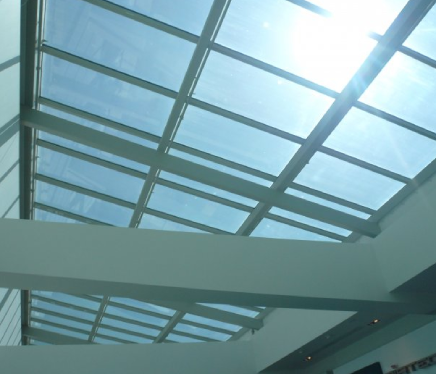
Large windows can make an office, storefront, restaurant, or commercial building feel bright and modern.
But the same glass can also create practical problems.
Desks near the windows become noticeably warmer than the rest of the room. Afternoon sunlight washes out computer screens. Customers close the blinds because the lobby is too bright. Street-facing offices feel exposed. Furniture and finishes receive years of solar exposure.
Professional commercial window film gives building owners and tenants a way to address many of these issues without automatically replacing the existing glazing.
Depending on the film, a commercial window-tinting project can help:
- Reduce solar heat gain
- Control glare
- Improve comfort near windows
- Reduce UV exposure
- Add daytime privacy
- Create a more uniform exterior appearance
- Preserve natural daylight
- Provide decorative privacy
- Improve certain aspects of glazing performance
Luxury Glass Tinting provides professional commercial window tinting in Los Angeles for offices, storefronts, restaurants, retail properties, and other commercial buildings.
The key is choosing the film according to the problem.
A company trying to reduce monitor glare may need a different product from a retail store seeking daytime privacy. A coastal office may prioritize low reflectivity and corrosion-resistant ceramic technology. A property concerned about forced entry needs dedicated security film rather than ordinary solar tint.
This guide explains how to make those choices.
What Is Commercial Window Tinting?
Commercial window tinting involves applying professionally selected architectural film to existing building glass.
Modern commercial films are available for several different purposes.
These include:
- Solar control
- Glare reduction
- UV protection
- Daytime privacy
- Decorative privacy
- Low-E thermal performance
- Safety and security
- Exterior installation
- Architectural appearance
Commercial film is therefore much broader than simply making windows darker.
A well-designed installation starts by asking:
What problem is the glass creating now?
Then the film can be selected around that goal.
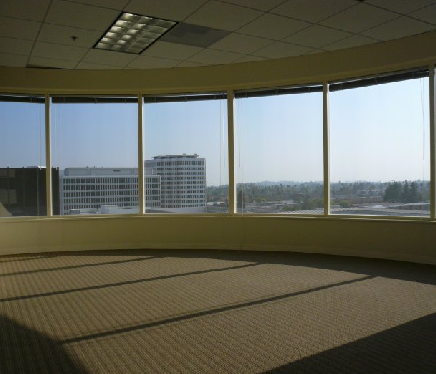
Quick Guide: Which Commercial Film Solves Which Problem?
| Business Problem | Film Type to Consider |
| Hot offices near sunny windows | Solar-control film |
| Screen glare | Solar-control or glare-reducing film |
| Want strong heat control with mirrored appearance | Reflective film |
| Want heat control with lower interior reflectivity | Dual-reflective film |
| Want minimal appearance change | Spectrally selective or specialty film |
| Want neutral, non-mirrored appearance | Neutral or ceramic film |
| Want year-round thermal performance | Low-E film |
| Need daytime street-facing privacy | Reflective solar film |
| Need consistent visual privacy | Frosted or opaque decorative film |
| Difficult interior installation access | Compatible exterior film |
| Broken-glass retention or forced-entry delay | Dedicated safety/security film |
The best commercial project may use several different films across the same property.
Why Commercial Buildings Develop Hot Spots
Solar exposure is rarely distributed evenly throughout a building.
A perimeter office facing strong afternoon sun can feel very different from an interior office only a few feet away.
Solar radiation passes through glazing and heats:
- Floors
- Desks
- Furniture
- Walls
- People
- Interior finishes
Those surfaces then contribute heat to the room.
This often creates the familiar commercial-building problem where occupants near the façade feel hot while people deeper inside the building feel comfortable.
Solar-control film reduces the amount of incoming solar energy reaching the interior through the treated glass.
That can help make perimeter spaces easier to manage.
Solar Heat Gain: The Metric Businesses Should Understand
For architectural glazing, one of the most important terms is Solar Heat Gain Coefficient, or SHGC.
SHGC describes the fraction of solar radiation entering through the glazing and ultimately becoming heat indoors.
It ranges from 0 to 1.
Generally:
Lower SHGC = less solar heat gain.
This is particularly important for commercial buildings where cooling loads are affected by large areas of sun-exposed glass.
A professional film recommendation should therefore be based on more than how dark the product looks.
What Is TSER?
Another useful specification is Total Solar Energy Rejected, or TSER.
TSER measures the percentage of total incoming solar energy rejected by the glazing system.
Generally:
Higher TSER = greater total solar-energy rejection.
TSER can be more informative than looking at a single infrared-rejection number because it considers the overall solar-energy performance of the glazing.
What Is VLT?
Visible Light Transmission, or VLT, tells you how much visible light passes through the filmed glass.
Higher VLT generally means:
- More daylight
- A lighter appearance
Lower VLT generally means:
- Less visible light
- A darker appearance
- More glare reduction
But VLT and heat rejection are not the same thing.
A modern spectrally selective film may preserve substantial visible light while rejecting a meaningful amount of solar heat.
That can be valuable in offices where the goal is to reduce heat without making the workplace feel dark.
Commercial Window Film Can Reduce Glare
Glare is one of the clearest business use cases for solar-control film.
Bright sunlight reflecting across computer screens can make them difficult to read.
OSHA’s current computer-workstation guidance recognizes glare from windows as a potential source of visual discomfort, eye strain, and awkward workstation positioning.
Commercial film can reduce excessive visible light at the glass before it reaches the workstation.
This can be useful in:
- Open-plan offices
- Conference rooms
- Reception areas
- Executive offices
- Control rooms
- Customer-service spaces
- Retail displays
The goal is not necessarily to make the room dark.
It is to bring excessive brightness into a more usable range.
Does Window Tint Increase Employee Productivity?
It is reasonable to say that reducing uncomfortable heat and glare can improve the usability and visual comfort of a workspace.
It is not responsible to promise a specific productivity increase.
Employee performance depends on countless variables beyond the windows.
A better claim is that properly selected film can create a workspace with:
- Less monitor glare
- Fewer severe hot spots
- More balanced daylight
- Greater visual comfort
Those are practical building-performance benefits without inventing an unsupported productivity percentage.
Reducing Glare Without Closing the Blinds
Blinds are effective at controlling sunlight.
The trade-off is that they can also block:
- Natural light
- Outdoor views
- Exterior visibility
- The open feeling created by glass
Window film can reduce glare while preserving more daylight and visibility.
That can be especially valuable in commercial properties designed around large glazing areas.
Instead of leaving blinds closed through the brightest part of every day, an appropriate solar film can address some of the problem at the glass itself.
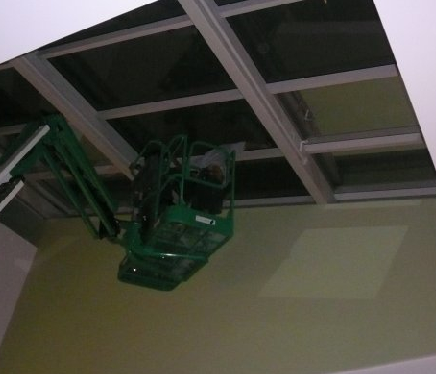
Reflective Commercial Window Film
Reflective film is one of the strongest options when solar control is the priority.
Its exterior surface creates a more mirrored appearance, helping reject solar energy while adding a visually uniform look to the building.
Reflective film can be useful for:
- Highly exposed façades
- Offices with severe solar heat
- Street-facing properties
- Buildings seeking daytime privacy
- Properties where a reflective architectural appearance is acceptable
Luxury Glass Tinting currently offers reflective film among its commercial solar-control options.
Reflective Film Can Add Daytime Privacy
Reflective film can make it harder to see into a commercial building when the outside is significantly brighter than the interior.
That can help conceal:
- Workstations
- Equipment
- Interior clutter
- Occupants
- Certain street-facing areas
But the effect depends on lighting.
Does Reflective Commercial Film Provide Privacy at Night?
Not reliably.
After dark, when the interior is illuminated and the exterior is darker, people outside may be able to see in much more easily.
Reflective privacy is therefore best understood as daytime privacy.
Businesses requiring consistent visual privacy should consider:
- Frosted film
- Opaque film
- Decorative privacy film
- Blinds
- Shades
- Another appropriate privacy system
Do not sell ordinary reflective solar film as permanent one-way glass.
Dual-Reflective Window Film
Dual-reflective film is designed to address one of the drawbacks of traditional reflective film.
It combines:
- A more reflective exterior
- A less reflective interior surface
This helps maintain strong solar performance while reducing the mirror-like reflection occupants see from inside.
The result can provide clearer outward views, particularly after dark.
Dual-reflective film can be particularly attractive for:
- Restaurants
- Offices
- Hotels
- Reception areas
- Buildings where nighttime views matter
It should still not be marketed as guaranteed 24-hour privacy.
Its major advantage is better outward visibility with strong solar control.
Neutral Commercial Window Film
Not every business wants mirrored windows.
Neutral film can reduce solar heat and glare while making a smaller change to the building’s appearance.
This may be a good fit for:
- Professional offices
- Medical buildings
- Retail stores
- Properties with architectural appearance requirements
- Businesses seeking a subtle upgrade
Neutral films generally use understated gray or similar tones rather than a highly reflective exterior.
Ceramic Commercial Window Film
Ceramic architectural film is another strong option when appearance matters.
Commercial ceramic film can offer:
- Solar control
- Reduced glare
- UV protection
- Good optical clarity
- Relatively low reflectivity
- Neutral appearance
Luxury Glass Tinting currently offers commercial ceramic film and specifically positions it for strong solar performance without requiring a highly mirrored look.
Ceramic film can also be useful in coastal environments when the selected product uses construction designed for corrosion resistance.
That makes it relevant for Los Angeles-area properties closer to the coast.
Spectrally Selective Window Film
Spectrally selective film is designed to reject a larger portion of solar energy while allowing comparatively high visible-light transmission.
In practical terms, that means:
less heat with less visible darkening.
This is especially useful for commercial properties where:
- Natural daylight is important
- Retail merchandise should remain visible
- Exterior appearance should change as little as possible
- Historic or architectural appearance needs to be preserved
- Dark or mirrored windows are undesirable
Luxury Glass Tinting currently lists spectrally selective film among its commercial options.
Specialty and Virtually Clear Solar Film
Some commercial properties need solar performance with very little visual change.
Specialty films can provide an almost invisible appearance while improving solar control.
Potential applications include:
- High-end retail
- Historic properties
- Showrooms
- Luxury offices
- Display windows
- Buildings with strict appearance requirements
The film should be selected from actual performance data rather than assuming “clear” means it provides no heat control.
Low-E Commercial Window Film
Low-E stands for low emissivity.
Low-E film is designed to affect long-wave radiant heat transfer in addition to solar performance.
Depending on the product and building, this can provide benefits during both:
- Warmer weather
- Cooler weather
A useful additional metric here is U-value.
U-value measures the rate of heat transfer through a building component.
Generally:
Lower U-value = less heat transfer.
Low-E films can therefore make sense when a commercial property is evaluating year-round glazing performance rather than only summer solar heat.
Exterior Commercial Window Film
Most architectural film is commonly installed on the interior surface of appropriate glazing.
But that is not always practical.
Exterior-rated films can be useful where:
- Interior glass is inaccessible
- Existing coatings limit interior application
- Architectural conditions make exterior installation preferable
- A retrofit presents unusual access constraints
Exterior film must be specifically designed for outdoor exposure.
Standard interior film should not simply be installed outside.
Will Commercial Window Film Reduce Energy Costs?
Potentially, yes.
The U.S. Department of Energy recognizes windows as a significant component of building energy performance, particularly because of both conductive heat transfer and solar heat gain.
Reducing unwanted solar heat through appropriate glazing can reduce cooling demand.
But the actual energy savings for one Los Angeles building depend on factors such as:
- Window area
- Glass type
- Orientation
- SHGC
- Existing window performance
- Exterior shading
- HVAC system
- Occupancy
- Operating schedule
- Thermostat settings
- Film selected
- Local weather
That means responsible commercial film companies should not promise:
“Your utility bill will drop by 30%.”
without building-specific analysis.
Window Film and HVAC Demand
Reducing solar heat gain can reduce the cooling load associated with sun-exposed glazing.
That may mean the HVAC system does not have to overcome as much solar gain during bright periods.
But another common sales claim needs caution:
Installing film does not guarantee that an HVAC system will last a specific number of extra years.
Equipment lifespan depends on maintenance, design, age, controls, operating conditions, refrigerant systems, and many other factors.
The safer and more accurate claim is that reducing solar loads may help reduce cooling demand.
Can Commercial Window Film Lower a Building’s Carbon Footprint?
Potentially.
If solar-control film reduces the amount of energy a building uses for cooling, that can reduce energy consumption associated with HVAC operation.
But the environmental impact varies according to:
- Building performance
- Utility generation mix
- Climate
- Film
- Window area
- Actual energy reduction
It is reasonable to include commercial film as part of an energy-efficiency strategy.
It should not be sold with a universal carbon-reduction percentage.
UV Protection for Commercial Interiors
Many premium architectural solar films block more than 99% of ultraviolet radiation.
This can help reduce a major contributor to fading and deterioration of:
- Retail merchandise
- Flooring
- Carpeting
- Furniture
- Artwork
- Displays
- Interior finishes
However, UV is only one contributor to fading.
Visible light, heat, material chemistry, and age also matter.
Commercial film can reduce fading factors but cannot guarantee that furnishings or merchandise will never fade.
Commercial Window Film for Retail Stores
Retail buildings have a difficult balancing act.
They often need:
- High visibility
- Attractive displays
- Comfortable customers
- Reduced glare
- Solar control
- A polished façade
A very dark or highly reflective film may not be appropriate when merchandise needs to remain visible from outside.
Spectrally selective, neutral, ceramic, or specialty films may provide a better balance.
A storefront should be evaluated around both:
performance and merchandising.
Commercial Film for Offices
Office properties commonly use film to address:
- Perimeter heat
- Screen glare
- Bright conference rooms
- Reception-area comfort
- Street-facing privacy
- Exterior uniformity
Different elevations may require different products.
A west-facing conference room may need stronger solar control than a shaded north-facing office.
Applying exactly the same film across every window is not automatically the best approach.
Commercial Window Film for Restaurants
Restaurants often value outdoor views.
Highly reflective film can create strong nighttime interior reflections, potentially reducing that view.
Dual-reflective or lower-reflectivity options can therefore make more sense where diners need:
- Daytime heat control
- Reduced glare
- Clearer evening views
The film should be chosen around operating hours as well as sun exposure.
Commercial Film for Hotels and Hospitality
Hospitality properties can use architectural film to address:
- Guest comfort
- Lobby glare
- Solar heat
- Privacy
- Exterior appearance
- Decorative glass
Guest rooms and public spaces may require different films.
A large lobby facing afternoon sun should not automatically receive the same solution as an interior spa partition requiring privacy.
Privacy Film for Offices and Conference Rooms
Exterior solar tint is not the only form of commercial privacy film.
Interior glass offices and conference rooms often need visual privacy without losing natural light.
Frosted and decorative window film can create privacy on:
- Conference rooms
- Glass offices
- Reception partitions
- Interior doors
- Medical-office glass
- Meeting areas
A white frost window film can provide a clean etched-glass appearance while obscuring the view through the glass.
Decorative Film Can Support Branding
Decorative film can also become part of the interior design.
Depending on the product and design, films can create:
- Frosted bands
- Geometric patterns
- Etched effects
- Gradients
- Privacy zones
- Custom visual elements
Custom graphics or branding may also be possible with appropriate products and production methods.
Do not assume every architectural film can automatically be printed or cut into every design.
The exact decorative system should be confirmed.
Privacy Film Is Not Automatically Security Film
This distinction is critical.
A privacy film may reduce visibility through the glass.
It does not automatically provide tested glass-retention or forced-entry performance.
Security film is a separate product category.
What Is Commercial Security Window Film?
Safety and security window film uses stronger film construction and adhesive systems designed primarily around the behavior of glass after breakage.
When appropriate film is installed on compatible glass, it can help:
- Hold broken fragments together
- Reduce loose glass hazards
- Keep fractured glazing more contained
- Add resistance after impact
For forced-entry applications, the film-to-frame connection can be particularly important.
Does Security Film Strengthen Glass?
The phrase “strengthens the glass” can be misleading.
The glass can still break.
A better explanation is that safety/security film changes how the glazing behaves after it breaks.
The film helps retain fractured pieces and, depending on the film and attachment system, can increase the time and effort needed to create an opening.
That is different from making the glass unbreakable.
Can Security Film Stop a Break-In?
No security-film manufacturer should promise that an intruder can never get through.
3M explicitly states that its safety/security films do not stop intruders.
When appropriate film is combined with a compatible Impact Protection Attachment system, the glazing can help delay forced entry.
That extra resistance may be valuable as part of a layered security strategy involving:
- Locks
- Alarms
- Cameras
- Access control
- Lighting
- Security personnel
Attachment Systems Matter for Security Film
During a serious impact, the question is not simply whether the shattered glass remains stuck to the film.
The next question is:
Does the filmed glass remain connected to the frame?
Specialized attachment systems can improve that connection.
For example, 3M requires its Impact Protection Attachment system for certain break-and-entry, explosion, and other security applications.
A standard solar-film installation should not be represented as equivalent to such a security system.
Security Film Is Not Bulletproof
Standard commercial safety/security window film is not bulletproof.
3M explicitly states that bullets can pass through its safety/security film.
Ballistic glazing is a separate specialized system.
Businesses requiring ballistic protection should work with professionals designing and specifying appropriate tested glazing assemblies.
Solar and Security Performance Can Sometimes Be Combined
Some manufacturers offer safety/security films that also provide solar-control properties.
For example, certain 3M Ultra Prestige products combine:
- Glass-retention technology
- Solar heat reduction
- UV reduction
But not every solar film is security film, and not every security film has strong solar-control performance.
If both objectives apply to the same glazing, specify a product designed for both.
Commercial Window Film and Building Appearance
Large commercial façades often look inconsistent because of:
- Different blinds
- Interior lighting
- Empty offices
- Furniture
- Temporary coverings
- Different tenant spaces
Appropriate exterior-facing solar film can create a more uniform appearance across the glazing.
Luxury Glass Tinting currently emphasizes consistent film alignment and appearance across commercial panes for this reason.
A professional installation should consider how the project looks from:
inside and outside.
Choosing Film by Performance, Not Just Shade
When comparing commercial films, useful specifications include:
VLT
How much visible light passes through the filmed glass?
SHGC
How much solar energy ultimately enters as heat?
TSER
How much total solar energy is rejected?
Visible Reflectance
How reflective will the glazing appear?
Glare Reduction
How much will excessive visible brightness be reduced?
UV Rejection
What percentage of UV does the specific product reject?
U-Value
How quickly is heat transferred through the glazing system?
These metrics help property owners compare films objectively.
Commercial Film Should Match the Glass
Architectural film should not be selected before understanding the existing glazing.
Commercial buildings may contain:
- Clear single-pane glass
- Tempered glass
- Laminated glass
- Insulated glass units
- Double-pane windows
- Low-E glass
- Factory-tinted glass
- Coated glazing
- Specialty glass
Different glass constructions absorb and transfer heat differently.
That affects which films are appropriate.
Can Window Film Be Installed on Double-Pane Commercial Glass?
Often, yes.
But the exact film must be compatible with the glazing system.
Insulated glass units require proper evaluation because film changes:
- Solar absorption
- Reflection
- Transmission
Manufacturers maintain film-to-glass compatibility guidance for this reason.
Professional product selection is particularly important on large commercial panes.
Can Film Be Installed on Low-E Glass?
Potentially.
IWFA says compatibility depends on factors including:
- Type of Low-E coating
- Where the Low-E coating is located
- Desired heat-gain reduction
- Desired heat-loss reduction
The installer should identify the glazing and confirm manufacturer compatibility rather than simply installing the darkest available film.
Can Window Film Cause Glass Breakage?
Glass can break from thermal stress for many reasons.
Window film changes how solar energy is absorbed, reflected, and transmitted, so film selection can influence thermal conditions in the pane.
That is why reputable manufacturers publish film-to-glass guidelines.
IWFA specifically recommends using those guidelines to determine whether a film is appropriate for the glass.
This is one of the strongest reasons to use an experienced architectural-film installer for commercial projects.
Window Film Cannot Repair Failed Windows
Film can improve the performance of compatible existing glazing.
It does not repair:
- Failed seals
- Cracked glass
- Major frame problems
- Water intrusion
- Air leakage
- Structural damage
If an insulated-glass seal has failed or the frame is deteriorating, those issues may need repair or replacement first.
Commercial Window Film vs. Window Replacement
When the existing glazing and frames are in good condition, film can be a less disruptive retrofit than replacing the complete window system.
Potential advantages include:
- Faster installation
- Less demolition
- Lower project disruption
- Ability to treat selected elevations
- Multiple appearance options
- Customized solar-control performance
But film and replacement are not identical upgrades.
Replacement windows can address issues such as:
- Failed seals
- Frame performance
- Air leakage
- Structural condition
Film cannot solve those problems.
Commercial Window Film and California Energy Requirements
Window film used in commercial projects exists within a broader building-performance framework.
California’s current building energy standards address fenestration performance using metrics such as:
- SHGC
- Visible transmittance
- U-factor
- Glazing characteristics
The requirements that apply depend on the building and project scope.
Commercial window film should not be described as automatically making a property “Title 24 compliant” or automatically earning a green-building certification.
For regulated renovations or permit-dependent work, the project’s applicable requirements should be reviewed separately.
Does Commercial Window Film Automatically Earn LEED Credits?
No.
Window film may support broader energy, comfort, daylighting, or sustainability strategies.
But installing film does not automatically make a project LEED certified.
LEED certification evaluates a much wider building and project framework.
Avoid marketing claims such as:
“Install tint and earn LEED certification.”
How Commercial Window Film Installation Works
A professional commercial installation should begin with the building rather than with a film sample.
Step 1: Identify the Main Problem
Is the priority:
- Heat?
- Glare?
- Privacy?
- Exterior appearance?
- UV exposure?
- Security?
- Several of these?
The answer determines which products should be evaluated.
Step 2: Review the Glass
The installer should assess:
- Glass type
- Existing coatings
- Pane construction
- Orientation
- Damage
- Window system
This supports safe film selection.
Step 3: Review Exposure
The same building can have dramatically different exposure on different elevations.
Film recommendations should consider:
- Direction
- Exterior shading
- Nearby buildings
- Sun path
- Operating hours
Step 4: Choose Performance and Appearance
The customer can compare:
- VLT
- TSER
- SHGC
- Reflectivity
- Exterior color
- Interior appearance
- Privacy level
Samples can help stakeholders understand how the finished glazing may look.
Step 5: Plan Around Business Operations
Commercial work often has to be coordinated around:
- Customers
- Employees
- Tenants
- Deliveries
- Security access
- Business hours
Luxury Glass Tinting’s current commercial process emphasizes staged installation by zones to reduce disruption.
Step 6: Prepare the Glass
The glass is carefully cleaned so contamination does not become trapped beneath the film.
Step 7: Install the Film
Architectural film is typically installed using an application solution that allows accurate positioning.
The installer then removes the solution and finishes the edges.
Step 8: Check Consistency
Multi-pane commercial installations should be inspected for:
- Alignment
- Edges
- Clarity
- Contamination
- Consistent appearance
- Adjacent-pane uniformity
This is particularly important on visible storefronts and large façades.
Commercial Film Needs Time to Cure
Architectural film does not become fully dry the instant installation is finished.
Residual application moisture may create temporary:
- Haze
- Water patterns
- Small moisture pockets
- Optical changes
Drying depends on:
- Film
- Glass
- Temperature
- Humidity
- Sun exposure
The installer should explain what is normal and when to request an inspection.
Commercial Window Film Maintenance
Once properly cured, architectural film is straightforward to clean.
Use methods approved for the specific product.
General guidance includes:
- Soft clean cloths
- Soft synthetic sponges
- Non-abrasive glass cleaner
- Gentle squeegees where approved
Avoid abrasive tools that may scratch the film.
How Long Does Commercial Window Film Last?
There is no single lifespan for every architectural film.
IWFA notes that service life depends on factors including:
- Film
- Glass
- Window construction
- Orientation
- Geographic location
Manufacturer warranty terms also vary.
Ask about the warranty for the exact film and installation configuration, particularly for exterior products and unusual glazing systems.
How to Choose the Best Commercial Window Film
Start with the problem rather than the product name.
Choose Reflective Film When:
Strong solar control and daytime privacy are important and a mirrored appearance fits the property.
Choose Dual-Reflective When:
You want strong solar performance with lower interior reflectivity and better nighttime outward views.
Choose Neutral Film When:
You want heat and glare reduction with a more understated appearance.
Choose Ceramic Film When:
You want premium solar control with a neutral, low-reflective appearance.
Choose Spectrally Selective Film When:
You want meaningful heat rejection while preserving as much daylight and visual transparency as practical.
Choose Low-E Film When:
Year-round heat-transfer performance is an important project objective.
Choose Frosted or Decorative Film When:
Consistent visual privacy or design is more important than maintaining a clear view.
Choose Safety/Security Film When:
Broken-glass retention or forced-entry delay is the real objective.
Questions to Ask Before Hiring a Commercial Window Film Installer
Before choosing a contractor, ask:
- What glass do I currently have?
- Is the proposed film compatible with that glazing?
- What exact film manufacturer and series will be installed?
- What are the VLT, TSER, SHGC, and reflectivity values?
- What will the exterior look like?
- How will the interior view change at night?
- Is the privacy daytime-only?
- What warranty applies?
- Is the warranty valid on my glass type?
- How will installation be staged around business operations?
- What should we expect during curing?
- If security is the goal, does the proposed system require a frame-attachment method?
A contractor should be able to explain those answers without relying only on phrases such as “maximum heat rejection.”
Frequently Asked Questions
Does commercial window tint really reduce heat?
Solar-control film can reduce solar energy entering through treated glazing. The actual effect depends on the film, glass, orientation, exposure, and building.
Will commercial film make the office dark?
Not necessarily. Films range from dark reflective products to high-VLT spectrally selective and specialty films designed to preserve substantial daylight.
What is the best film for office glare?
The best option depends on how severe the glare is, how much daylight should remain, and the building’s glass. Solar-control, neutral, ceramic, and other glare-reducing films may all be appropriate.
Can office window tint help with monitor glare?
Yes. Reducing excessive visible light through the window can reduce reflections and glare on workstations. OSHA recognizes window glare as a potential source of visual discomfort.
Will window film lower our utility bill?
It can reduce solar heat gain and may reduce cooling-energy demand, but actual savings vary by building. A specific savings percentage should not be promised without building-specific analysis.
Can window film extend the life of our HVAC equipment?
Reduced solar load may reduce cooling demand, but film should not be sold as guaranteeing a specific increase in HVAC lifespan.
Does commercial tint block UV?
Many premium architectural films block more than 99% of UV radiation. Verify the specification for the exact product.
Will window film stop furniture from fading?
It can reduce major solar contributors to fading, but it cannot prevent all fading.
Does reflective film provide privacy at night?
Not reliably. When the interior becomes brighter than the exterior, visibility from outside can increase.
What film provides privacy day and night?
Frosted or opaque decorative film is generally a better option when maintaining a clear view is not necessary.
What is the difference between reflective and dual-reflective film?
Reflective film has a more mirrored appearance on both sides. Dual-reflective film uses a more reflective exterior and less reflective interior, improving outward views while retaining strong solar control.
Is ceramic commercial tint better than reflective film?
Not universally. Reflective film may provide stronger privacy or a particular solar-control profile, while ceramic may be preferable when low reflectivity and a neutral appearance matter.
What is spectrally selective window film?
It is film engineered to reduce more solar infrared energy relative to the amount of visible light reduced, making it useful when heat control is desired without strongly darkening the glass.
Can window film go on double-pane commercial glass?
Often yes, but the exact film must be compatible with the glazing construction.
Can film be installed on Low-E windows?
Potentially. The Low-E coating type and location need to be identified, and manufacturer compatibility guidance should be followed.
Does security window film prevent break-ins?
It can help delay forced entry when properly specified and, where needed, appropriately attached to the frame. It cannot guarantee that an intruder will never gain entry.
Does security film make glass unbreakable?
No. The glass can still break. Security film is intended to help retain broken fragments and improve the glazing’s behavior after breakage.
Is security film bulletproof?
No. Standard safety/security window film is not ballistic glazing.
Can one film provide both solar control and security?
Some products combine solar-control and safety/security features. The exact film and tested configuration need to match both goals.
How long does commercial window film last?
There is no universal lifespan. Film, glass, orientation, exposure, installation environment, and manufacturer warranty all matter.
Optimize the Glass Around the Way Your Business Actually Operates
Commercial window tinting is most effective when it is treated as a building-performance decision rather than simply a cosmetic upgrade.
An office struggling with screen glare may need a different solution from a retail store with hot display windows.
A restaurant with an evening view may prefer dual-reflective or low-reflectivity film over highly mirrored glass.
A conference room requiring visual privacy may be better served by decorative frost.
A storefront concerned about forced entry should evaluate dedicated safety/security film and the complete glazing system—not ordinary dark tint.
Luxury Glass Tinting provides professional commercial window tinting in Los Angeles with current film options including:
- Reflective
- Dual-reflective
- Neutral
- Ceramic
- Spectrally selective
- Low-E
- Specialty
- Exterior solar-control film
For businesses with separate safety concerns, Luxury Glass Tinting also provides security window film, while decorative and frosted films can address conference-room privacy, interior partitions, and architectural design.
The strongest commercial window-film plan begins with four questions:
Where is the heat coming from?
Where is glare interfering with the space?
Which areas actually need privacy?
Which glazing, if any, needs specialized safety or security performance?
Once those questions are answered, film can be selected according to the actual glass, exposure, appearance, and business requirements.
That is how commercial window film becomes more than tint.
It becomes a targeted retrofit for a more comfortable, usable, and polished business environment.