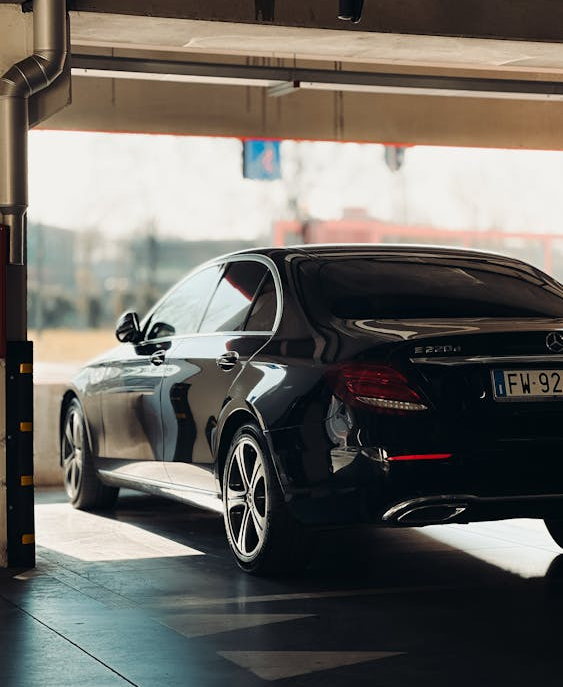
You open your car after it has been sitting in the Los Angeles sun and immediately feel the heat.
The seats are hot. The steering wheel is uncomfortable to touch. The dashboard has absorbed hours of sunlight, and the air-conditioning system has to work hard just to bring the cabin back to a reasonable temperature.
If that experience sounds familiar, one upgrade can make a meaningful difference:
automotive ceramic window tint.
Ceramic tint is not simply a dark cosmetic film.
Modern ceramic and nano-ceramic automotive films are engineered to reduce solar energy entering through the glass while also providing UV protection, glare reduction, privacy options, and a cleaner appearance.
The result can be a more comfortable cabin without requiring extremely dark windows.
Luxury Glass Tinting provides professional automotive ceramic window tinting in Los Angeles using premium LLumar film options for drivers who prioritize heat control, UV protection, visibility, and everyday comfort.
But before choosing ceramic tint, it helps to understand what it actually does—and what it does not.
Quick Answer: Does Ceramic Tint Really Keep a Car Cooler?
Yes.
High-performance ceramic window film can reduce the amount of solar energy entering the vehicle through its glass.
That can:
- Reduce solar heat gain
- Improve cabin comfort
- Make hot interior surfaces less severe
- Reduce glare
- Provide substantial UV protection
- Make it easier for the vehicle’s climate-control system to cool the cabin
The exact difference depends on the film, glass, shade, vehicle, weather, sun exposure, and how long the car has been parked.
That is why responsible tint installers should not promise that every vehicle will be exactly 15, 20, or 30 degrees cooler.
The reliable benefit is reduced solar energy entering through the treated windows.
Why Cars Become So Hot in the Sun
Vehicle glass allows solar energy to enter the cabin.
Once sunlight reaches interior surfaces such as:
- Seats
- Dashboard
- Steering wheel
- Center console
- Carpeting
- Door panels
those surfaces absorb energy and warm up.
They then release some of that heat into the cabin.
This is one reason a parked vehicle can feel dramatically hotter than the outdoor air.
Window film cannot stop every source of heat.
Heat can also enter through:
- Roof panels
- Bodywork
- Air infiltration
- Untreated glass
But high-performance film can reduce an important part of the problem by limiting solar energy passing through the windows.
Why Basic Tint and Ceramic Tint Can Feel Different
Not all tint technologies manage solar energy in the same way.
A traditional dyed film is primarily useful for:
- Darker appearance
- Privacy
- Glare reduction
- Basic solar control
A ceramic film adds more advanced solar-control technology.
Premium ceramic and nano-ceramic films use non-metallic particles engineered to manage solar and infrared energy while maintaining good visibility.
That allows ceramic film to provide strong heat performance without depending only on darkness.
This is the biggest reason drivers upgrade from basic tint to ceramic.
Darker Tint Does Not Automatically Mean a Cooler Car
This is one of the most important facts to understand.
A very dark inexpensive film can allow less visible light into the vehicle while still providing only moderate total heat rejection.
A lighter premium ceramic film can sometimes reject more solar energy.
Why?

Because visible-light transmission and heat rejection are different measurements.
A film can look light but contain sophisticated solar-control technology.
This means you do not necessarily need extremely dark glass to make your vehicle more comfortable.
What Is VLT?
Visible Light Transmission, or VLT, measures how much visible light passes through the glazing.
Higher VLT means more visible light enters.
Lower VLT means the window appears darker.
For example:
- 70% VLT looks relatively light
- 50% VLT provides a noticeable tint
- 35% VLT is darker
- 20% VLT is very dark
- 5% VLT is extremely dark
VLT helps describe shade.
It does not, by itself, tell you how well a film controls total solar heat.
What Is TSER?
For drivers focused on heat rejection, Total Solar Energy Rejected, or TSER, is an important specification.
TSER represents the percentage of total solar energy rejected by the glazing system.
Generally:
Higher TSER = more total solar energy rejected.
This makes TSER particularly useful when comparing a basic dark tint against a premium lighter ceramic film.
For example, LLumar’s current FormulaOne performance data shows that different films with similar-looking shades can have substantially different total solar performance.
What Does Infrared Rejection Mean?
Ceramic tint is often advertised using large infrared-rejection numbers.
Infrared radiation is an important part of the solar energy you can feel as heat.
Premium nano-ceramic film can manage infrared energy very effectively.
However:
IR rejection is not the same thing as total heat rejection.
Different manufacturers may also calculate or advertise infrared performance differently.
That means an advertisement saying:
“97% infrared rejection”
should not automatically be interpreted as:
“97% of all heat is blocked.”
For a better comparison, review:
- TSER
- VLT
- IR Energy Rejection
- UV rejection
- Film technology
- Manufacturer test data
instead of selecting film according to the largest single percentage.
What Makes Ceramic Tint Different?
Ceramic film uses ceramic-based, non-metallic technology rather than relying primarily on dye or reflective metal.
Depending on the specific product, advantages can include:
- Strong solar heat rejection
- Strong infrared performance
- UV protection
- Reduced glare
- Good optical clarity
- Non-metallic construction
- Electronic signal compatibility
- Multiple shade choices
- A relatively neutral appearance
Premium ceramic film is therefore especially appealing to drivers who want performance without having to choose extremely dark glass.
What Is Nano-Ceramic Window Tint?
Nano-ceramic technology uses very small ceramic particles engineered to interact with solar energy.
The goal is to provide strong solar performance while maintaining:
- Clarity
- Low reflectivity
- Signal compatibility
- Multiple VLT options
Luxury Glass Tinting currently offers premium LLumar FormulaOne ceramic products, including Stratos and Pinnacle.
FormulaOne Stratos is LLumar’s higher-performance nano-ceramic option.
LLumar’s published FormulaOne data shows that different Stratos shades can provide up to approximately 65% TSER while blocking more than 99% of UV radiation.
The exact number depends on the shade and test configuration.

Ceramic Tint Can Work Even in Lighter Shades
This is particularly important for Los Angeles drivers who care about:
- Nighttime visibility
- Factory-style appearance
- California compliance
- Subtle styling
You do not have to turn every window almost black to improve solar performance.
For example, premium ceramic films are offered in several VLT levels, allowing the customer to choose a balance between:
- Heat rejection
- Privacy
- Exterior appearance
- Daytime glare
- Night visibility
This flexibility is one of ceramic tint’s greatest advantages.
Virtually Clear Film Is Another Option
Drivers who want minimal appearance change can also consider virtually clear ceramic film.
Luxury Glass Tinting currently offers LLumar AIR clear film.
LLumar’s published data shows that certain AIR products can maintain high visible-light transmission while still providing meaningful total solar-energy rejection and more than 99% UV protection.
This is particularly useful when:
- You prefer the factory look
- Visibility is a priority
- You want UV protection without dark windows
- Your vehicle already has factory privacy glass
- You want solar performance on appropriate lighter glazing
Clear film is strong evidence that performance does not have to equal darkness.
UV Protection Is One of Ceramic Tint’s Strongest Benefits
Automotive UV exposure is easy to overlook.
The Skin Cancer Foundation’s current 2026 guidance explains that laminated windshields generally provide substantial UV protection, but many side, rear, and sunroof windows can allow more UVA exposure.
Appropriate automotive UV film can block approximately 99% of UV radiation.
That can be particularly valuable for:
- Daily commuters
- Professional drivers
- People who spend hours in traffic
- Vehicles with large side windows
- Vehicles with large glass roof areas
UV protection should be evaluated from the actual product specification rather than inferred from darkness.
Dark Tint Is Not Required for UV Protection
A nearly clear film can provide excellent UV protection.
That is important because many drivers mistakenly believe:
The darker the tint, the stronger the UV protection.
Not necessarily.
UV rejection depends on the film’s construction and UV-inhibiting technology.
Choose a product with verified UV specifications instead of relying on appearance.
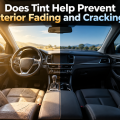
Ceramic Tint Can Help Protect Your Interior
The Los Angeles sun also affects automotive interiors.
Over time, UV radiation, visible light, and heat can contribute to deterioration of:
- Leather
- Vinyl
- Dashboard materials
- Upholstery
- Plastic trim
- Carpets
- Decorative surfaces
Ceramic film reduces several components of solar exposure reaching those materials.
That can help slow:
- Fading
- Discoloration
- Drying
- Cracking
- General solar-related deterioration
However, no film can guarantee that interior materials will remain completely unchanged forever.
Age, heat, material chemistry, cleaning products, and other environmental conditions also matter.
Ceramic Tint Can Reduce Glare
Los Angeles drivers encounter glare from:
- Direct sunlight
- Low-angle morning and evening sun
- Bright roads
- Reflective vehicles
- Glass buildings
Reducing excessive visible light can improve daytime driving comfort.
Ceramic film is available in different shades, allowing glare reduction to be balanced against nighttime visibility.
The darkest shade is not necessarily the smartest shade.
Why Nighttime Visibility Matters
Very dark tint reduces light transmission in both daylight and darkness.
That can make it harder to see through side windows at night when:
- Reversing
- Entering parking garages
- Driving on poorly lit residential streets
- Turning at intersections
- Driving in rain
- Looking for pedestrians or cyclists
Ceramic technology gives drivers the option of selecting a lighter shade while still receiving strong solar performance.
This can produce a better everyday balance than simply choosing the darkest film available.
Does Ceramic Tint Interfere With GPS or Cell Signals?
Quality non-metallic ceramic film is designed to provide solar performance without relying on metallic construction.
LLumar’s current FormulaOne Pinnacle and Stratos products use non-metallic nano-ceramic technologies.
That makes ceramic particularly attractive for modern vehicles using:
- GPS
- Mobile phones
- Bluetooth
- Keyless entry
- Wireless connectivity
The exact product should always be checked, but signal compatibility is an established advantage of quality non-metallic ceramic technology.

Can Ceramic Tint Reduce Air-Conditioning Demand?
Potentially.
If less solar energy enters the cabin through treated glass, the climate-control system has less solar heat to overcome under those conditions.
Drivers may therefore find that the cabin:
- Becomes comfortable more easily
- Feels less harsh in direct sun
- Requires less aggressive cooling in some situations
But this benefit should not be turned into guaranteed fuel savings.
Does Ceramic Tint Improve Gas Mileage?
Automotive window tint should not be sold as a guaranteed MPG upgrade.
Fuel consumption depends on many variables:
- Traffic
- Vehicle design
- Engine
- Speed
- Driving habits
- Ambient temperature
- HVAC settings
- Road conditions
Reducing solar heat can influence air-conditioning demand, but there is no universal fuel-savings percentage that should be promised simply because ceramic film was installed.
For electric vehicles, the same caution applies.
Ceramic tint may reduce solar load and improve comfort, but it should not be advertised as a guaranteed range increase.
Ceramic Tint vs. Dyed Tint
Both can be good products when they match the customer’s priorities.
| Feature | Dyed Tint | Ceramic Tint |
| Appearance | Excellent | Excellent |
| Privacy | Yes | Yes |
| Glare reduction | Yes | Yes |
| UV protection | Product-specific; premium films can be strong | Typically strong in premium products |
| Heat rejection | Moderate depending on product | Generally stronger |
| Strong performance in lighter shades | More limited | Major advantage |
| Metallic construction | No | No |
| Signal compatibility | Good | Good |
| Cost | Lower | Higher |
| Best for | Budget, style, privacy | Heat, comfort, premium performance |
Dyed film is not “bad tint.”
A premium dyed film can provide excellent value.
Ceramic makes the strongest case when heat control is one of your main reasons for tinting the car.
Ceramic Tint vs. Factory Privacy Glass
Many SUVs, trucks, and crossovers already have dark factory glass behind the driver.
This is usually called privacy glass.
Its primary purpose is appearance and privacy.
The fact that factory glass looks dark does not tell you how much:
- Total solar energy
- Infrared energy
- UV radiation
it rejects.
Appropriate ceramic or virtually clear film can sometimes be added over factory privacy glass to improve solar performance.
A professional installer should evaluate the existing glass and desired final appearance first.
Is Ceramic Tint Worth It in Los Angeles?
For many drivers, yes.
Los Angeles has several conditions that make ceramic tint especially attractive:
- Frequent sunshine
- Long commutes
- Freeway congestion
- Outdoor parking
- Large amounts of automotive glass
- Warm cabin conditions
- Strong afternoon solar exposure
Ceramic film can be particularly worthwhile when you spend significant time in the vehicle.
However, not everyone needs top-tier nano-ceramic tint.
If your priorities are primarily style and privacy, a premium dyed film may provide better value.
The right question is not:
“Is ceramic always best?”
It is:
“Will I benefit enough from ceramic’s stronger solar performance to justify the extra cost?”
Choosing Between Pinnacle, Stratos, and Clear Film
Luxury Glass Tinting currently offers several LLumar options appropriate for different priorities.
FormulaOne Pinnacle
Pinnacle is a premium nano-ceramic film that provides strong heat rejection, UV protection, reduced glare, non-metallic construction, and multiple shades.
It is an excellent option for daily drivers who want a meaningful performance upgrade.
FormulaOne Stratos
Stratos is LLumar’s top FormulaOne heat-rejecting option.
It uses concentrated nano-ceramic technology for drivers who want premium solar and infrared performance.
This is particularly attractive for:
- Long Los Angeles commutes
- Outdoor parking
- Premium vehicles
- Large-window vehicles
- Drivers who prioritize maximum comfort
LLumar AIR
AIR is a virtually clear ceramic film.
It is useful for drivers who want:
- Minimal visual change
- High visibility
- UV protection
- Additional heat control
- Solar performance over appropriate factory-darkened glass
Which one makes sense depends on the specific vehicle and goals.
What Should You Compare Before Buying Ceramic Tint?
Do not choose tint based only on the installer saying:
“This is our best ceramic.”
Ask for actual specifications.
VLT
How much visible light passes through?
TSER
How much total solar energy does the glazing reject?
UV Rejection
What UV protection does the exact film provide?
IRER or IR Data
How is infrared performance measured?
Appearance
Does the film have a neutral, charcoal, blue, reflective, or other tone?
Warranty
What does the written manufacturer warranty cover?
Existing Glass
How will the film perform and look over your factory glazing?
California Law Still Matters
Ceramic technology does not create a legal exemption.
For Los Angeles drivers, California Vehicle Code §26708 regulates different windows differently.
Under the ordinary current front-side-window provision, qualifying material immediately beside the front seats must be:
- Clear
- Colorless
- Transparent
- At least 88% VLT itself
The finished glass-and-film system must also meet the referenced federal 70% minimum light-transmission requirement, along with UV and certification conditions.
Rear-side and rear-window rules differ.
The current statute was amended effective January 1, 2026.
That means a shade that is appropriate behind the driver may not be suitable for the front side windows.
Professional Installation Matters
Even premium ceramic film can look poor when installed badly.
Automotive tint installation requires careful:
- Glass cleaning
- Film sizing
- Film handling
- Heat shaping
- Moisture removal
- Edge finishing
- Inspection
Potential signs of poor installation include:
- Creases
- Misaligned film
- Contamination
- Persistent air bubbles
- Peeling edges
- Poor cuts
- Optical distortion
Professional workmanship is part of what you are paying for.
Fresh Ceramic Tint Needs Time to Cure
Automotive film is generally installed using a water-based solution.
Some residual moisture may remain temporarily.
Freshly installed film can show:
- Mild haze
- Moisture patterns
- Small water pockets
- Temporary visual distortion
These can be normal during curing.
Cure time varies according to:
- Film
- Temperature
- Humidity
- Sun exposure
- Vehicle storage
Follow your installer’s aftercare instructions.
Don’t Roll the Windows Down Too Soon
Fresh side-window film needs time to establish its bond.
Rolling windows down prematurely can disturb an edge.
Luxury Glass Tinting provides aftercare guidance based on the film and conditions at installation.
Follow the specific recommendation rather than assuming every film requires the same waiting period.
Ceramic Tint Does Not Make Glass Shatterproof
Another claim worth correcting is that premium tint creates safety glass.
Ordinary automotive ceramic film is not a dedicated impact-resistant security system.
It should not be marketed as:
- Shatterproof
- Break-in proof
- Bulletproof
- Structural reinforcement
Its main purposes are solar performance, UV protection, glare reduction, privacy, and appearance.
Ceramic Tint Does Not Make Your Car Theft-Proof
A darker shade can make the vehicle interior less visible to casual observers.
That can provide privacy.
However, automotive tint cannot prevent someone from breaking a window.
Avoid leaving valuables inside the vehicle even when the windows are heavily tinted.
How Long Does Ceramic Tint Last?
There is no universal lifespan for every ceramic film.
Durability depends on:
- Manufacturer
- Film series
- Installation
- Sun exposure
- Climate
- Window operation
- Maintenance
- Warranty
Premium manufacturers back specific products with written warranties.
LLumar FormulaOne Pinnacle and Stratos currently come with transferable limited lifetime manufacturer warranty coverage, subject to the warranty terms and restrictions.
Ask for warranty documentation for the exact film you purchase.
Frequently Asked Questions
Does ceramic tint really make a car cooler?
Ceramic film can reduce solar energy entering through the glass, improving cabin comfort. The exact temperature difference varies by vehicle, film, glass, sun exposure, and conditions.
Will ceramic tint make my car 20 degrees cooler?
There is no reliable universal temperature drop that applies to every vehicle. Avoid installers who guarantee the same temperature reduction for every car.
What makes ceramic tint better for heat?
Ceramic and nano-ceramic technologies are engineered for strong solar and infrared performance without depending solely on dark visible-light transmission.
Is darker ceramic tint better for heat?
Not necessarily. Different shades and products have different TSER values. Compare actual performance data.
Does ceramic tint block infrared heat?
Quality ceramic film can significantly reduce infrared energy, but IR rejection is not the same as total solar heat rejection.
What does TSER mean?
TSER stands for Total Solar Energy Rejected. It is one of the most useful overall measurements for comparing solar heat performance.
Does ceramic tint block UV?
Many premium ceramic products block more than 99% of UV radiation. Verify the specification for the exact film.
Do I need dark ceramic tint for UV protection?
No. Lighter and virtually clear films can provide strong UV protection.
Does ceramic tint interfere with GPS?
Quality non-metallic ceramic films are designed to avoid the signal-interference concerns associated with some metallic constructions.
Is ceramic tint good for night driving?
It can be, provided you choose an appropriate VLT. Lighter ceramic shades can maintain stronger visibility while still providing good solar performance.
Is ceramic tint better than dyed tint?
Ceramic generally provides stronger heat-control performance. Dyed film remains a good lower-cost option when privacy and appearance are the main priorities.
Is nano-ceramic better than regular ceramic?
Premium nano-ceramic products can provide stronger solar performance, but the exact product specifications matter more than the marketing label.
Can I apply ceramic tint over factory privacy glass?
Often, compatible ceramic or virtually clear film can be installed over factory privacy glass to add solar-control performance. The existing glass should be evaluated first.
Does ceramic tint save gas?
Reduced solar heat may reduce A/C demand in some conditions, but ceramic tint should not be advertised as guaranteeing fuel savings.
Is ceramic tint worth it for an EV?
It can improve solar comfort in vehicles with large glazing areas, but it should not be marketed as guaranteeing additional EV range.
Is ceramic tint legal in California?
Ceramic film technology itself is legal, but the actual installation must comply with California rules for the specific window, VLT, glazing, color, and certification requirements.
Tired of a Hot Car? Choose Performance, Not Just Darkness
If your vehicle regularly sits in the Los Angeles sun, ceramic window tint can be one of the most noticeable comfort upgrades you make.
The strongest benefits are:
- Reduced solar heat gain
- Strong UV protection
- Reduced glare
- Better cabin comfort
- Multiple shade options
- Performance without necessarily using extremely dark film
- Non-metallic construction
- Additional interior protection from solar exposure
But the key is choosing the right ceramic film, not simply any product with “ceramic” printed on the box.
Luxury Glass Tinting provides professional ceramic window tinting in Los Angeles using premium LLumar options including FormulaOne Pinnacle and Stratos, along with virtually clear film for drivers who prefer minimal visual change.
When comparing your choices, look beyond darkness and marketing claims.
Compare:
VLT, TSER, UV protection, infrared performance, nighttime visibility, California requirements, warranty, and installation quality.
That is how ceramic tint changes the driving experience—not by making unrealistic promises, but by controlling more of the solar energy that reaches you and your vehicle every day.