
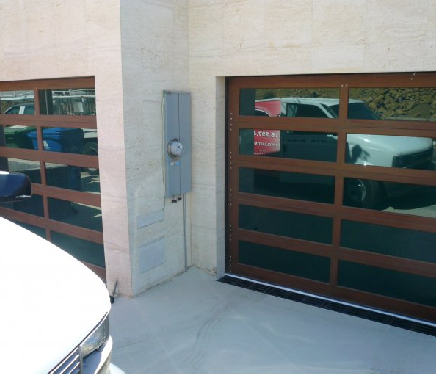
Your home should feel comfortable and private without forcing you to keep the blinds closed throughout the day.
For many Los Angeles homeowners, however, large windows create a difficult trade-off.
Opening the curtains brings in natural light and outdoor views—but it may also expose living areas to neighbors, sidewalks, or the street. Strong afternoon sunlight can create hot rooms and screen glare. Years of solar exposure can also contribute to fading of floors, furniture, artwork, and other interior materials.
Professional residential window film can address many of these problems without replacing the existing windows.
Depending on the film you choose, residential window tinting can help provide:
- Daytime privacy
- Solar heat control
- Glare reduction
- UV protection
- Decorative privacy
- More consistent exterior appearance
- Better comfort near sunny windows
Luxury Glass Tinting provides professional residential window tinting in Los Angeles with options including reflective, dual-reflective, neutral, ceramic, spectrally selective, Low-E, frosted, decorative, blackout, and whiteout films.
The most important step is selecting the right type of film for the problem you actually want to solve.
What Is Residential Window Tinting?
Residential window tinting involves applying architectural film to compatible household glass.
Modern home window film can do much more than make windows darker.
Different products are engineered around different goals.
Some films focus on:
- Solar heat rejection
- UV protection
- Glare reduction
Others prioritize:
- Daytime privacy
- Decorative design
- Consistent visual privacy
- Year-round thermal performance
That means there is no single “best residential tint” for every room.
The right film for a west-facing living room may be completely different from the right film for a bathroom window.
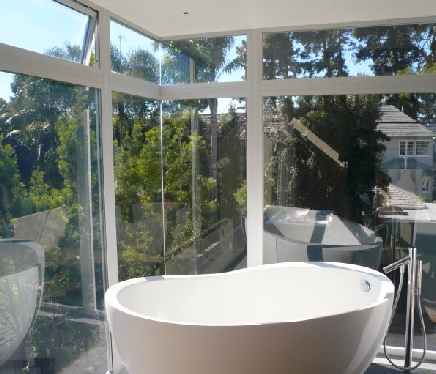
Quick Guide: Which Residential Film Should You Choose?
| Your Main Goal | Film to Consider |
| Daytime privacy while keeping an outdoor view | Reflective or dual-reflective film |
| Privacy day and night | Frosted, white frost, opaque, blackout, or whiteout film |
| Strong solar heat control | Reflective, ceramic, or other solar-control film |
| Reduce heat with minimal visual change | Spectrally selective or specialty film |
| Reduce glare | Neutral, ceramic, reflective, or other solar-control film |
| Subtle appearance | Neutral or ceramic film |
| Year-round thermal performance | Low-E film |
| Decorative privacy | Frosted or patterned decorative film |
| Broken-glass retention / forced-entry delay | Dedicated safety and security film |
Start with the room and problem—not simply the darkest available film.
Why Privacy Is One of the Biggest Reasons to Tint Home Windows
Street-facing glass can make a home feel more exposed than many homeowners expect.
This is especially true for:
- Ground-floor living rooms
- Bedrooms facing sidewalks
- Front doors with glass
- Door sidelights
- Bathrooms
- Homes close to neighboring properties
- Large modern windows
Curtains and blinds solve the privacy problem, but they can also block daylight and outdoor views.
Window film gives homeowners more options.
However, the type of privacy matters.
There is an important difference between:
daytime reflective privacy and consistent privacy regardless of lighting conditions.
Reflective Window Film for Daytime Privacy
Reflective residential film creates a more mirror-like exterior when conditions outside are brighter than conditions inside.
During the day, this can make it considerably harder for people outside to see into the room while occupants can still maintain an outward view.
Reflective film can be a useful option for:
- Living rooms facing the street
- Ground-floor windows
- Homes near busy sidewalks
- Rooms facing neighboring properties
- Large windows requiring both privacy and solar control
It can also reduce glare and solar heat at the same time.
This makes reflective film a multi-purpose choice for particularly exposed windows.
Does Reflective Window Tint Give You Privacy at Night?
Not reliably.
This is one of the most important limitations to understand before installing reflective privacy film.
During daylight, the exterior is usually brighter than the interior.
At night, that relationship often reverses.
Once indoor lights are switched on and it is dark outside, people outside may be able to see through the glass more easily.
From inside, you may also see more reflection from the room.
So reflective film should primarily be considered a daytime privacy solution.
For nighttime privacy, you may still need:
- Curtains
- Blinds
- Shades
Or you can choose a film designed to obscure the view regardless of lighting conditions.
Dual-Reflective Film for Privacy and a Better Interior View
Dual-reflective film is designed differently from traditional highly mirrored tint.
It typically provides:
- A more reflective exterior
- A less reflective interior surface
This can give you strong solar control and daytime privacy while reducing the mirror-like reflection seen from inside.
It can be particularly useful for:
- Living rooms
- Dining rooms
- Large scenic windows
- Rooms where nighttime outward visibility matters
But dual-reflective film still relies partly on lighting conditions for privacy.
It should not be described as permanent one-way glass.
Frosted Window Film for Privacy Day and Night
When you need the view obscured regardless of whether it is noon or midnight, frosted film is usually a better option.
White frost window film diffuses light and prevents a clear view through the glass.
It can provide privacy while still allowing substantial natural light into the room.
This makes it especially suitable for:
- Bathrooms
- Showers
- Entry doors
- Door sidelights
- Ground-floor bedrooms
- Interior glass partitions
Unlike reflective film, its privacy does not depend on one side of the glass being brighter than the other.
Frosted Film Is Ideal When Privacy Matters More Than the View
Frosted film intentionally obscures visibility.
That makes it excellent for some locations and inappropriate for others.
For example:
Bathroom window: Excellent application.
Front-door sidelight: Excellent application.
Living-room picture window with a beautiful view: Probably not the first choice.
This is why privacy needs should be evaluated room by room.
White Frost Film Can Mimic Etched Glass
Replacing clear glass with custom etched or sandblasted glass can be expensive and disruptive.
Decorative white frost film provides a retrofit alternative.
It can create a clean architectural appearance that resembles:
- Etched glass
- Sandblasted glass
- Privacy glass
while keeping the existing pane in place.
That can make it useful when homeowners want both privacy and a design upgrade.
Decorative Window Film Adds More Than Privacy
Decorative window film allows homeowners to treat glass as part of the interior design.
Depending on the product, decorative styles can include:
- Frosted finishes
- Etched effects
- Patterns
- Textures
- Gradients
- Geometric designs
- Privacy bands
This can be particularly effective on:
- Entryways
- Interior doors
- Bathroom glass
- Stairway glass
- Home offices
- Interior partitions
The goal does not always have to be complete privacy.
A gradient or patterned film can obscure only the portion of the glass where privacy is needed.
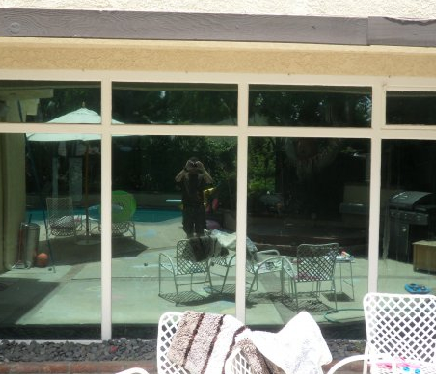
Blackout and Whiteout Film for Maximum Privacy
Some windows do not need to maintain an outdoor view at all.
In those situations, blackout or whiteout film may be appropriate.
These products provide much stronger visual blocking than conventional tint.
They can be useful for:
- Storage rooms
- Utility areas
- Specific bedroom windows
- Interior glass
- Windows that should no longer provide visibility
Luxury Glass Tinting currently includes blackout and whiteout products among its residential privacy options.
Privacy Film Does Not Have to Make Your Home Dark
Many homeowners assume privacy requires very dark glass.
That is not necessarily true.
Depending on the goal, you can use:
- Reflective film for daytime privacy
- Frosted film to diffuse the view
- Decorative film to obscure selected areas
- Dual-reflective film for solar control and privacy
- Higher-VLT solar films for more subtle appearance
The result can remain bright and comfortable.
The key is understanding that privacy, darkness, and heat rejection are different characteristics.
Residential Window Film Can Help Control Solar Heat
Los Angeles homes can experience strong solar exposure, particularly through large south- and west-facing windows.
When sunlight passes through glass, interior surfaces absorb that solar energy.
That can make areas near windows noticeably warmer.
Solar-control film can reduce the amount of solar energy entering through the treated glazing.
This can be especially useful for:
- West-facing living rooms
- Kitchens with large windows
- Home offices
- Sliding glass doors
- Bedrooms with afternoon sun
- Floor-to-ceiling glass
What Is SHGC?
One useful performance measurement for residential glass is Solar Heat Gain Coefficient, or SHGC.
SHGC represents the fraction of solar energy that passes through the glazing and becomes heat indoors.
The scale runs from 0 to 1.
Generally:
Lower SHGC = less solar heat gain.
This is more useful for evaluating heat-control performance than simply choosing the darkest-looking film.
What Is TSER?
Total Solar Energy Rejected, or TSER, is another useful window-film measurement.
It represents the percentage of total solar energy rejected by the glazing system.
Generally:
Higher TSER = greater total solar-energy rejection.
When heat is a major concern, ask about the actual performance specifications rather than relying only on shade.
Darker Film Does Not Automatically Mean Better Heat Control
A dark-looking window does not automatically reject the most total solar energy.
Modern films use different technologies.
A relatively light:
- Ceramic film
- Spectrally selective film
- Specialty solar film
may provide meaningful solar performance without making the glass dramatically darker.
This is valuable when homeowners want to preserve:
- Natural daylight
- Exterior views
- A subtle façade
- Bright interiors
Ceramic Residential Window Film
Ceramic architectural film can provide strong solar performance while maintaining a relatively neutral, low-reflective appearance.
It may be appropriate when homeowners want:
- Heat control
- Glare reduction
- UV protection
- Good optical clarity
- Less mirrored exterior appearance
Luxury Glass Tinting currently includes ceramic film among its residential options.
Ceramic is a strong choice—but it is not automatically the best film for every window.
Reflective, neutral, spectrally selective, or Low-E products may perform better for certain goals.
Spectrally Selective Film
Spectrally selective film is designed to control significant amounts of solar energy while allowing relatively high levels of visible light through the glass.
That makes it useful when you want:
- Reduced solar heat
- UV protection
- Bright rooms
- Minimal change to the appearance of the glass
- Clearer views
This can be particularly attractive for homes with attractive outdoor views.
Neutral Window Film
Neutral film provides another subtle option.
Rather than creating a highly mirrored exterior, neutral films typically create a softer appearance.
They can help with:
- Glare
- Solar heat
- UV exposure
while maintaining a more understated architectural look.
This may be preferable for traditional homes where strongly reflective windows would not complement the design.
Low-E Window Film
Low-E stands for low emissivity.
Low-E film is designed to influence radiant heat transfer through the glazing.
Depending on the exact film and glass configuration, it may help address both:
- Summer solar heat
- Cooler-season heat loss
Low-E does not mean “low-emission material.”
The term refers to thermal emissivity.
Can Residential Window Film Reduce Energy Bills?
Potentially.
If solar-control film reduces unwanted heat gain through sunny windows, the home’s air-conditioning system may have less solar load to overcome.
But there is no responsible universal claim such as:
“Window tint will reduce your bill by 30%.”
Actual energy use depends on:
- Window area
- Direction
- Glass type
- Exterior shade
- Insulation
- HVAC efficiency
- Thermostat settings
- Climate
- Occupant behavior
- Film performance
The correct message is:
Residential window film can reduce solar heat gain and may reduce cooling demand.
Specific savings require property-specific analysis.
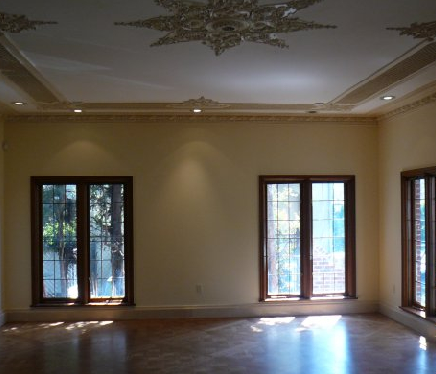
UV Protection for Your Home
High-quality solar window film can provide substantial UV protection.
The International Window Film Association states that window film can reduce solar UV exposure by up to approximately 99%, depending on the product.
The Skin Cancer Foundation requires qualifying UV window film carrying its Seal of Recommendation to demonstrate 99% or greater UVA and UVB blocking.
This makes product selection important.
Not every decorative or privacy film should automatically be assumed to have identical UV performance.
Can Window Film Protect Floors and Furniture From Fading?
It can help significantly—but no film can eliminate fading completely.
UV radiation is an important contributor to fading.
However, other factors also include:
- Visible light
- Solar heat
- Material chemistry
- Age
- Dye stability
The International Window Film Association specifically states that window film can reduce fading but cannot eliminate it.
A better way to describe the benefit is:
Window film reduces important solar contributors to fading and can help preserve interiors for longer.
Interior Materials That May Benefit
Solar-control film can help reduce exposure affecting:
- Hardwood flooring
- Carpeting
- Rugs
- Upholstery
- Curtains
- Artwork
- Photographs
- Cabinets
- Decorative finishes
This can be particularly valuable where sunlight repeatedly reaches the same portion of a floor or room every day.
Window Film Can Reduce Glare
Natural light is desirable until it makes a space difficult to use.
Common glare problems include:
- Television reflections
- Computer-screen glare
- Bright home offices
- Low-angle afternoon sunlight
- Excessive brightness near glass doors
Residential solar film can reduce excessive visible light while preserving more daylight than permanently closing blinds.
This is useful for home offices and entertainment spaces where a room is bright but uncomfortable.
Residential Film Can Improve Exterior Appearance
Window film can also change the exterior appearance of a home.
Depending on the product, glazing can appear:
- More uniform
- More reflective
- More neutral
- Slightly darker
- More contemporary
This can help create a more consistent façade where visible blinds, furniture, and interior lighting currently make windows appear mismatched.
Curb appeal is subjective, however.
A mirrored film that looks appropriate on a modern home may not fit a traditional property.
Appearance should be considered alongside performance.
Privacy Film and Security Film Are Not the Same
This is one of the most important distinctions in residential window film.
Ordinary:
- Solar-control tint
- Privacy tint
- Frosted film
- Decorative film
should not automatically be described as security film.
These products can address visibility, heat, glare, or design.
Dedicated safety and security window film is a separate category.
What Does Security Window Film Actually Do?
Safety/security film is designed to change how glazing behaves after breakage.
When installed on compatible glass, appropriate security film can help:
- Hold broken fragments together
- Reduce loose flying shards
- Keep shattered glass associated with the film
- Add resistance after breakage
For some forced-entry applications, the filmed glass also needs to be connected more effectively to the window frame with an appropriate attachment system.
Security Film Does Not Make Glass Unbreakable
The glass can still break.
The benefit is primarily what happens after breakage.
That is different from claiming security film turns ordinary windows into unbreakable barriers.
Even major manufacturers such as 3M explicitly caution that safety/security film is:
- Not bulletproof
- Not designed to stop every intruder
Properly configured systems can help delay forced entry.
That additional resistance can provide more response time when used as one layer of a broader security plan.
Attachment Systems Can Matter
For a serious forced-entry application, simply keeping broken pieces attached to the film may not be enough.
If the entire filmed pane separates from the frame, an opening can still be created.
This is why certain tested systems use a compatible structural attachment around the perimeter to connect the filmed glazing to the frame.
The appropriate system depends on:
- Existing glass
- Frame
- Film
- Threat
- Installation method
A security assessment should evaluate the complete glazing system rather than choosing film by thickness alone.
Security Film Is Not Bulletproof
Standard residential safety/security window film should never be marketed as ballistic protection.
Ballistic glazing is a separate specialty product category.
If bullet resistance is required, a tested ballistic glass or glazing system should be professionally specified.
Can Security Film Also Provide UV or Solar Benefits?
Some security films can include additional UV or solar-control performance.
But not every security film is designed for strong heat rejection, privacy, or glare reduction.
Likewise, an ordinary solar-control film is not automatically security film.
If a homeowner needs both, choose a product or system specifically designed to address both objectives.
Can Window Film Go on Double-Pane Glass?
Often, yes.
But film-to-glass compatibility should always be checked.
Double-pane insulated glass reacts differently to solar energy than single-pane glass.
Architectural film changes how sunlight is:
- Absorbed
- Transmitted
- Reflected
Manufacturers therefore publish compatibility guidance for particular combinations of film and glass.
What About Low-E Windows?
Low-E glazing also requires proper evaluation.
The International Window Film Association explains that compatibility depends on factors including:
- Type of Low-E surface
- Location of the Low-E coating within the window system
- Desired heat-gain reduction
- Desired heat-loss reduction
A professional installer should identify the glass before recommending film.
Can Window Film Cause Glass to Crack?
Window film does not automatically cause glass breakage.
However, film can change how much solar energy the pane absorbs.
Thermal stress is therefore one of the factors manufacturers consider when determining whether a film is appropriate for a specific glazing system.
IWFA recommends following manufacturer film-to-glass tables and compatibility guidelines.
This is particularly important for:
- Insulated glass
- Laminated glass
- Low-E glass
- Factory-tinted glass
- Large panes
Window Film Cannot Repair Failed Windows
Window film can improve the performance of compatible existing glass.
It cannot repair:
- Failed insulated-glass seals
- Cracked panes
- Rotten frames
- Water intrusion
- Major air leaks
- Broken hardware
If the underlying window system is failing, repair or replacement may be the correct solution.
Residential Window Film vs. Window Replacement
If existing windows are structurally sound, film may provide privacy or solar-control improvements without replacing the entire window assembly.
Advantages can include:
- Less disruption
- No frame removal
- Faster installation
- Room-specific solutions
- Multiple appearance choices
Replacement windows can provide benefits film cannot, particularly when the existing glazing or frame has physically failed.
The two options should not be presented as identical.
Professional vs. DIY Residential Window Film
DIY film is not automatically a bad option.
It can be practical for:
- Small panes
- Temporary privacy
- Simple decorative projects
- Static-cling applications
Professional installation becomes more valuable when the project involves:
- Large windows
- Multiple adjacent panes
- Solar-performance requirements
- Low-E glazing
- Insulated glass
- Reflective film
- Long-term appearance
- Manufacturer warranty
- Security applications
The more complex the glazing or performance objective, the more important product selection and installation experience become.
How Professional Residential Window Film Is Installed
A typical professional project includes several steps.
1. Assess the Room
The installer looks at:
- Sun exposure
- Heat
- Glare
- Privacy
- Desired appearance
- Window direction
2. Identify the Glass
The existing glazing should be evaluated for film compatibility.
3. Select the Film
The homeowner compares:
- Privacy level
- VLT
- Solar performance
- Reflectivity
- Exterior appearance
- UV specifications
4. Prepare the Glass
The pane is thoroughly cleaned.
Contamination under the film can affect appearance.
5. Measure and Install
Film is sized and positioned for the individual pane.
A water-based installation solution is commonly used to position architectural film accurately.
6. Finish the Edges
The film is carefully finished around the perimeter for a clean appearance.
7. Final Inspection
The installer checks:
- Alignment
- Clarity
- Edges
- Consistency
- Overall appearance
Luxury Glass Tinting’s current residential installation process emphasizes per-pane cutting, smooth edges, consistent coverage, and aftercare guidance.
Does Window Film Need Time to Cure?
Yes.
Immediately after installation, some moisture can remain beneath the film.
This may temporarily create:
- Haze
- Small moisture pockets
- Slight optical distortion
The drying period varies according to:
- Film
- Glass
- Temperature
- Humidity
- Sun exposure
Do not assume every product cures on exactly the same schedule.
Follow the installer’s instructions.
How to Clean Residential Window Film
Once the film has cured, maintenance is simple.
IWFA recommends:
- Soft clean cloths
- Clean synthetic sponges
- Normal non-abrasive glass cleaners
- Soft squeegees for drying
Avoid:
- Abrasive pads
- Hard scrapers
- Harsh abrasive cleaners
Proper cleaning helps preserve the film’s surface.
How Long Does Residential Window Film Last?
There is no universal lifespan.
IWFA says service life varies according to factors including:
- Film type
- Glass type
- Window construction
- Window orientation
- Geographic location
Manufacturer warranties are therefore more useful than a generic claim such as:
“All residential film lasts 20 years.”
Ask about the exact product being proposed and the written manufacturer warranty.
Choosing the Best Film for Each Room
Different rooms often benefit from different solutions.
Living Room
Consider:
- Dual-reflective film
- Neutral film
- Ceramic film
- Spectrally selective film
depending on heat, glare, privacy, and the importance of the view.
Bathroom
Frosted or white frost film is often an excellent choice because consistent privacy is usually more important than an outdoor view.
Bedroom
For ground-floor bedrooms, choose between:
- Frosted film for consistent privacy
- Reflective film for daytime privacy plus separate nighttime coverings
Home Office
Solar-control or spectrally selective film can reduce glare while preserving daylight.
Front Door and Sidelights
Decorative or frosted film can provide privacy without eliminating natural light.
Large Scenic Windows
Ceramic, neutral, or spectrally selective film can provide solar benefits while keeping the appearance relatively subtle.
Common Residential Window Tinting Myths
Myth: Privacy Film Always Works Day and Night
False.
Reflective privacy depends strongly on lighting conditions.
Myth: Privacy Requires Very Dark Windows
False.
Frosted, decorative, dual-reflective, and other films can address privacy without turning every window black.
Myth: Every Residential Film Blocks 99% UV
False.
UV performance is product-specific.
Myth: UV Protection Completely Stops Fading
False.
UV is only one contributor to fading.
Myth: Window Tint Guarantees Lower Energy Bills
False.
Film can reduce solar heat gain, but actual energy savings depend on the home.
Myth: Ordinary Window Tint Makes Glass Shatterproof
False.
Dedicated safety/security film is a different product category.
Myth: Security Film Stops Burglars
False.
Appropriate security-film systems may help delay forced entry, but they do not guarantee that an intruder cannot gain access.
Myth: Security Film Is Bulletproof
False.
Standard safety/security window film is not ballistic glazing.
Myth: Any Film Can Be Installed on Any Window
False.
Glass type and film compatibility matter.
Frequently Asked Questions About Residential Window Tinting
What are the main benefits of residential window tinting?
Depending on the film, benefits can include solar heat control, glare reduction, UV protection, daytime privacy, decorative privacy, and improved window appearance.
What is the best home window film for privacy?
It depends on whether you need daytime privacy while maintaining a view or consistent visual privacy.
Reflective and dual-reflective film can work well during daylight.
Frosted or opaque film is more appropriate when privacy must remain consistent at night.
Can I get privacy without losing natural light?
Yes.
Frosted and decorative films can obscure visibility while still allowing substantial diffused daylight into the room.
Reflective film can also provide daytime privacy while preserving an outward view.
Can I get privacy without losing my outdoor view?
During the day, reflective or dual-reflective film can provide increased privacy while allowing outward visibility.
For reliable nighttime privacy, a clear outward view generally conflicts with complete visual privacy, so additional coverings may be necessary.
Does reflective window film work at night?
It does not provide reliable one-way privacy when the interior is brighter than outside.
Does frosted film provide privacy at night?
Yes. Frosted film obscures the view through the glass rather than relying on a lighting imbalance.
Does home window tint reduce heat?
Solar-control film can reduce solar energy entering through the glass. Performance varies by film, glazing, exposure, and orientation.
Will window tint make my house dark?
Not necessarily. There are nearly clear, neutral, ceramic, and spectrally selective products designed to maintain comparatively high visible-light transmission.
Does residential tint block UV?
Many premium solar films can block approximately 99% or more UV radiation. Check the performance specification of the exact film.
Will window film stop my floors and furniture from fading?
It can reduce important causes of fading but cannot eliminate fading completely.
Can window tint lower my energy bill?
It may reduce cooling demand by controlling solar heat gain, but actual savings vary by home.
Is window tint safe for double-pane windows?
Many films are compatible with insulated glass, but the exact film and glazing system should be checked against manufacturer recommendations.
Can tint be installed over Low-E windows?
Sometimes. Compatibility depends on the Low-E coating and its position within the glazing system.
Can window tint crack glass?
Properly selected film is commonly installed on architectural glass, but thermal stress must be considered. Manufacturer film-to-glass compatibility guidance should be followed.
Does security film prevent windows from breaking?
No. Glass can still break. Security film is designed to help hold fragments together and improve the behavior of broken glazing.
Can security film prevent a break-in?
It may help delay forced entry when properly specified and, where necessary, attached to the frame. It cannot guarantee that an intruder will never enter.
Is security film bulletproof?
No. Standard safety/security film is not bulletproof.
How long does residential film last?
Service life depends on film, glass, orientation, climate, installation, and manufacturer warranty. There is no single lifespan that applies to all products.
Is professional installation better than DIY?
For large panes, solar-control projects, Low-E or insulated glazing, multi-window projects, and security applications, professional product selection and installation can provide important advantages.
Privacy and Protection Start With Choosing the Right Film
Residential window tinting is most useful when it solves a specific problem rather than simply changing the color of your windows.
If you want:
Daytime privacy while preserving an outdoor view, consider reflective or dual-reflective film.
If you need:
Consistent visual privacy, consider frosted, white frost, blackout, or another opaque solution.
If your concern is:
Heat and glare, compare solar-control performance rather than selecting film only by darkness.
If you want:
UV and fade reduction, choose a product with verified UV performance.
And if the goal is:
Broken-glass retention or forced-entry delay, evaluate dedicated safety/security film and the complete glazing system rather than ordinary residential tint.
Luxury Glass Tinting provides professional residential window tinting in Los Angeles with current options including:
- Reflective film
- Dual-reflective film
- Neutral film
- Ceramic film
- Spectrally selective film
- Low-E film
- Frosted and decorative film
- Whiteout and blackout privacy film
For specialized glazing protection, the company also offers security window film installation.
A good residential window-film project should leave you with more than darker glass.
It should give you the right balance of privacy, natural light, heat control, glare reduction, appearance, glass compatibility, and protection for the way each room is actually used.