

Most privacy window films work at night, depending on the type of the film. This is one of the most common points of confusion with residential film. Many people expect any film labelled “privacy” to perform the same way after dark and also with residential film, when in reality some films are designed for daytime privacy while others are far more reliable once the interior lights are on.
For residential areas, the two most frequently installed films are reflective privacy and frosted films. Reflective privacy film is usually strongest during the day, when outside light is brighter than the room. Frosted film is usually the stronger choice when the glass needs to stay screened more consistently, including in the evening. A frosted privacy window film is often the more dependable route when privacy needs to hold after sunset rather than drop away once the room is lit from inside.
How Night Privacy Works
Privacy changes when the brighter side of the glass changes
The U.S. Department of Energy explains that window films can help block glare and ultraviolet exposure, but privacy performance still depends on the type of film and how light behaves around the glass.
The way glass behaves is shaped by light balance. During the day, outdoor light is usually stronger, so reflective film can help reduce visibility from outside. At night, the balance shifts. The inside of the room becomes brighter, which changes how the glass reads from the outside.
Day privacy and night privacy are two different results
This is the part that often gets missed. A film can perform very well in daylight and still feel disappointing after dark. The privacy result may look strong in the morning, then become much weaker once the room lights are on and the exterior is dark. That difference is exactly why the choice of film needs to be tied to the way the room is used, not only to the way the sample looks during the day.
Reflective Privacy Film After Dark
1. Reflective film depends on outside brightness
The IWFA guide explains that reflective films can lose privacy when interior light is stronger. This is why reflective privacy film can work well during the day, then feel much weaker at night once the room is brighter than the outside.
Reflective privacy film provides privacy during the day in front, street facing windows, and spaces where strong daylight is already hitting the glass. The film works by creating a mirrored outer appearance on the brighter side of the glass.
2. Interior lighting changes the result
Once the interior lights are on, the privacy effect can weaken. The glass may become much easier to see through from outside, especially in rooms with warm overhead lighting or lamps switched on in the evening. This is why reflective privacy film is usually a better fit for rooms that need daytime screening rather than all-day privacy.
3. It can still be useful in the right room
Reflective film is not the wrong product. It just needs to be used with the right expectation. In a living room or front-facing space where daytime privacy is the main issue, it can still be a strong option. In a bathroom, bedroom, or room that feels exposed after dark, it is usually not the most dependable route.
Frosted Privacy Film for Better Night-Time Screening
The Whole Building Design Guide notes that decorative window films can create private glass spaces while still welcoming light. For rooms that need more consistent screening, white frost window film can help soften the view through the glass while keeping the space bright.
1. Frosted film obscures rather than reflects
A frosted privacy window film works differently because it softens or obscures the view through the glass rather than relying on reflected light. That means the privacy result is not built around outdoor brightness in the same way reflective film is.
2. Light still comes through
Frosted films have the ability to keep a room bright while reducing direct visibility. This is extremely useful in spaces where privacy and light is required at the same time.
3. It suits rooms that need privacy all the time
A frosted glass window film is usually a stronger fit in bathrooms, entry glass, sidelights, and street-facing rooms that still feel too exposed after sunset. It does not give a clear outward view in the same way reflective film can, but it is often the more practical answer when the room needs consistent screening.
Best Rooms for Frosted Privacy Film
Bathrooms
Bathrooms are one of the clearest uses for frosted film because privacy is needed through the full day, not only in daylight hours. In these spaces, a frosted privacy glass window film usually gives a much more reliable result than a reflective product.
For bathrooms, front door sidelights, bedrooms, and internal glass, decorative window film in Los Angeles can add privacy and a cleaner glass finish without making the room feel closed off.
Front door sidelights
For areas like entry glass, they might feel comfortable at day time and too exposed at night. Decorative and frosted sidelight films are usually the best choice if home owners want to keep the area bright while also keeping the privacy.
Bedrooms and street-facing windows
Bedrooms and front-facing rooms often need a calmer level of privacy after sunset, especially in homes close to the street or near neighbouring properties. In these rooms, a frost window film often gives the better balance between screening and soft natural light.
Internal glass and partitions
Frosted film is also a strong fit for internal partitions, glass doors, and interior-facing windows where the room needs some privacy but should still feel light and clean.
How Frosted Film Changes Light, Visibility, and Room Feel
The room feels softer
Once installed, the first thing most people notice is that the room feels less exposed. The glass still allows light through, but the view becomes softened and less direct, which changes the overall feel of the space.
Night-time privacy becomes more dependable
The second noticeable change usually comes in the evening. Once the interior lights are on, the window no longer feels as open or easy to see through as it did before. That often makes the room feel much more settled at night.
The glass takes on a more finished look
A frosted film can also change the visual finish of the glass in a positive way. In many homes, it makes the window feel cleaner and more deliberate, especially in bathrooms, entry areas, and decorative side panels.
The Limits of Frosted Privacy Film
It does not preserve a clear outward view
This is an important part of the decision. Frosted film gives up the clear view through the glass in exchange for more consistent privacy. If the window needs both privacy and a full outward view, another route may need to be considered.
It is not the same as mirrored privacy film
Some people start by comparing frosted and reflective film as though they are just different looks of the same product. In practice, they solve different problems. Reflective film is stronger for daytime privacy with view retention. Frosted film is stronger for screening the glass more consistently, especially at night.
Choosing the Right Privacy Film for Your Home
When making a choice on a privacy film for your home, you should decide if the room needs privacy only in daylight, in the evening, or both. Frosted film is the best film if your answer includes bathrooms, entry glass, bedrooms, or windows that feel too exposed after dark.
That is also where the finish needs to be considered properly. Some homes suit a plain frosted look. Others may suit a more decorative pattern that still keeps the privacy effect. The room, the light, and the way the glass is used all shape that recommendation.
NREL notes that window film may be chosen for privacy, glare, excessive light, and aesthetics. That is why the better recommendation should begin with how the room behaves during the day and at night, not just with how the film sample looks.
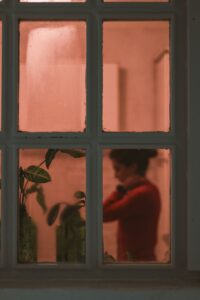
Choosing the Right Privacy Film for the Right Time of Day
Privacy needs are not always the same from one room to the next. A front lounge may only need screening during the day. A bathroom may need it morning to night. A sidelight may need privacy without making the entrance feel darker. Once the room is looked at in those terms, the film choice becomes much easier to narrow down.
At Luxury Glass Tinting, we usually recommend residential window tinting in Los Angeles can help match the right film to the room, the light level, and the privacy you need after dark. If a window still feels too exposed once the lights are on, we can help you work through the right finish and the right level of screening for the space.